Skip to main content
Macroeconomics
My Course
Learn
Exam Prep
AI Tutor
Study Guides
Flashcards
Explore
Try the app
My Course
Learn
Exam Prep
AI Tutor
Study Guides
Flashcards
Explore
Try the app
Back
Graphing Review definitions
You can tap to flip the card.
Axes
You can tap to flip the card.
👆
Axes
The two perpendicular lines on a graph, typically labeled as price (vertical) and quantity (horizontal) in economics.
Track progress
Control buttons has been changed to "navigation" mode.
1/17
Related flashcards
Related practice
Recommended videos
Graphing Review quiz
Graphing Review
15 Terms
Graphing Review
1. Introduction to Macroeconomics
5 problems
Topic
Percentage and Decimal Review
1. Introduction to Macroeconomics
10 problems
Topic
1. Introduction to Macroeconomics - Part 1 of 2
8 topics
14 problems
Chapter
1. Introduction to Macroeconomics - Part 2 of 2
1 topic
3 problems
Chapter
Guided course
03:40
Calculating Slope of a Curve: Point Method
3834
views
64
rank
Guided course
02:32
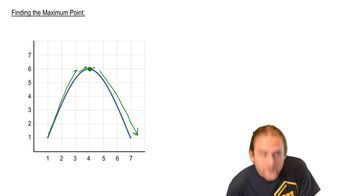
Finding Maximum and Minimum on a Graph
3298
views
42
rank
Guided course
02:36
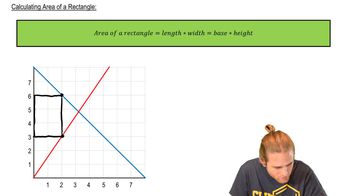
Calculating Area of a Rectangle on Graph
3770
views
55
rank
Terms in this set (17)
Hide definitions
Axes
The two perpendicular lines on a graph, typically labeled as price (vertical) and quantity (horizontal) in economics.
Demand Schedule
A table showing various prices and the corresponding quantities demanded, used to plot points on a graph.
Curve
A line connecting plotted points on a graph, which can be straight or bent, representing relationships between variables.
Intersection
The point where two lines or curves cross on a graph, often indicating equilibrium or a key outcome.
Slope
A measure of how much the vertical value changes for each unit change in the horizontal value, indicating steepness.
Rise
The change in the vertical value between two points on a graph, used in calculating slope.
Run
The change in the horizontal value between two points on a graph, paired with rise to determine slope.
Tangent Line
A straight line that touches a curve at only one point, used to find the slope at that exact spot.
Arc Method
A technique for finding the average slope between two points on a curve by connecting them with a straight line.
Maximum Point
The highest point on a graph where the direction changes from rising to falling, indicating a peak.
Minimum Point
The lowest point on a graph where the direction changes from falling to rising, indicating a trough.
Area of Triangle
A region on a graph calculated as half the product of its base and height, often used to measure surplus or loss.
Area of Rectangle
A region on a graph found by multiplying base and height, useful for calculating total values like revenue.
Correlation
A relationship between two variables where changes in one help predict changes in the other, without implying cause.
Causation
A direct link where one event produces another, establishing a cause-and-effect relationship between variables.
Omitted Variable Bias
A problem in graph interpretation when a relevant factor is left out, leading to misleading conclusions.
Reverse Causality
A misinterpretation where the direction of cause and effect is mistakenly flipped between two variables.
 BackBack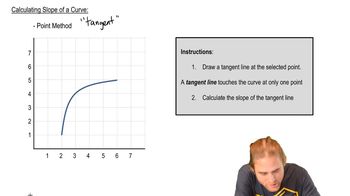
 03:40
03:40