What does the ceteris paribus assumption mean in the context of demand curves?
Ceteris paribus means 'all else equal,' so only the price changes while all other factors remain constant.
What happens to the demand curve when only the price of a product changes?
A change in price causes movement along the demand curve, not a shift of the curve itself.
What is a 'change in quantity demanded'?
It refers to movement along the demand curve due to a change in the product's price.
What causes the demand curve to shift rather than move along it?
A change in any determinant of demand other than price, such as preferences or income, shifts the demand curve.
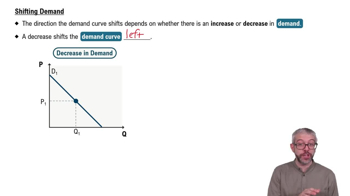
How is a decrease in demand shown on a demand curve graph?
A decrease in demand is shown by shifting the demand curve to the left.
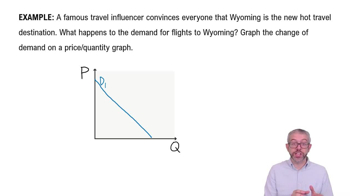
What does a rightward shift of the demand curve indicate?
A rightward shift indicates an increase in demand at every price level.
List the five main determinants of demand discussed in the lesson.
The five determinants are consumer preferences, number of consumers, consumer expectations, consumer income, and the price of related goods.
How do changes in consumer preferences affect demand?
If consumers prefer a good more, demand increases; if they prefer it less, demand decreases.
What effect does an increase in the number of consumers have on demand?
An increase in the number of consumers raises demand, shifting the curve to the right.
How do consumer expectations about future prices affect current demand?
If consumers expect prices to rise, current demand increases; if they expect prices to fall, current demand decreases.
How does an increase in consumer income affect demand for normal goods?
An increase in income raises demand for normal goods, shifting the demand curve to the right.
What happens to demand for inferior goods when consumer income rises?
Demand for inferior goods decreases when consumer income rises.
How does the price of a substitute good affect demand for a product?
If the price of a substitute rises, demand for the product increases.
What is the effect on demand for a good if the price of its complement increases?
If the price of a complement increases, demand for the good decreases.
What is the difference between a change in demand and a change in quantity demanded?
A change in demand shifts the entire curve due to non-price factors, while a change in quantity demanded is movement along the curve due to a price change.
 Back
Back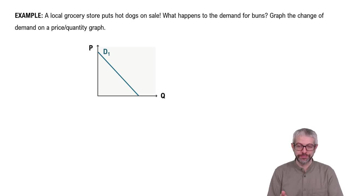
 01:27
01:27