Back

Shifting Short Run Aggregate Supply definitions

Control buttons has been changed to "navigation" mode.
1/14
  • Short Run Aggregate Supply

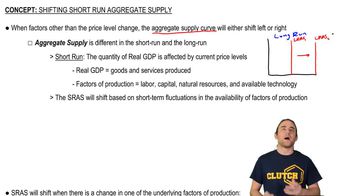
    Total output firms are willing to produce at various price levels in the short term, influenced by resource and expectation changes.
  • Long Run Aggregate Supply

    Vertical curve representing maximum sustainable output, determined by available resources and technology, unaffected by price level.
  • Factors of Production

    Inputs like labor, capital, and natural resources that determine the economy’s productive capacity and influence supply shifts.
  • Labor

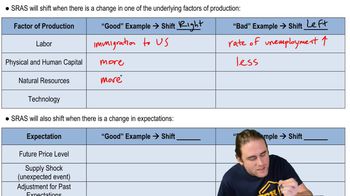
    Human effort available for production; increases or decreases can shift aggregate supply right or left, respectively.
  • Physical Capital

    Machinery, buildings, and equipment used in production; more of it boosts output and shifts supply right.
  • Human Capital

    Skills and knowledge of workers; higher levels enhance productivity and shift supply right.
  • Natural Resources

    Raw materials like oil or timber; discoveries or losses directly impact the economy’s output capacity.
  • Technology

    Innovations or advancements that improve production efficiency, typically causing supply to shift right.
  • Expectations

    Beliefs about future price levels; optimism or pessimism can prompt firms to adjust current output.
  • Supply Shock

    Unexpected event, such as a resource discovery or loss, that immediately alters production costs and output.
  • Price Level

    Average of current prices across the economy, serving as a key axis in aggregate supply analysis.
  • Real GDP

    Total value of goods and services produced, adjusted for inflation, used to measure economic output.
  • Adjustment for Past Expectations

    Correction in supply when previous forecasts about prices prove inaccurate, shifting output to reflect actual conditions.
  • Natural Rate of Unemployment

    Baseline unemployment level; increases reduce available labor and shift supply left.