Skip to main content
Macroeconomics
My Course
Learn
Exam Prep
AI Tutor
Study Guides
Flashcards
Explore
Try the app
My Course
Learn
Exam Prep
AI Tutor
Study Guides
Flashcards
Explore
Try the app
Back
Shifting Supply definitions
You can tap to flip the card.
Supply Curve
You can tap to flip the card.
👆
Supply Curve
A graphical representation showing the relationship between price and quantity offered for sale, typically sloping upward.
Track progress
Control buttons has been changed to "navigation" mode.
1/14
Related flashcards
Related practice
Recommended videos
Shifting Supply quiz
Shifting Supply
15 Terms
Shifting Supply
3. Supply and Demand
10 problems
Topic
Big Daddy Shift Summary
3. Supply and Demand
10 problems
Topic
3. Supply and Demand - Part 1 of 2
11 topics
15 problems
Chapter
3. Supply and Demand - Part 2 of 2
1 topic
3 problems
Chapter
Guided course
01:56
Shifting Supply
556
views
9
rank
Guided course
01:00
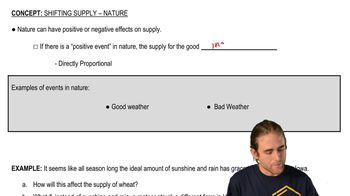
Nature
3334
views
27
rank
Guided course
01:39
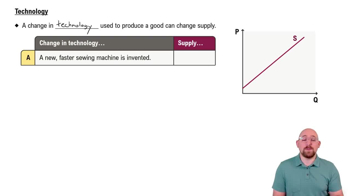
Technology
450
views
8
rank
Terms in this set (14)
Hide definitions
Supply Curve
A graphical representation showing the relationship between price and quantity offered for sale, typically sloping upward.
Law of Supply
A principle stating that, all else equal, higher prices lead to higher quantities offered for sale.
Input Costs
Expenses for resources used in production, such as materials and labor, which directly affect the amount offered for sale.
Technology
Advancements or regressions in production methods that can alter the amount producers are able to offer at each price.
Taxes
Government-imposed financial charges that raise production expenses and typically reduce the amount offered for sale.
Subsidies
Government financial support that lowers production costs, encouraging producers to offer more at each price.
Substitutes in Production
Alternative goods that can be produced with similar resources, where a price change in one affects the supply of the other.
Producer Expectations
Anticipations about future market conditions that influence current decisions on how much to offer for sale.
Number of Suppliers
The total count of producers in a market, where an increase leads to more of the good being available.
Events in Nature
Natural occurrences, such as weather changes, that can positively or negatively impact the amount producers can offer.
Rightward Shift
A movement of the supply curve indicating an increase in the amount offered at every price.
Leftward Shift
A movement of the supply curve indicating a decrease in the amount offered at every price.
Quantity Supplied
The specific amount of a good producers are willing to offer at a particular price, represented by a point on the supply curve.
Determinants of Supply
Factors other than price, such as input costs or technology, that can cause the supply curve to shift.
 BackBack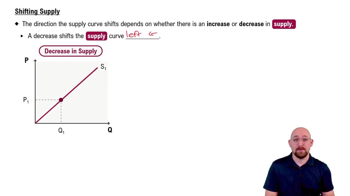
 01:56
01:56