Back

Bacteriophage: Lytic Phage Infections definitions

Control buttons has been changed to "navigation" mode.
1/15
  • Bacteriophage

    A virus that specifically infects bacterial cells, using them to replicate and produce new viral particles.
  • Lytic Cycle

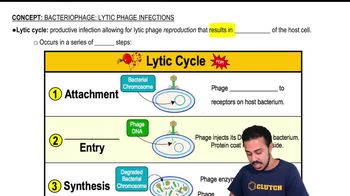
    A sequence of events in which a virus replicates within a bacterium, ending with host cell destruction and phage release.
  • Productive Infection

    A viral process resulting in the creation of new viral particles and eventual host cell lysis.
  • Attachment

    The initial step where a virus binds to specific receptors on a bacterial cell's surface.
  • Genome Entry

    The process where viral DNA is injected into a host cell, while the protein coat remains outside.
  • Synthesis

    A stage where viral enzymes degrade host DNA and direct the production of viral proteins and genomes.
  • Assembly

    The step where newly made viral components are put together inside the host to form complete viruses.
  • Release

    The final phase where the host cell ruptures, freeing new viruses to infect other cells.
  • Host Cell

    A bacterial cell that provides the environment and resources for viral replication.
  • Receptor

    A specific molecule on a bacterial surface recognized and bound by a virus during infection.
  • Protein Coat

    The protective outer shell of a virus that remains outside the host during genome injection.
  • Phage Enzyme

    A viral protein that breaks down host DNA, disabling the host's genetic functions.
  • Bacterial Chromosome

    The main genetic material of a bacterium, targeted and degraded during viral infection.
  • Lysis

    The breaking open of a cell, resulting in the release of newly formed viral particles.
  • Phage Protein

    A viral structural or functional molecule produced during infection, essential for new virus assembly.