Back

Cell Communication: Cytokines definitions

Control buttons has been changed to "navigation" mode.
1/15
  • Cytokines

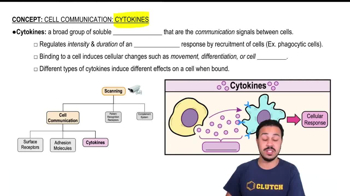
    Soluble proteins acting as communication signals between cells, regulating immune responses by inducing cellular changes.
  • Chemokines

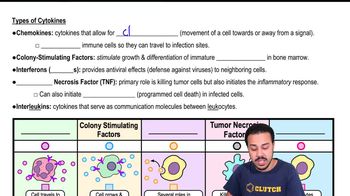
    Molecules that promote chemotaxis, guiding immune cells to infection sites for microbe elimination.
  • Chemotaxis

    Directed movement of cells toward or away from chemical signals, crucial for immune cell recruitment.
  • Colony Stimulating Factors

    Proteins that stimulate growth and differentiation of immature leukocytes in bone marrow.
  • Leukocytes

    Immune system cells, including white blood cells, that respond to cytokine signals for defense.
  • Interferons

    Proteins providing antiviral effects, enabling neighboring cells to mount defenses against viral infections.
  • Tumor Necrosis Factors

    Molecules initiating inflammation and apoptosis, originally identified for killing tumor cells.
  • Apoptosis

    Programmed cell death, often triggered in infected or damaged cells to prevent spread of infection.
  • Interleukins

    Communication molecules between leukocytes, with diverse roles in immune cell activation and proliferation.
  • IL-1

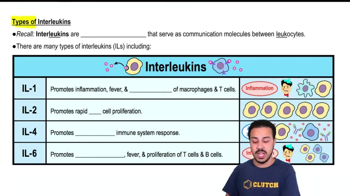
    Mediator that promotes inflammation, fever, and activation of macrophages and T cells.
  • IL-2

    Factor that enhances rapid proliferation of T cells during immune responses.
  • IL-4

    Key molecule for antibody immune response, supporting adaptive immunity.
  • IL-6

    Agent promoting inflammation, fever, and proliferation of T and B cells.
  • Macrophages

    Phagocytic immune cells activated by certain interleukins to engulf and destroy pathogens.
  • Adaptive Immunity

    Immune response involving antibody production and memory, enhanced by specific interleukins.