Back

Gram-Negative Cell Walls definitions

Control buttons has been changed to "navigation" mode.
1/13
  • Gram-Negative Bacteria

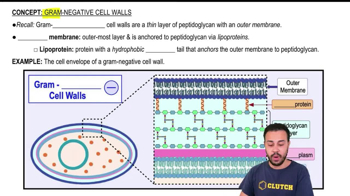
    Microorganisms with a thin peptidoglycan layer and an outer membrane, not retaining the Gram stain, often linked to severe infections.
  • Peptidoglycan

    A thin, mesh-like layer in certain bacterial cell walls, providing structural support between the plasma and outer membranes.
  • Outer Membrane

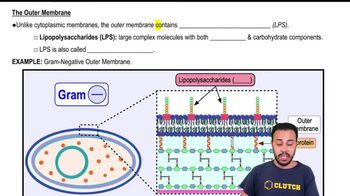
    A unique lipid bilayer in some bacteria, serving as the outermost barrier and containing specialized molecules like LPS and porins.
  • Plasma Membrane

    The innermost membrane of bacterial cells, essential for regulating transport and maintaining cellular integrity.
  • Lipoprotein

    A molecule with both lipid and protein components, anchoring the outer membrane to the peptidoglycan layer in certain bacteria.
  • Lipopolysaccharide

    A complex molecule in the outer membrane, also called endotoxin, crucial for pathogenicity and composed of three structural parts.
  • Endotoxin

    A toxic component of the outer membrane, responsible for severe effects during bacterial infections, synonymous with LPS.
  • Lipid A

    The membrane-anchoring portion of LPS, responsible for the molecule's toxic effects and deadly impact in infections.
  • Core Polysaccharide

    The central, relatively constant region of LPS, connecting the membrane anchor to the variable outer sugar chain.
  • O Antigen

    The variable, outward-extending sugar polymer of LPS, useful for distinguishing bacterial species.
  • Porin

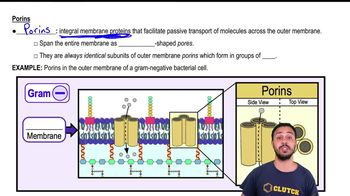
    A cylindrical protein complex in the outer membrane, forming channels that allow passive diffusion of molecules.
  • Integral Membrane Protein

    A protein embedded within a membrane, such as porins, facilitating transport or structural functions.
  • Passive Transport

    The movement of molecules across membranes without energy input, enabled by structures like porins.