Back

Immune Response Damage to the Host quiz

Control buttons has been changed to "navigation" mode.
1/15
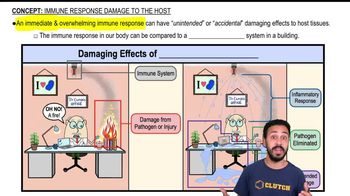
  • How can the immune response be compared to a sprinkler system in a building?

    Like a sprinkler system that puts out a fire but also damages equipment, the immune response can eliminate pathogens but also cause unintended damage to host tissues.
  • What is an unintended consequence of an overwhelming immune response?

    An overwhelming immune response can accidentally damage host tissues while trying to eliminate pathogens.
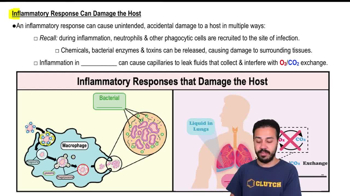
  • Which cells are recruited during inflammation to the site of infection?

    Neutrophils and other phagocytic cells like macrophages are recruited during inflammation.
  • What harmful substances can macrophages release during inflammation?

    Macrophages can release bacterial enzymes, toxins, exotoxins, and endotoxins that may damage surrounding tissues.
  • How can inflammation in the lungs affect breathing?

    Inflammation can cause fluid buildup in the lungs, which inhibits oxygen and carbon dioxide gas exchange, making it harder to breathe.
  • What is a possible result of fluid buildup in the lungs due to inflammation?

    Fluid buildup can interfere with lung function and may be dangerous, as seen in conditions like bacterial pneumonia.
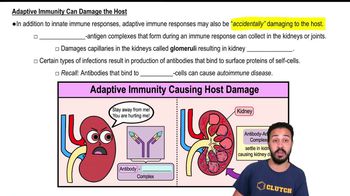
  • How can adaptive immunity cause unintentional host damage?

    Adaptive immunity can cause damage when antibody-antigen complexes accumulate in organs, or when antibodies mistakenly target self cells.
  • What are antibody-antigen complexes and how can they be harmful?

    Antibody-antigen complexes are formed when antibodies bind to antigens; if not cleared, they can build up in organs and cause tissue damage.
  • Where can antibody-antigen complexes accumulate and cause problems?

    They can accumulate in organs such as the kidneys or joints, leading to tissue damage.
  • What is a potential consequence of antibody-antigen complex buildup in the kidneys?

    Buildup can damage kidney capillaries (glomeruli), potentially resulting in kidney failure.
  • What happens when antibodies bind to surface proteins of self cells?

    When antibodies bind to self cells, it can trigger autoimmune diseases where the immune system attacks healthy tissues.
  • What is an autoimmune disease in the context of immune response damage?

    An autoimmune disease occurs when the adaptive immune system mistakenly targets and damages the body's own healthy cells.
  • Why might phagocytes fail to eliminate antibody-antigen complexes?

    Sometimes phagocytes do not detect or remove these complexes, allowing them to accumulate and cause damage.
  • How does the immune response's protective function sometimes backfire?

    While aiming to eliminate pathogens, the immune response can inadvertently harm host tissues through inflammation or adaptive mechanisms.
  • What lesson can be learned from the immune response's potential to cause host damage?

    The immune system's actions, though protective, must be carefully regulated to avoid accidental damage to the body's own tissues.