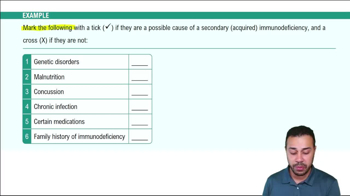
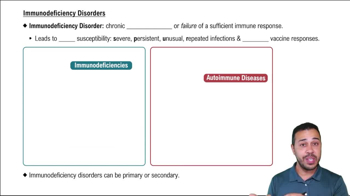
Immunodeficiency disorders are characterized by a chronic absence or failure of a sufficient immune response, leaving the immune system too weak and the body vulnerable.
What are the main consequences of immunodeficiency disorders?
They lead to increased susceptibility to severe, persistent, unusual, and repeated infections, and poor vaccine responses.
What is the SPUR memory tool used for in immunodeficiency disorders?
SPUR stands for Severe, Persistent, Unusual, and Repeated infections, which are common in people with immunodeficiencies.
How do primary immunodeficiencies differ from secondary immunodeficiencies?
Primary immunodeficiencies are congenital and present from birth due to genetic defects, while secondary immunodeficiencies are acquired after birth due to various factors.
What is Bruton's agammaglobulinemia and what immune cells does it affect?
Bruton's agammaglobulinemia is a genetic defect that impairs B cell maturation, leading to a lack of B cells and antibodies.
What is the main defect in DiGeorge syndrome?
DiGeorge syndrome results from a chromosomal deletion causing impaired thymus development and a severe lack or absence of T cells.
What immune component is defective in chronic granulomatous disease (CGD)?
CGD is caused by ineffective phagocytes that cannot produce chemicals needed to kill germs, leading to frequent and severe infections.
Why are primary immunodeficiencies generally rare?
They are caused by genetic mutations or chromosomal abnormalities and are present from birth, making them less common than acquired forms.
What are some factors that contribute to secondary immunodeficiencies?
Factors include aging, malnutrition, infections (like HIV and measles), immunosuppressive drugs, cancer treatments, genetics, and environmental influences.
How does malnutrition lead to secondary immunodeficiency?
Malnutrition results in fewer or poorer antibodies and white blood cells, weakening the immune system and increasing vulnerability to infections.
What is AIDS and how is it related to HIV?
AIDS is the most advanced stage of HIV infection, where the virus kills helper T cells, severely weakening the immune system.
Why do people with AIDS have an increased risk of opportunistic infections and rare cancers?
Their immune system is weakened by the loss of helper T cells, making them more susceptible to infections and certain cancers.
How does aging affect the immune system in the context of secondary immunodeficiencies?
The immune system tends to deteriorate with age, increasing vulnerability to infections and contributing to secondary immunodeficiency.
What is the difference between autoimmune diseases and immunodeficiency disorders?
Autoimmune diseases involve a misdirected immune response against self tissues, while immunodeficiency disorders involve a weak or absent immune response.
Why is there variability in the severity of immunodeficiency symptoms among individuals?
The exact reasons for variability are not fully understood, but two people with the same immunodeficiency can experience different symptom severity.
 Back
Back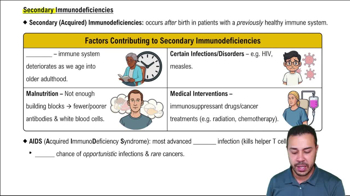
 02:41
02:41