Back

Introduction to Adaptive Immunity definitions

Control buttons has been changed to "navigation" mode.
1/15
  • Adaptive Immunity

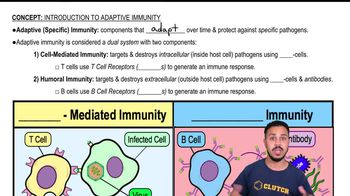
    A defense system with components that adapt over time, providing specific protection against particular pathogens.
  • Cell-Mediated Immunity

    A branch of defense targeting intracellular pathogens using T cells and their receptors.
  • Humoral Immunity

    A branch of defense targeting extracellular pathogens using B cells and antibodies.
  • T Cell

    A lymphocyte developing in the thymus, crucial for recognizing and eliminating infected host cells.
  • B Cell

    A lymphocyte maturing in bone marrow, responsible for producing antibodies against specific antigens.
  • Antigen

    A foreign molecule capable of triggering a specific immune response by lymphocytes.
  • Antibody

    A protein secreted by plasma cells that binds specifically to antigens, aiding in their neutralization.
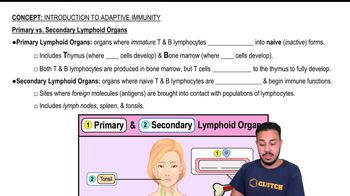
  • Primary Lymphoid Organ

    A site where immature lymphocytes develop into naive forms, such as the thymus and bone marrow.
  • Secondary Lymphoid Organ

    A site where naive lymphocytes encounter antigens and become activated, including lymph nodes and spleen.
  • Naive Lymphocyte

    A fully developed but inactive T or B cell that has not yet encountered its specific antigen.
  • Plasma Cell

    A differentiated B cell specialized in secreting large amounts of antibodies.
  • Memory Cell

    A long-lived lymphocyte capable of mounting a rapid response upon re-exposure to its specific antigen.
  • T Cell Receptor

    A membrane protein on T cells that recognizes specific antigens presented by other cells.
  • B Cell Receptor

    A membrane-bound immunoglobulin on B cells that binds specific antigens, initiating activation.
  • Antigen-Presenting Cell

    A cell, such as a dendritic cell, that displays antigens to T cells, initiating their activation.