Back

Natural Killer Cells definitions

Control buttons has been changed to "navigation" mode.
1/14
  • Natural Killer Cells

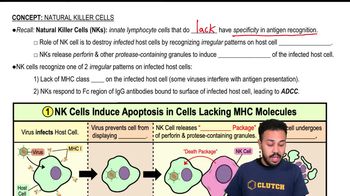
    Innate lymphocytes that eliminate infected host cells by detecting abnormal surface patterns without antigen specificity.
  • Innate Immunity

    Immediate, non-specific defense mechanism involving cells that do not require prior exposure to pathogens.
  • Adaptive Immunity

    Defense system involving lymphocytes that recognize specific antigens and provide long-lasting protection.
  • Lymphocytes

    White blood cells including NKs, T cells, and B cells, each with distinct roles in immune responses.
  • Antigen

    Molecule or structure on pathogens or infected cells recognized by immune components, triggering a response.
  • MHC Class I

    Surface proteins on healthy cells that present internal peptides; their absence signals abnormality to immune cells.
  • Apoptosis

    Programmed cell death process induced by immune cells to eliminate infected or abnormal host cells.
  • Perforin

    Protein released by NKs that forms pores in target cell membranes, facilitating entry of destructive enzymes.
  • Proteases

    Enzymes in NK cell granules that degrade proteins within target cells, promoting cell death.
  • Antibody-Dependent Cellular Cytotoxicity

    Mechanism where immune cells recognize antibody-coated targets and induce their destruction.
  • Fc Region

    Constant portion of an antibody recognized by NKs, enabling them to bind and kill marked cells.
  • IgG

    Antibody class that binds antigens on infected cells, marking them for immune cell recognition.
  • Death Packages

    Granules released by NKs containing molecules like perforin and proteases to induce apoptosis.
  • Antigen Presentation

    Display of pathogen-derived peptides on cell surfaces, often disrupted by viruses to evade immunity.