 Back
BackSymbiotic Relationships definitions

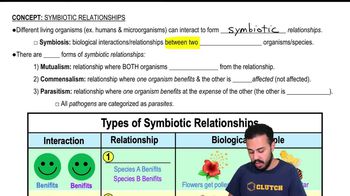
 05:59
05:59
Terms in this set (14)
Symbiotic Relationship
A specific association between two organisms where at least one derives a benefit from the interaction.
Mutualism
A biological relationship where both participating organisms gain benefits from their association.
Commensalism
A relationship in which one organism benefits while the other is neither helped nor harmed.
Parasitism
A relationship where one organism benefits at the expense of another, causing harm to the host.
Pathogen
A disease-causing agent that always acts as a parasite, harming its host.
Host
An organism that provides resources or shelter to another organism in a symbiotic relationship.
Benefit
A positive outcome or advantage gained by an organism from a biological interaction.
Harm
A negative effect experienced by an organism as a result of a biological relationship.
Species
A group of organisms capable of interbreeding and producing fertile offspring, often involved in symbiotic interactions.
Barnacle
A marine organism that attaches to larger animals, gaining transportation without affecting its host.
Whale
A large marine mammal that can serve as a host in commensalistic relationships, remaining unaffected.
Tick
A small parasite that feeds on the blood of mammals, often causing harm to its host.
Honeybee
An insect that collects nectar and aids in pollination, exemplifying mutualistic interactions.
Pollination
The transfer of pollen facilitated by animals, resulting in plant reproduction and mutualistic benefits.