Back

Temperature Requirements for Microbial Growth definitions

Control buttons has been changed to "navigation" mode.
1/13
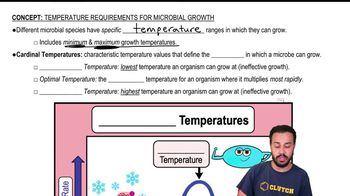
  • Cardinal Temperatures

    Characteristic values marking the lowest, best, and highest temperatures at which a microbe can grow.
  • Minimum Temperature

    Lowest point on the temperature scale where cell growth is possible, though typically slow and ineffective.
  • Optimal Temperature

    Specific value where microbial growth rate is at its highest and cells multiply most rapidly.
  • Maximum Temperature

    Highest temperature permitting cell growth, usually resulting in slow or ineffective proliferation.
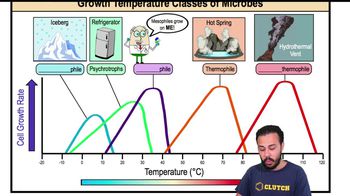
  • Cell Growth Rate

    Measurement of how quickly microbial cells increase in number under specific temperature conditions.
  • Psychrophiles

    Microbes thriving in extremely cold environments, with best growth between 0°C and 10°C, such as icebergs.
  • Psychrotrophs

    Microbes preferring cool temperatures, often found in refrigerators, with optimal growth between 20°C and 30°C.
  • Mesophiles

    Microbes adapted to moderate temperatures, commonly found in or on humans, with optimal growth near 35°C.
  • Thermophiles

    Microbes flourishing in hot environments like hot springs, with optimal growth around 70°C.
  • Hyperthermophiles

    Microbes surviving in extremely hot settings, such as hydrothermal vents, with optimal growth near 100°C.
  • Bell Curve

    Graphical representation showing how cell growth rate varies with temperature, peaking at the optimal value.
  • Hydrothermal Vents

    Deep ocean locations with extreme heat, serving as habitats for certain heat-loving microbes.
  • Hot Springs

    Naturally heated water sources where thermophilic microbes can thrive due to elevated temperatures.