Back

Viruses Evade the Immune Response definitions

Control buttons has been changed to "navigation" mode.
1/15
  • Antiviral Proteins

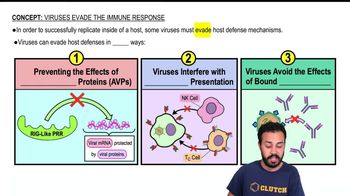
    Host cell molecules induced by interferons that inhibit viral replication, often by triggering apoptosis in infected cells.
  • Pattern Recognition Receptors

    Cytoplasmic sensors, such as RIG-like receptors, that detect viral RNA and initiate immune responses.
  • RIG-like Receptors

    A subset of cytoplasmic pattern recognition receptors specialized in detecting viral RNA within host cells.
  • Apoptosis

    Programmed cell death mechanism that eliminates infected cells, limiting viral replication and spread.
  • Interferons

    Cytokines released by infected cells that signal neighboring cells to produce antiviral proteins.
  • Antigen Presentation

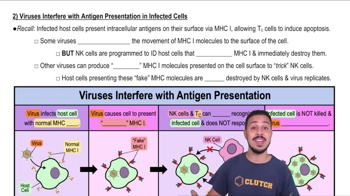
    Display of intracellular antigens on the cell surface via MHC class I molecules to alert immune cells.
  • MHC Class I Molecules

    Surface proteins that present intracellular antigens to cytotoxic T cells, enabling detection of infected cells.
  • Natural Killer Cells

    Immune cells that destroy host cells lacking MHC class I molecules or presenting abnormal surface markers.
  • Cytotoxic T Cells

    Immune cells that recognize antigens presented by MHC class I molecules and induce apoptosis in infected cells.
  • Antibody-dependent Enhancement

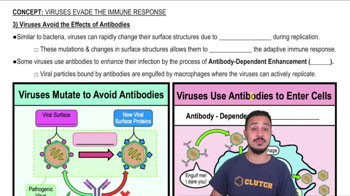
    A process where antibodies facilitate viral entry into macrophages, enhancing viral replication instead of neutralization.
  • Macrophages

    Phagocytic immune cells that can engulf pathogens; some viruses exploit them for replication via antibody-dependent enhancement.
  • Viral Surface Proteins

    Molecules on the viral envelope or capsid that interact with host cells and are targets for antibodies.
  • Mutation

    Genetic changes in viral genomes that alter surface proteins, enabling evasion of antibody recognition.
  • Immune Evasion

    Strategies used by viruses to avoid detection or elimination by the host immune system, ensuring successful replication.
  • Fake MHC Class I Molecules

    Viral mimics of host MHC class I proteins displayed on infected cells to deceive immune surveillance.