 Back
BackAdaptive Immunity: The Third Line of Defense
Study Guide - Smart Notes
 Tailored notes based on your materials, expanded with key definitions, examples, and context.
Adaptive Immunity: Overview
Definitions and General Principles
Adaptive immunity is the third line of defense in the immune system, providing protection after exposure to pathogens or viruses. It is characterized by its specificity, clonality, ability to distinguish between 'self' and 'non-self', creation of memory, and inducibility. The adaptive immune system consists of two main components: humoral and cellular immunity.
Specificity: Targets specific antigens.
Clonality: Generates clones of lymphocytes specific to an antigen.
Self vs. Non-self: Recognizes and responds only to foreign antigens.
Memory: Remembers previous encounters for faster response.
Inducibility: Activated only upon exposure to antigens.
Components of Adaptive Immunity
Humoral Immunity: B Cells and Antibodies
Humoral immunity is mediated by B cells, which originate from stem cells in the red bone marrow. B cells differentiate and migrate to lymphoid tissues such as the spleen and lymph nodes. Upon activation, B cells produce antibodies that specifically bind to antigens.
B Cell Formation: Stem cells differentiate into B cells, which migrate to lymphoid tissues.
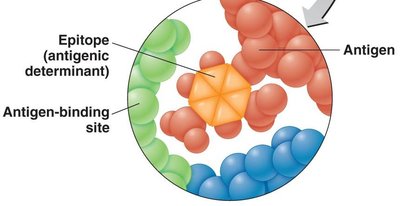
Antibody Production: B cells produce antibodies (immunoglobulins, Ig) that bind to epitopes on antigens.
Antibody Structure: Antibodies have variable (V) regions for antigen binding and constant (C) regions that determine antibody class. The Fc region interacts with other immune components.
Antibody Types and Functions
There are several classes of antibodies, each with distinct functions. The main types include IgG, IgM, IgA, IgE, and IgD.
Antibody Type | Known Functions |
|---|---|
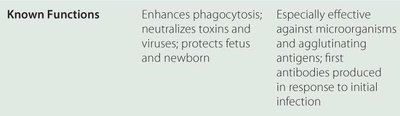
IgG | Enhances phagocytosis; neutralizes toxins and viruses; protects fetus and newborn |
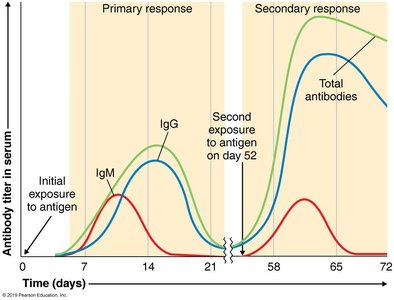
IgM | Especially effective against microorganisms and agglutinating antigens; first antibodies produced in response to initial infection |
IgA | Protects mucosal surfaces |
IgE | Involved in allergic responses and defense against parasites |
IgD | Functions mainly as a receptor on B cells |
Targets for Antibodies: Antigens and Epitopes
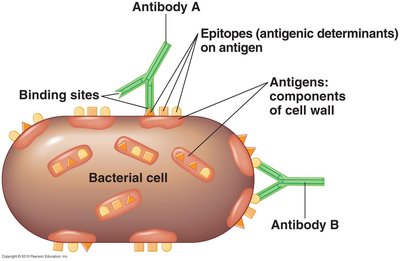
Antigens are molecules found on the surface of pathogens, such as components of capsules, cell walls, flagella, or fimbriae. Epitopes are specific regions on antigens recognized by antibodies. Antigens are typically proteins or polysaccharides and vary between species, strains, or toxins.
Haptens
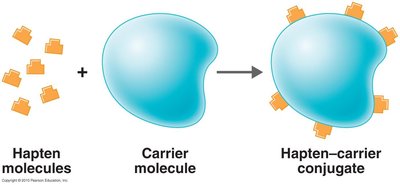
Haptens are small molecules that are not antigenic unless attached to a carrier molecule. Once exposed, antibodies can bind to haptens independently of the carrier. Penicillin is an example of a hapten that binds to body proteins.
B Cell Differentiation and Clonal Deletion
B cell differentiation ensures a variety of B cell receptors (BCRs) and prevents responsiveness to self-antigens. Clonal deletion removes B cells that recognize self-antigens, preventing autoimmunity.
T-Dependent B Cell Activation (Clonal Expansion)
T-dependent activation requires help from T helper cells. B cells bind to antigens, internalize them, and present antigen fragments on MHC proteins. T helper cells recognize the MHC-antigen complex and produce cytokines to activate B cells, leading to clonal expansion and formation of plasma and memory cells.
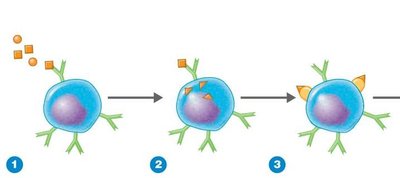
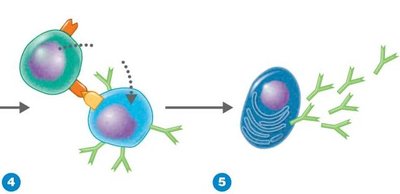
T-Independent B Cell Activation
Some antigens, such as polysaccharides and lipopolysaccharides, can directly stimulate B cells without T cell help. This results in a weaker response and no memory cell formation.
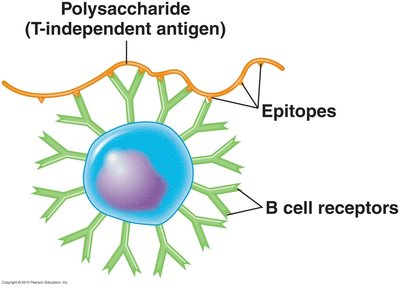
Antigen-Antibody Binding Results
Antibody binding to antigens leads to several outcomes:
Agglutination: Pathogens are bound together, restricting movement and facilitating phagocytosis.
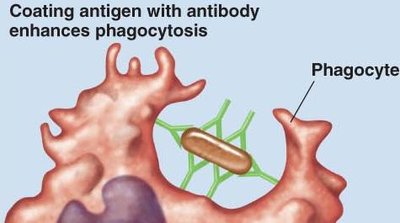
Opsonization: Antibody coating enhances phagocyte binding and intake.
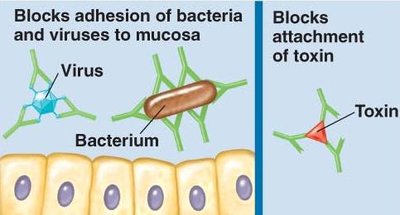
Neutralization: Antibodies block pathogen or toxin attachment to host cells.
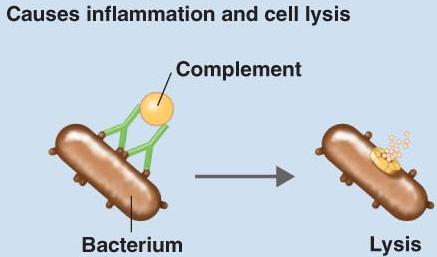
Activation of Complement: Complement proteins bind to antibody-coated pathogens, causing lysis and attracting immune cells.
Antibody-dependent cell-mediated cytotoxicity: Immune cells such as eosinophils, macrophages, and natural killer cells are attracted to antibody-coated targets, leading to destruction.
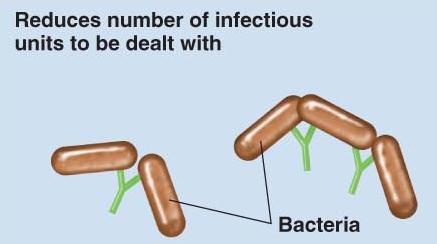
Cellular Immunity: T Cells
Formation and Differentiation of T Cells
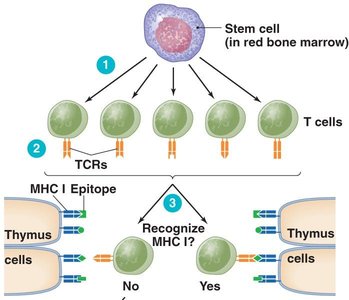
T cells are responsible for cell-mediated immunity, combating infected cells and cancer. They originate from stem cells in the bone marrow and migrate to the thymus for differentiation. T cells then move to lymph nodes and spleen.
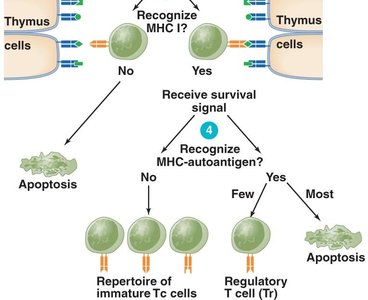
T Cell Thymic Selection
Thymic selection ensures T cells recognize MHC proteins and distinguish self from non-self. T cells that fail to recognize MHC or recognize self-antigens undergo apoptosis or become regulatory T cells.
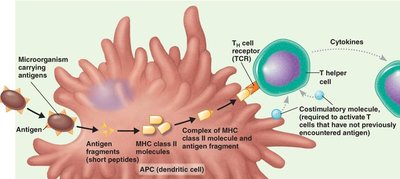
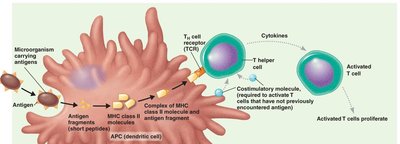
T Cell Activation
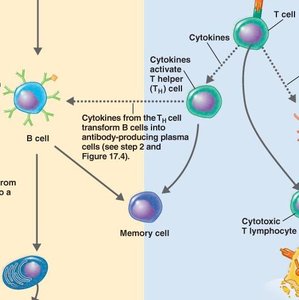
Pathogens are engulfed by phagocytic cells, which present antigen fragments on MHC proteins. T helper cells bind to the MHC-antigen complex and are activated by costimulatory molecules. Activated T helper cells produce cytokines, stimulate other immune cells, and can become memory cells or activate B cells.
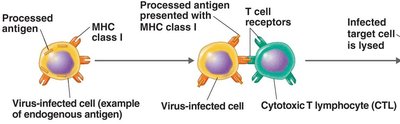
Killing of Virus-Infected Cells
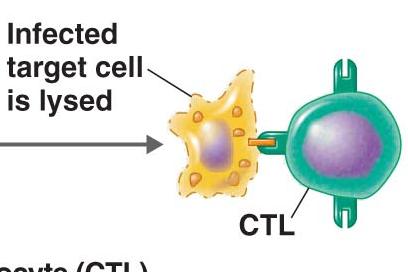
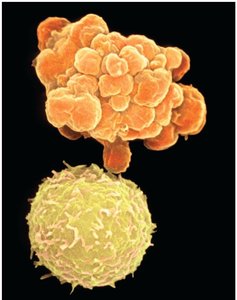
Cytotoxic T cells (CTLs) are activated by T helper cells and recognize virus-infected or cancerous cells presenting abnormal antigens on MHC proteins. CTLs induce apoptosis in infected cells using perforin and granzymes.
Immunological Memory
Memory B Cells and Secondary Response
Memory B cells are formed during the primary immune response and enable a faster, stronger response upon subsequent exposures to the same antigen. The secondary response is characterized by higher IgG production.
Types of Adaptive Immunity
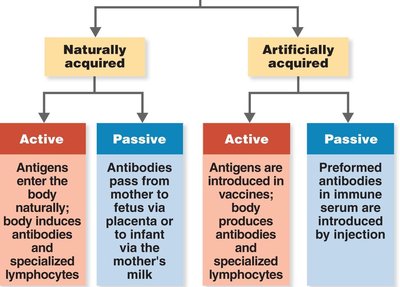
Adaptive immunity can be acquired naturally or artificially, and can be active or passive:
Naturally acquired active: Antigens enter the body naturally, inducing antibodies and specialized lymphocytes.
Naturally acquired passive: Antibodies pass from mother to fetus or infant.
Artificially acquired active: Antigens introduced in vaccines stimulate antibody production.
Artificially acquired passive: Preformed antibodies are introduced by injection.
Application Problems
Apoptosis and Dendritic Cells
Apoptosis: Cells undergoing apoptosis are those that fail thymic selection or are targeted by cytotoxic T cells.
Induction of Apoptosis: Cytotoxic T cells induce apoptosis via perforin and granzymes.
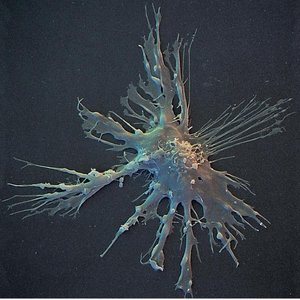
Dendritic Cells: Dendritic cells are antigen-presenting cells that play a crucial role in adaptive immunity by presenting antigens to T cells. Without dendritic cells, the immune system would have impaired activation of T cells and reduced adaptive responses.
Additional info: The notes have been expanded with academic context to ensure completeness and clarity for microbiology students.
