 Back
Antimicrobial Agents, Viral Pathogens, and Epidemiology: Core Concepts in Microbiology
Study Guide - Smart Notes
 Tailored notes based on your materials, expanded with key definitions, examples, and context.
Controlling Microbial Growth in the Body: Antimicrobial Agents
Introduction to Antimicrobial Agents
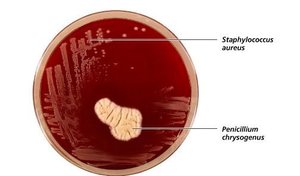
Antimicrobial agents are chemicals used to treat diseases caused by microorganisms. These agents are a subset of chemotherapeutic drugs, which are chemicals that affect the physiology of an organism to combat disease. The development of antimicrobial agents revolutionized medicine, allowing for the effective treatment of bacterial, fungal, and some viral infections.
Antibiotics: Naturally produced by microorganisms (e.g., fungi, bacteria) to inhibit or kill other microbes.
Synthetics: Completely synthesized in the laboratory.
Semisynthetics: Chemically modified derivatives of natural antibiotics.
Key historical figures: Paul Ehrlich ("magic bullets" and chemotherapy), Alexander Fleming (discovery of penicillin), Gerhard Domagk (sulfanilamide).
Mechanisms of Antimicrobial Action
Antimicrobial drugs work by exploiting differences between microbial cells and host cells, a concept known as selective toxicity. The main mechanisms include:
Inhibition of Cell Wall Synthesis: Drugs like penicillin and vancomycin interfere with peptidoglycan formation, weakening bacterial cell walls.
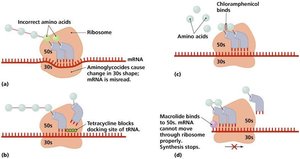
Inhibition of Protein Synthesis: Target differences in ribosomal structure between prokaryotes and eukaryotes (e.g., tetracyclines, chloramphenicol).
Disruption of Cytoplasmic Membranes: Drugs like amphotericin B bind to membrane sterols, forming pores and causing cell lysis.
Inhibition of Metabolic Pathways: Sulfonamides act as structural analogs, blocking essential bacterial metabolic reactions.
Inhibition of Nucleic Acid Synthesis: Quinolones and nucleotide analogs disrupt DNA/RNA synthesis.
Prevention of Virus Attachment: Attachment antagonists block viral entry into host cells (still under development).
Spectrum of Action
The spectrum of action refers to the range of pathogens a drug affects:
Narrow-spectrum drugs: Target specific types of pathogens (e.g., penicillin for Gram-positive bacteria).
Broad-spectrum drugs: Affect a wide variety of organisms but may disrupt normal microbiota, leading to secondary infections.
Testing Antimicrobial Efficacy
Determining the effectiveness of antimicrobial agents is crucial for clinical use. Common tests include:
Diffusion Susceptibility Test (Kirby-Bauer): Measures zones of inhibition around drug-impregnated discs on agar plates.
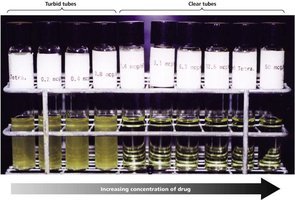
Minimum Inhibitory Concentration (MIC) Test: Identifies the lowest concentration of drug that inhibits visible growth.
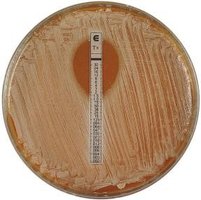
Etest: Combines MIC and diffusion methods using a gradient strip.
Minimum Bactericidal Concentration (MBC) Test: Determines the lowest concentration that kills the organism.
Routes of Administration
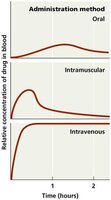
The method of drug delivery affects its concentration and efficacy at the site of infection:
Topical: For surface infections.
Oral: Convenient but may result in lower concentrations at the infection site.
Intramuscular (IM): Faster absorption than oral.
Intravenous (IV): Rapid and high drug levels in the blood.
Safety and Side Effects
Antimicrobial agents can cause adverse effects:
Toxicity: Damage to organs or developing fetus.
Allergies: Can trigger severe reactions, including anaphylactic shock.
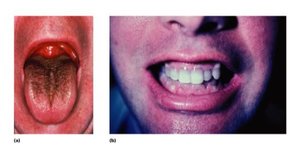
Disruption of Normal Microbiota: May lead to secondary infections (e.g., Candida albicans).
Resistance to Antimicrobial Drugs
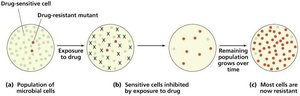
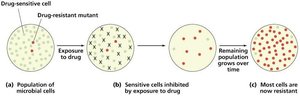
Microbial resistance is a growing concern. Resistance can develop through genetic mutations or acquisition of resistance genes (e.g., R-plasmids). Mechanisms include:
Enzyme production that destroys or inactivates the drug.
Prevention of drug entry into the cell.
Alteration of drug targets.
Efflux pumps that expel the drug.
Retarding Resistance
Use drugs at effective concentrations and for appropriate durations.
Combine drugs for synergistic effects.
Limit use to necessary cases.
Develop new drugs and modify existing ones (second- and third-generation drugs).
Characterizing and Classifying Viruses, Viroids, and Prions
Introduction to Acellular Pathogens
Viruses, viroids, and prions are acellular infectious agents that rely on host cells for replication. They are responsible for a wide range of diseases in humans, animals, plants, and bacteria.
Characteristics of Viruses
Acellular: Not composed of cells; obligate intracellular parasites.
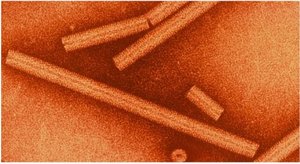
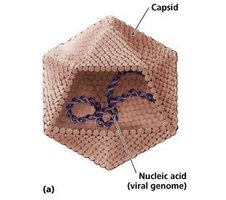
Structure: Consist of a nucleic acid core (DNA or RNA) surrounded by a protein coat (capsid). Some have an additional envelope derived from host membranes.
Virion: The extracellular, infectious form of a virus.
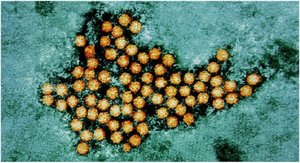
Genetic Material of Viruses
Can be DNA or RNA, single- or double-stranded.
Genome size is typically much smaller than that of host cells.
Hosts and Specificity
Viruses are often host-specific, infecting only certain cell types or species.
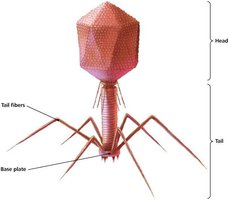
Bacteriophages infect bacteria; plant viruses infect plants; animal viruses infect animals.
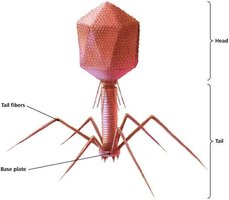
Sizes and Morphology
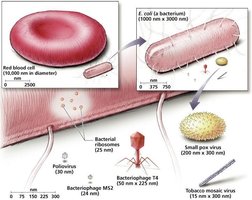
Viruses are much smaller than bacteria and eukaryotic cells.
Capsid shapes: helical, polyhedral, complex.
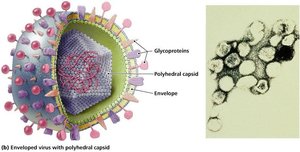
The Viral Envelope
Enveloped viruses have a phospholipid membrane with embedded proteins (spikes).
Envelope is acquired during viral release from the host cell.
Classification of Viruses
Based on nucleic acid type, capsid shape, presence/absence of envelope, and size.
Viral Replication
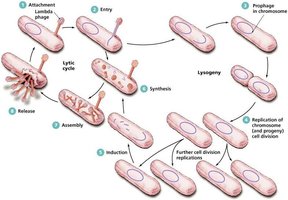
Viruses replicate by hijacking host cell machinery. The lytic cycle includes:
Attachment
Entry
Synthesis
Assembly
Release
Lysogeny
Some bacteriophages can integrate their genome into the host DNA, becoming a prophage. This allows the virus to remain dormant until induced to enter the lytic cycle.
Replication of Animal Viruses
Attachment via glycoprotein spikes.
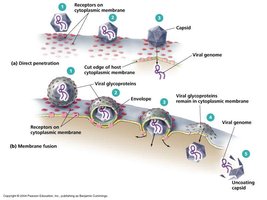
Entry by direct penetration, membrane fusion, or endocytosis.
Genome replication depends on nucleic acid type (DNA or RNA, positive or negative sense).
Assembly and release by budding (enveloped viruses) or lysis/exocytosis (naked viruses).
Latency and Cancer
Latent viruses (proviruses) can remain dormant in host cells.
Some viruses can activate oncogenes, leading to cancer (neoplasia, tumors, metastasis).
Viroids and Prions
Viroids: Infectious RNA molecules, no capsid, infect plants.
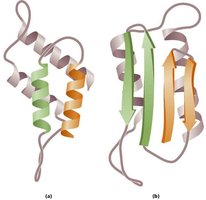
Prions: Infectious proteins causing spongiform encephalopathies (e.g., mad cow disease). Prions convert normal proteins into abnormal beta-pleated sheets.
Infection, Infectious Diseases, and Epidemiology
Symbiotic Relationships
Microbes interact with hosts in various symbiotic relationships:
Mutualism: Both benefit (e.g., Escherichia coli in the colon).
Commensalism: One benefits, the other is unaffected.
Parasitism: One benefits at the expense of the other (most pathogens).
Normal Microbiota
Resident microbiota: Permanent, stable populations on body surfaces.
Transient microbiota: Temporary, outcompeted by resident flora.
Normal flora can become opportunistic pathogens if the host is compromised or if they enter new body sites.
Reservoirs of Infection
Animal reservoirs: Zoonoses are diseases transmitted from animals to humans.
Human carriers: Infected individuals without symptoms can transmit disease.
Nonliving reservoirs: Soil, water, and food.
Portals of Entry
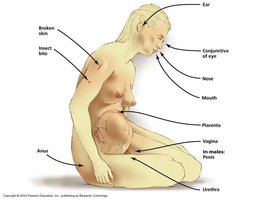
Skin (breaks, hair follicles, sweat glands)
Mucous membranes (respiratory, gastrointestinal, urogenital tracts)
Placenta
Parenteral route (direct deposition into tissues)
Adhesion and Biofilms
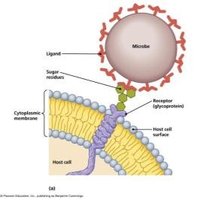
Pathogens use adhesion factors (ligands) to attach to host cells.
Biofilms are communities of microbes attached to surfaces (e.g., dental plaque).
Manifestations and Causation of Disease
Symptoms: Subjective effects (e.g., pain).
Signs: Objective, measurable effects (e.g., fever).
Syndrome: Group of signs and symptoms characteristic of a disease.
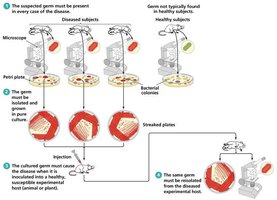
Etiology: Study of disease causation; Koch's postulates are used to identify causative agents.
Virulence Factors
Adhesion factors
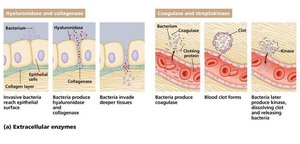
Extracellular enzymes: Hyaluronidase, collagenase, coagulase, kinases
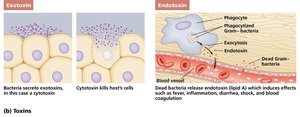
Toxins: Exotoxins (cytotoxins, neurotoxins, enterotoxins), endotoxins (Lipid A)
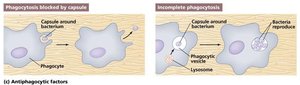
Antiphagocytic factors: Capsules, M proteins, leukocidins
Stages of Infectious Disease
Incubation period
Prodromal period
Illness
Decline
Convalescence
Transmission of Infectious Diseases
Contact transmission: Direct, indirect (fomites), droplet
Vehicle transmission: Airborne, waterborne, foodborne
Vector transmission: Biological (e.g., mosquitoes), mechanical (e.g., flies)
Classification and Epidemiology of Infectious Diseases
Acute: Rapid onset, short duration
Chronic: Slow onset, long duration
Latent: Inactive for long periods
Communicable: Spread from host to host
Non-communicable: Not spread between hosts
Epidemiology
Incidence: Number of new cases in a given time period
Prevalence: Total number of cases in a given time period
Endemic: Constantly present in a population
Sporadic: Occurs occasionally
Epidemic: Sudden increase in cases
Pandemic: Epidemic on multiple continents
Nosocomial (Healthcare-Associated) Infections
Exogenous: From the healthcare environment
Endogenous: From the patient's own microbiota
Iatrogenic: Resulting from medical procedures
Superinfections: Due to disruption of normal microbiota
Control and Public Health
Hand washing, sterile technique, and proper disposal of sharps are essential for infection control.
Public health agencies monitor, report, and educate to prevent and control disease outbreaks.
