Back

Antimicrobial Agents, Viral Pathogens, and Epidemiology: Core Concepts in Microbiology

Study Guide - Learn with Videos

Curated lessons matched to your uploaded material – learn every topic step by step.

Introduction to Controlling Microbial Growth

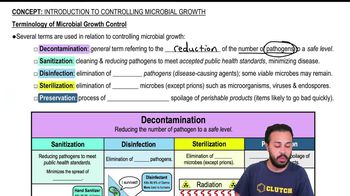
  • Terminology of Microbial Growth Control
    07:36
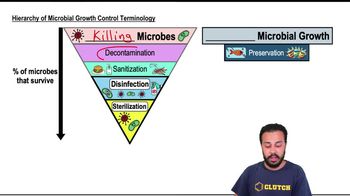
  • Hierarchy of Microbial Growth Control Terminology
    03:09
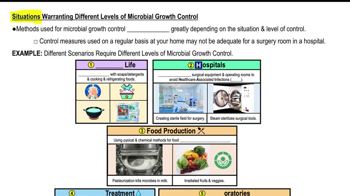
  • Situations Warranting Different Levels of Microbial Growth Control
    05:58

Selecting a Method to Control Microbial Growth

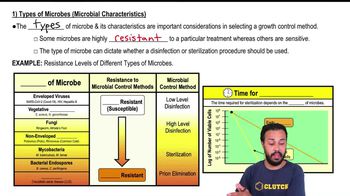
  • Types of Microbes (Microbial Characteristics)
    07:24
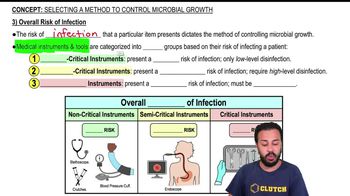
  • Overall Risk of Infection
    04:52
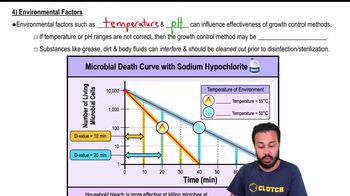
  • Environmental Factors
    04:18

Physical Methods to Control Microbial Growth

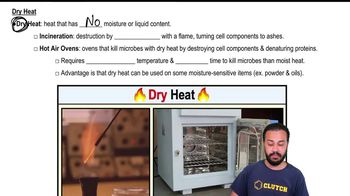
  • Dry Heat
    02:58
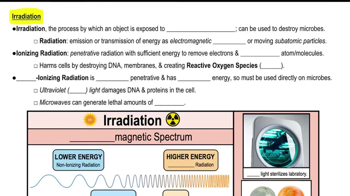
  • Irradiation
    06:18
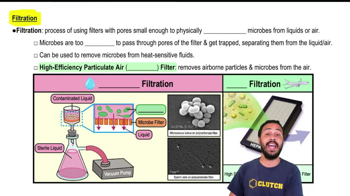
  • Filtration
    04:29

Chemical Methods to Control Microbial Growth

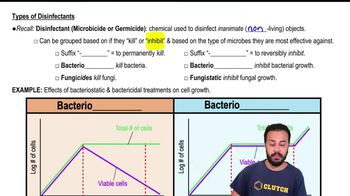
  • Types of Disinfectants
    05:21
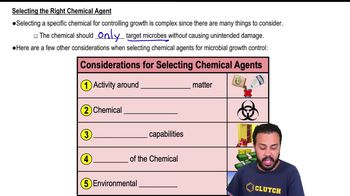
  • Selecting the Right Chemical Agent
    04:52
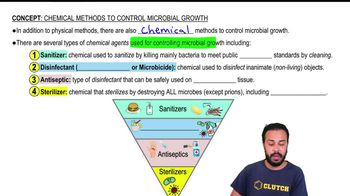
  • Chemical Methods to Control Microbial Growth
    03:58

Chemicals Used to Control Microbial Growth

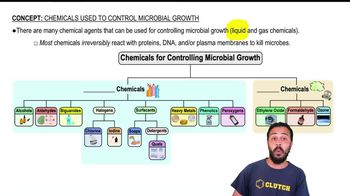
  • Chemicals Used to Control Microbial Growth
    02:29
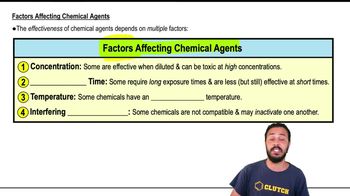
  • Factors Affecting Chemical Agents
    03:17

Introduction to Antimicrobial Drugs

  • Guided course
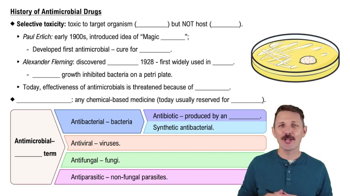
    History of Antimicrobial Drugs
    05:33

How Antimicrobial Drugs Work

  • Guided course
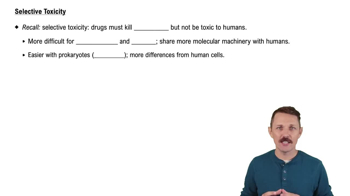
    Selective Toxicity
    05:27
  • Guided course
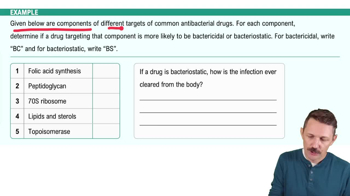
    How Antimicrobial Drugs Work Example 1
    03:28

Broad vs Narrow Spectrum Drugs

  • Guided course
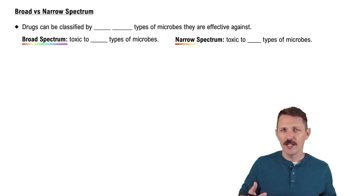
    Broad vs Narrow Spectrum
    04:05

Tests to Guide Antimicrobial Use

  • Guided course
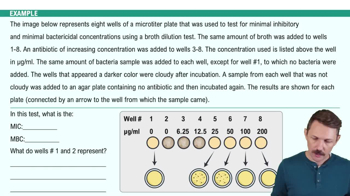
    Tests to Guide Antimicrobial Use Example 1
    04:17
  • Guided course
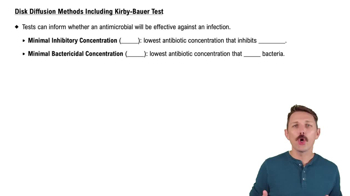
    Disk Diffusion Methods Including Kirby-Bauer Test
    06:04
  • Guided course
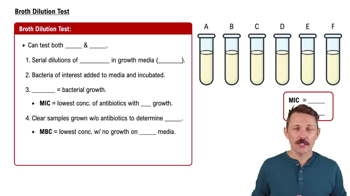
    Broth Dilution Test
    04:53

Antimicrobial Resistance

  • Guided course
    Types of Resistance Mechanisms
    05:04
  • Guided course
    Spread of Antibiotic Resistance
    04:45
  • Guided course
    Antibiotic Resistance
    03:45

Introduction to Viruses

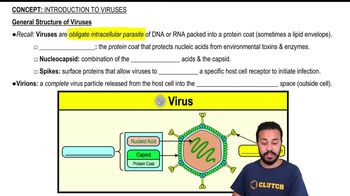
  • General Structure of Viruses
    04:47
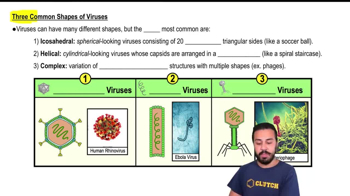
  • Three Common Shapes of Viruses
    03:19
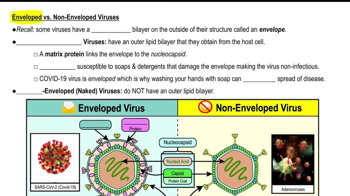
  • Enveloped vs. Non-Enveloped Viruses
    05:09

Introduction to Bacteriophage Infections

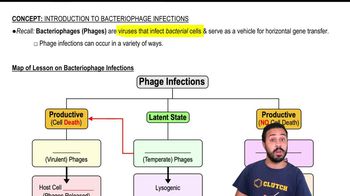
  • Map of Lesson on Bacteriophage Infections
    03:52
  • Productive vs. Latent State Infections
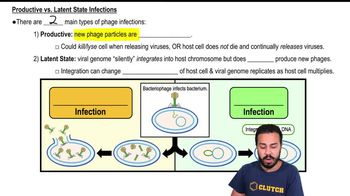
    04:09
  • Lytic & Lysogenic Bacteriophages
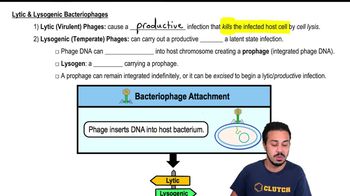
    04:34

Bacteriophage: Lytic Phage Infections

  • Bacteriophage: Lytic Phage Infections
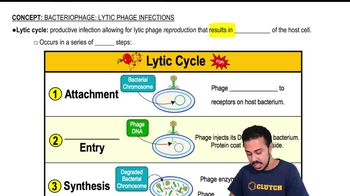
    04:58

Bacteriophage: Lysogenic Phage Infections

  • Bacteriophage: Lysogenic Phage Infections
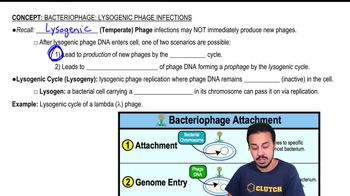
    05:27
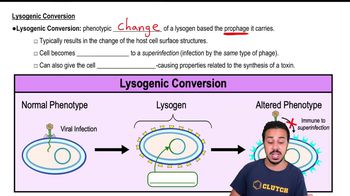
  • Lysogenic Conversion
    03:37

Introduction to Animal Virus Infections

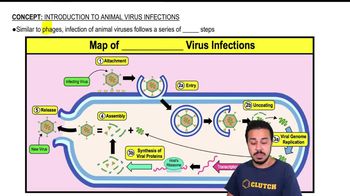
  • Introduction to Animal Virus Infections
    02:33
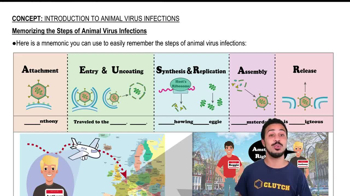
  • Memorizing the Steps of Animal Virus Infections
    01:40

Animal Viruses: 1. Attachment to the Host Cell

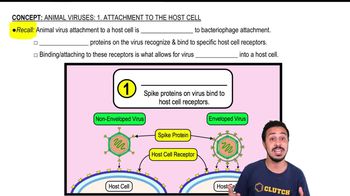
  • Animal Viruses: 1. Attachment to the Host Cell
    03:12

Animal Viruses: 2. Entry & Uncoating in the Host Cell

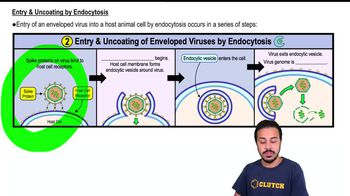
  • Entry & Uncoating by Endocytosis
    02:29
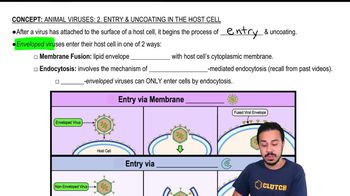
  • Animal Viruses: 2. Entry & Uncoating in the Host Cell
    04:29
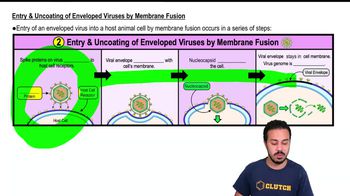
  • Entry & Uncoating of Enveloped Viruses by Membrane Fusion
    02:59

Animal Viruses: 3. Synthesis & Replication

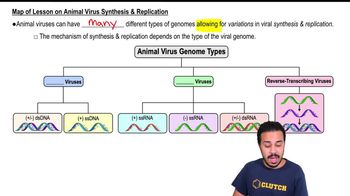
  • Map of Lesson on Animal Virus Synthesis & Replication
    03:34
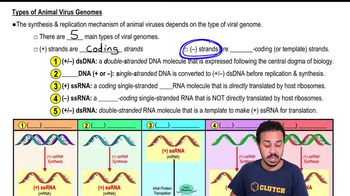
  • Types of RNA Virus Genomes
    10:46
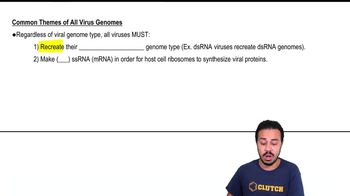
  • Common Themes of All Virus Genomes
    02:58

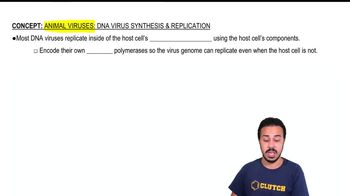
Animal Viruses: DNA Virus Synthesis & Replication

  • Animal Viruses: DNA Virus Synthesis & Replication
    01:10
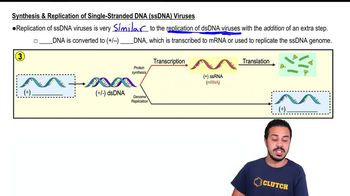
  • Replication of Single-Stranded DNA (ssDNA) Viruses
    04:12
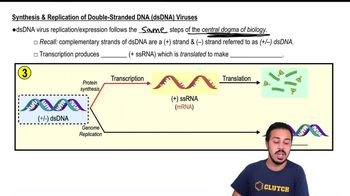
  • Replication of Double-Stranded DNA (dsDNA) Viruses
    03:58

Animal Viruses: RNA Virus Synthesis & Replication

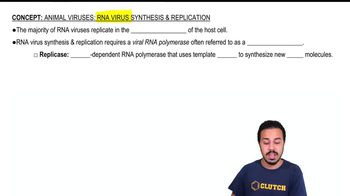
  • Animal Viruses: RNA Virus Synthesis & Replication
    01:30
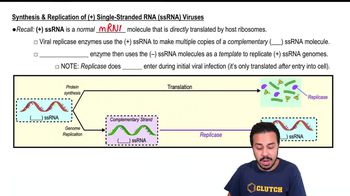
  • Replication of (+) Single Strand RNA (ssRNA) Viruses
    03:52
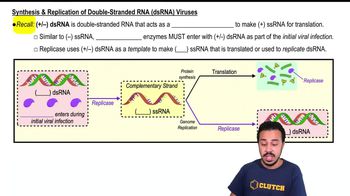
  • Replication of Double-Stranded RNA Viruses
    04:28

Animal Viruses: 4. Assembly Inside Host Cell

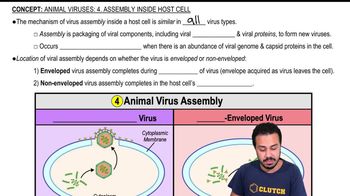
  • Animal Viruses: 4. Assembly Inside Host Cell
    04:26

Animal Viruses: 5. Release from Host Cell

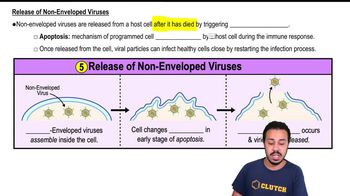
  • Release of Non-Enveloped Viruses
    02:34
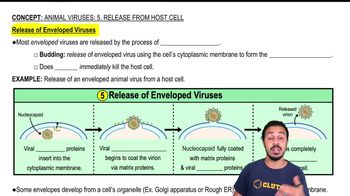
  • Release of Enveloped Viruses
    05:08

Bacteriophage: Lysogenic Phage Infections

  • Bacteriophage: Lysogenic Phage Infections
    05:27
  • Lysogenic Conversion
    03:37