 Back
BackChapter 19_ImmuneDisorders-AIDS-Cancer
Study Guide - Smart Notes
 Tailored notes based on your materials, expanded with key definitions, examples, and context.
Autoimmune Diseases
Mechanisms and Types of Autoimmunity
Autoimmune diseases occur when the immune system loses self-tolerance and attacks the body's own tissues. Self-tolerance is the ability of the immune system to distinguish between self and nonself antigens. Autoimmunity can be classified based on the immune mechanisms involved:
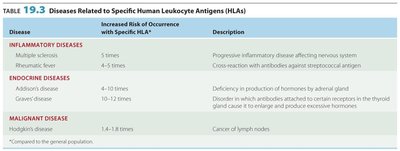
Cytotoxic Autoimmune Diseases: Antibodies react with cell-surface antigens, leading to cell damage. Example: Graves’ disease, where abnormal antibodies stimulate the thyroid to produce excess hormones.
Immune Complex Autoimmune Diseases: Immune complexes (antigen-antibody complexes) deposit in tissues, causing inflammation and tissue damage. Examples: Rheumatoid arthritis (joints), systemic lupus erythematosus (kidney glomeruli).
Cell-Mediated Autoimmune Diseases: T cells directly attack body tissues. Examples: Insulin-dependent diabetes mellitus (T cell destruction of pancreatic β-cells), psoriasis, and psoriatic arthritis.
Examples: Arthritis and Autoimmunity
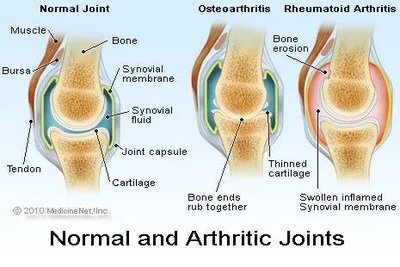
Osteoarthritis: Degenerative joint disease caused by wear and tear; cartilage wears out, leading to bone thickening and restricted movement.
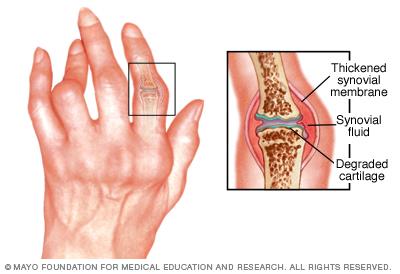
Rheumatoid Arthritis: An autoimmune disease where B cells produce antibodies against proteins in the synovial membrane, causing inflammation, pain, and joint deformities. The disease is intermittent but progressive.
Risk Factors for Rheumatoid Arthritis
Sex (more common in females)
Age (typically 40-60 years)
Family history
Cigarette smoking
Exposure to asbestos or silica
Obesity (especially in women under 55)
Co-occurrence with anxiety/depression
Reactions Related to the Human Leukocyte Antigen (HLA) Complex
HLA Complex and Disease Susceptibility
The Human Leukocyte Antigen (HLA) complex refers to the major histocompatibility complex (MHC) genes in humans, which encode cell-surface proteins essential for immune recognition. HLA typing is crucial for:
Identifying disease susceptibility (certain HLAs are linked to increased risk of specific diseases)
Transplant surgery (matching donor and recipient tissues)
Transplantation and HLA Matching
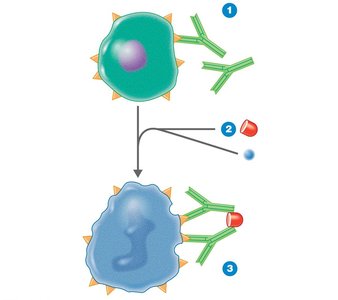
Transplants are matched by HLA typing (using antisera, monoclonal antibodies, or PCR) and ABO blood type. If the immune system recognizes the transplant as non-self, rejection occurs. Immunosuppressive drugs are used to prevent rejection.
Types of Grafts
Autograft: Tissue from the same individual
Isograft: Tissue from an identical twin
Allograft: Tissue from another person
Xenotransplantation: Tissue from a different species (risk of hyperacute rejection)
Graft-versus-host (GVH) disease can occur when transplanted bone marrow contains immunocompetent cells that attack the recipient.
Immunosuppression in Transplantation
Drugs such as cyclosporine, tacrolimus, sirolimus, mycophenolate, and basiliximab are used to suppress immune responses and prevent transplant rejection.
Privileged Sites and Tissues
Some sites (e.g., cornea, heart valves) are considered immune privileged, meaning transplants in these locations are less likely to be rejected due to limited immune surveillance.
Stem Cells in Transplantation
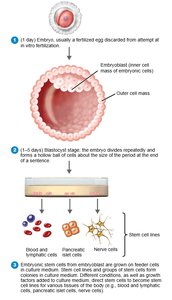
Stem cells are undifferentiated cells capable of self-renewal and differentiation into specialized cell types. They are used in regenerative medicine and transplantation.
Embryonic stem cells (ESCs): Pluripotent, can generate all cell types; harvested from blastocysts.
Adult stem cells: Found in differentiated tissues; can be reprogrammed to become induced pluripotent stem cells.
The Immune System and Cancer
Immune Surveillance and Cancer
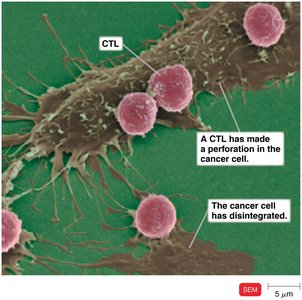
The immune system can recognize and destroy cancer cells through immune surveillance. Cancer cells express tumor-associated antigens, which are targeted by cytotoxic T lymphocytes (CTLs) and macrophages. However, some tumors evade immune detection by lacking recognizable antigens, reproducing rapidly, or becoming vascularized.
Immunotherapy for Cancer
Use of immune system components (e.g., monoclonal antibodies, vaccines) to treat or prevent cancer.
Examples: Herceptin® for breast cancer, immunotoxins targeting tumor cells, vaccines for HPV and hepatitis B.
Endotoxins (Coley's toxins) can stimulate immune responses against tumors.
Immunodeficiencies
Types of Immunodeficiencies
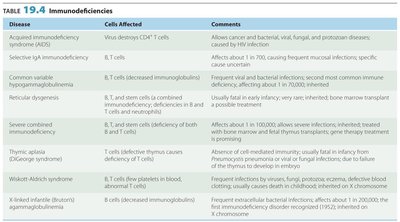
Congenital (Primary): Genetic defects leading to missing or defective immune components (e.g., IgA deficiency, severe combined immunodeficiency).
Acquired (Secondary): Develop during life due to infections (e.g., HIV), drugs, or cancers.
Acquired Immunodeficiency Syndrome (AIDS) and HIV
Origin and Transmission of HIV
HIV (Human Immunodeficiency Virus) is a retrovirus that infects CD4+ T helper cells, leading to immune deficiency. It originated from Simian Immunodeficiency Virus (SIV) in primates and crossed into humans in Africa. HIV is transmitted through sexual contact, blood, breast milk, and from mother to child.
Structure and Life Cycle of HIV
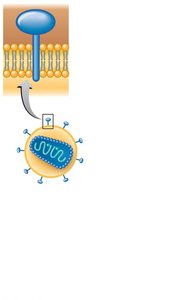
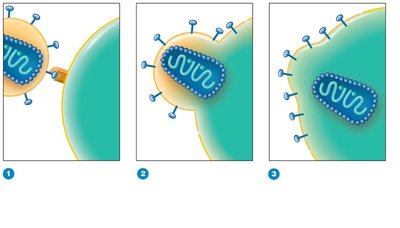
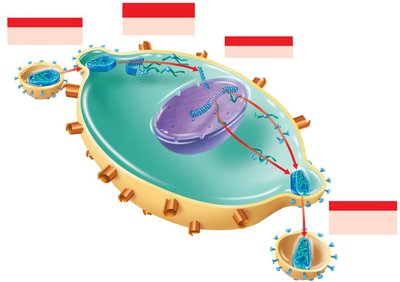
HIV is an enveloped virus with single-stranded RNA, reverse transcriptase, and glycoproteins (gp120 and gp41) on its surface.
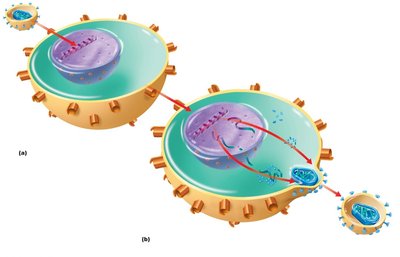
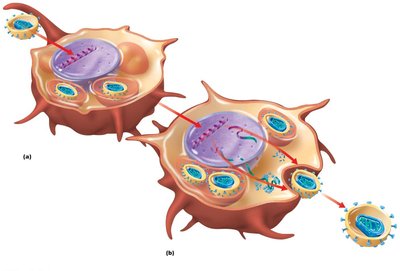
Attachment: gp120 binds to CD4 receptor and coreceptors (CCR5 or CXCR4) on host cells.
Fusion and Entry: gp41 facilitates fusion; viral RNA enters the cell.
Reverse Transcription: Viral RNA is converted to DNA and integrated into the host genome as a provirus.
Active Infection: New viruses are produced and bud from the cell.
Latent Infection: Provirus remains dormant in host DNA.
Subtypes and Progression of HIV Infection
HIV-1: Most common, related to viruses in chimpanzees and gorillas.
HIV-2: Less common, related to viruses in monkeys, less pathogenic.
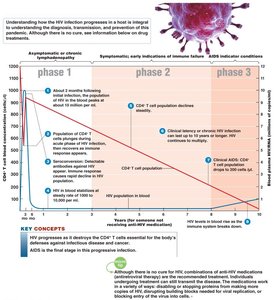
HIV infection progresses through three phases:
Phase 1: Asymptomatic or lymphadenopathy; high viral load.
Phase 2: Decline in CD4+ T cells; mild symptoms (e.g., persistent Candida infections).
Phase 3 (AIDS): CD4+ T cell count below 200 cells/μl; severe opportunistic infections and cancers.

Diagnosis and Epidemiology of HIV/AIDS
Diagnosis: Detection of antibodies (ELISA), viral RNA (APTIMA), or viral proteins (Western blotting). Plasma viral load measured by PCR.
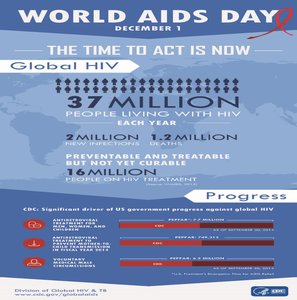
Epidemiology: Over 35 million people infected worldwide; majority of cases in sub-Saharan Africa. Main transmission routes are heterosexual contact, injection drug use, and mother-to-child transmission.
Prevention and Treatment of HIV/AIDS
Prevention: Safe sex practices, sterile needles, screening blood products.
Treatment: Antiretroviral therapy (ART) includes fusion/entry inhibitors (e.g., enfuvirtide, maraviroc), reverse transcriptase inhibitors, integrase inhibitors, and protease inhibitors.
No effective vaccine is currently available due to high mutation rates and lack of natural immunity models.
Additional info:
Some individuals are resistant to HIV infection due to genetic mutations (e.g., CCR5 gene deletion).
Long-term nonprogressors and elite controllers can suppress HIV without progressing to AIDS.
