 Back
Biochemistry Basics for Microbiology: Atoms, Bonds, and Biomolecules
Study Guide - Smart Notes
 Tailored notes based on your materials, expanded with key definitions, examples, and context.
Biochemistry Basics
Introduction
Biochemistry is foundational to understanding microbiology, as all living organisms are composed of matter, which in turn is made up of atoms. This chapter explores the structure of atoms, chemical bonds, the nature of acids and bases, and the major classes of biomolecules essential for life.
Atoms and Isotopes
Structure of Atoms
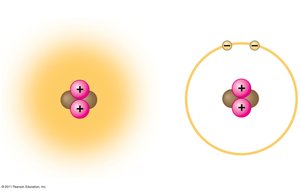
Atoms are the smallest units of elements and consist of three types of subatomic particles: protons (positive charge), neutrons (no charge), and electrons (negative charge). The nucleus contains protons and neutrons, while electrons orbit in shells around the nucleus.
Protons: Define the element and its atomic number.
Neutrons: Contribute to atomic mass; number can vary (isotopes).
Electrons: Occupy electron shells; involved in chemical bonding.
Atomic Number and Mass
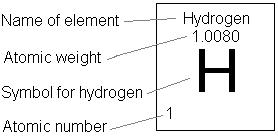
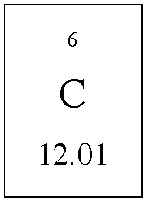
The atomic number is the number of protons in an atom, while the atomic mass is the sum of protons and neutrons. Electrons have negligible mass.
Isotopes
Isotopes are atoms of the same element with different numbers of neutrons. They are denoted by their atomic mass (e.g., Carbon-12, Carbon-14).
Electron Shells and Valence Electrons
Electron Shells
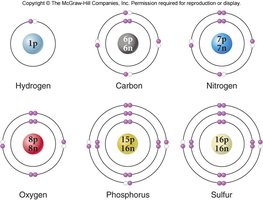
Electrons are arranged in shells around the nucleus. The first shell holds up to 2 electrons, and subsequent shells hold up to 8 electrons each. The arrangement of electrons determines the chemical reactivity of the atom.
Valence Electrons
Valence electrons are those in the outermost shell and are crucial for chemical bonding. Atoms with full valence shells are chemically inert, while those with incomplete shells are reactive.
Chemical Bonds
Covalent Bonds
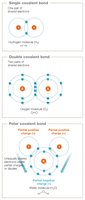
Covalent bonds involve the sharing of electron pairs between atoms. They can be nonpolar (equal sharing) or polar (unequal sharing, leading to partial charges).
Nonpolar covalent bond: Electrons shared equally (e.g., O2).
Polar covalent bond: Electrons shared unequally (e.g., H2O).
Electronegativity
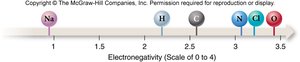
Electronegativity is an atom's ability to attract electrons in a bond. Higher electronegativity means stronger pull on electrons.
Ionic Bonds
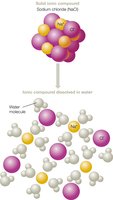
Ionic bonds form when electrons are transferred from one atom to another, resulting in charged ions (cations and anions). Ionic compounds dissociate in water to form electrolytes.
Hydrogen Bonds and Van der Waals Interactions
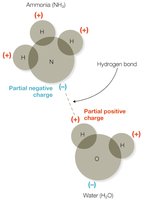
Hydrogen bonds are weak attractions between a hydrogen atom and an electronegative atom (e.g., O or N). Van der Waals interactions are weak, temporary attractions due to transient dipoles.
Acids, Bases, and Salts
Definitions and Properties
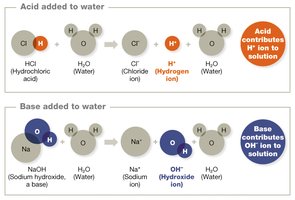
Acids: Donate H+ ions in solution.
Bases: Donate OH- ions or accept H+ ions.
Salts: Formed from the reaction of acids and bases.
pH Scale
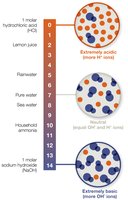
pH measures the concentration of H+ ions in a solution: . The scale ranges from 0 (acidic) to 14 (basic), with 7 being neutral.
Water and Solubility
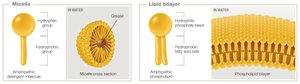
Hydrophilic, Hydrophobic, and Amphipathic Molecules
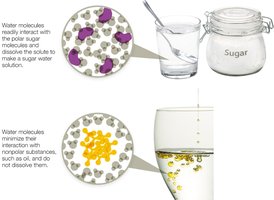
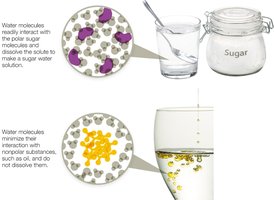
Hydrophilic: Water-loving; dissolve easily in water.
Hydrophobic: Water-fearing; do not dissolve in water.
Amphipathic: Contain both hydrophilic and hydrophobic regions (e.g., phospholipids).
Chemical Reactions
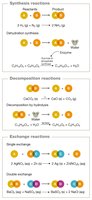
Types of Reactions
Synthesis reactions: Build larger molecules from smaller ones (A + B → AB).
Decomposition reactions: Break down molecules into smaller components (AB → A + B).
Exchange reactions: Swap components between molecules (AB + CD → AD + CB).
Energy in Reactions
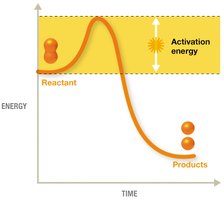
Activation energy is the minimum energy required to initiate a reaction. Catalysts (including enzymes) lower activation energy, increasing reaction rates.
Organic Molecules and Functional Groups
Organic vs. Inorganic Molecules
Organic molecules contain both carbon and hydrogen. Inorganic molecules may contain carbon but lack associated hydrogen (e.g., CO2).
Functional Groups
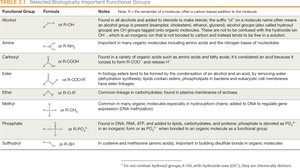
Functional groups are specific groups of atoms within molecules that determine their chemical properties and reactions.
Functional Group | Formula | Notes |
|---|---|---|
Alcohol | -OH | Found in sugars and alcohols; increases solubility in water. |
Amino | -NH2 | Found in amino acids and proteins; acts as a base. |
Carboxyl | -COOH | Found in organic acids; acts as an acid. |
Phosphate | -PO4 | Found in nucleic acids and ATP; involved in energy transfer. |
Biomolecules
Major Classes of Biomolecules
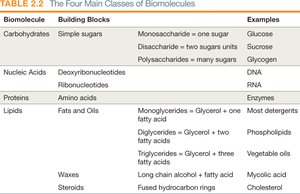
There are four main classes of biomolecules: carbohydrates, lipids, nucleic acids, and proteins. Each class has unique building blocks and functions.
Biomolecule | Building Blocks | Examples |
|---|---|---|
Carbohydrates | Monosaccharides | Glucose, Sucrose, Glycogen |
Nucleic Acids | Nucleotides | DNA, RNA |
Proteins | Amino acids | Enzymes |
Lipids | Fatty acids, Glycerol | Phospholipids, Cholesterol |
Carbohydrates
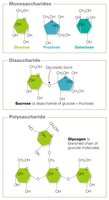
Carbohydrates are organic molecules composed of one or more sugar monomers. They serve as energy sources, structural components, and are involved in cell communication.
Monosaccharides: Single sugars (e.g., glucose).
Disaccharides: Two monosaccharides linked by glycosidic bonds (e.g., sucrose).
Polysaccharides: Long chains of monosaccharides (e.g., glycogen, cellulose).
Lipids
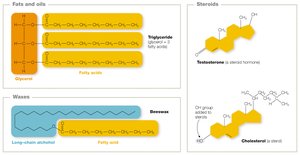
Lipids are hydrophobic or amphipathic molecules including fats, oils, waxes, and steroids. They function as energy sources, structural components of membranes, and signaling molecules.
Fats and oils: Glycerol + fatty acids (mono-, di-, triglycerides).
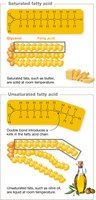
Saturated fatty acids: No double bonds; solid at room temperature.
Unsaturated fatty acids: One or more double bonds; liquid at room temperature.
Steroids: Four fused hydrocarbon rings (e.g., cholesterol).
Nucleic Acids
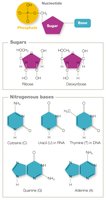
Nucleic acids (DNA and RNA) are polymers of nucleotides, which consist of a five-carbon sugar, phosphate group(s), and a nitrogenous base. DNA stores genetic information; RNA is involved in protein synthesis and can have catalytic functions.
DNA: Double-stranded, contains deoxyribose, bases A, T, C, G.
RNA: Single-stranded, contains ribose, bases A, U, C, G.
Proteins
Proteins are polymers of amino acids linked by peptide bonds. They perform a vast array of functions including catalysis (enzymes), structural support, transport, and cell signaling.
Primary structure: Linear sequence of amino acids.
Secondary structure: Alpha-helices and beta-pleated sheets.
Tertiary structure: 3D folding due to interactions among side chains.
Quaternary structure: Association of multiple polypeptide chains.
Summary Table: The Four Main Classes of Biomolecules
Biomolecule | Building Blocks | Examples |
|---|---|---|
Carbohydrates | Monosaccharides | Glucose, Sucrose, Glycogen |
Nucleic Acids | Nucleotides | DNA, RNA |
Proteins | Amino acids | Enzymes |
Lipids | Fatty acids, Glycerol | Phospholipids, Cholesterol |
Practice Questions
Name the four large biological molecules.
Which may contain carbon? Which may contain hydrogen? Which may contain nitrogen? Which may contain sulfur?
Cell membranes are mainly composed of phospholipids.
If E. coli are grown in a medium containing radioactive 16N, the 16N would most likely be found in the E. coli’s proteins.
If E. coli were grown in a medium containing radioactive 32P, the 32P would be found in ATP, DNA, and the plasma membrane, but not in carbohydrates.
Which type of macromolecule is NOT considered a polymer? Lipid.
List the nucleotides of DNA: A, T, C, G. List the nucleotides of RNA: A, U, C, G.
List the three components of ATP: Adenine, ribose, 3 phosphate groups.
