 Back
BackBiotechnology and DNA Technology: Principles and Applications
Study Guide - Smart Notes
 Tailored notes based on your materials, expanded with key definitions, examples, and context.
Biotechnology and DNA Technology
Introduction to Biotechnology
Biotechnology is the use of microorganisms, cells, or cell components to make useful products. While traditional biotechnology includes the production of bread, yogurt, beer, and wine, modern biotechnology leverages DNA technology to produce antibiotics, vitamins, enzymes, human hormones, and more. Microbes serve as biological factories for these processes.
Biotechnology: Application of biological systems or organisms to technical and industrial processes.
Modern DNA technology: Enables the production of complex molecules such as human insulin and growth hormone.
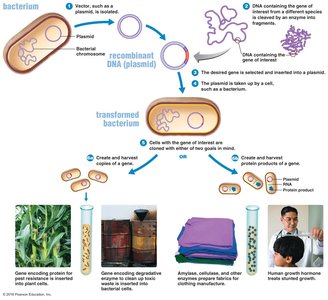
Recombinant DNA Technology
Principles of Recombinant DNA
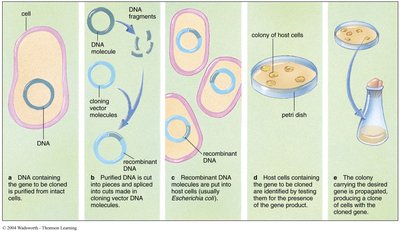
Recombinant DNA (rDNA) technology involves the insertion or modification of genes to produce desired proteins. This process is possible because DNA from all organisms shares the same chemical structure, allowing genes to be transferred between species.
Recombinant DNA: DNA molecules formed by laboratory methods of genetic recombination to bring together genetic material from multiple sources.
Artificial selection: The intentional reproduction of individuals in a population that have desirable traits.
Vectors: Self-replicating DNA molecules (e.g., plasmids, viruses) used to transport foreign DNA into a cell.
Common host: Escherichia coli (E. coli) is widely used for gene cloning and protein production.
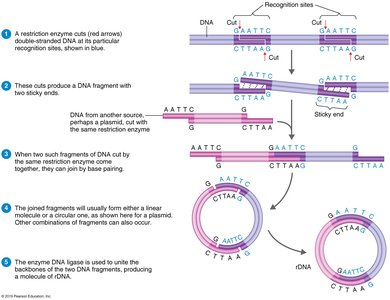
Tools of Biotechnology
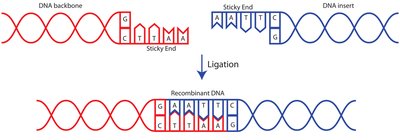
Restriction enzymes (restriction endonucleases) are molecular scissors that cut DNA at specific sequences, producing fragments with 'sticky ends.' These ends can be joined with other DNA fragments cut by the same enzyme. DNA ligase is used to seal the fragments, forming recombinant DNA molecules.
Restriction enzymes: Enzymes that recognize and cut DNA at specific sequences.
Sticky ends: Single-stranded overhangs created by restriction enzymes that facilitate the joining of DNA fragments.
DNA ligase: Enzyme that joins DNA fragments by forming phosphodiester bonds.
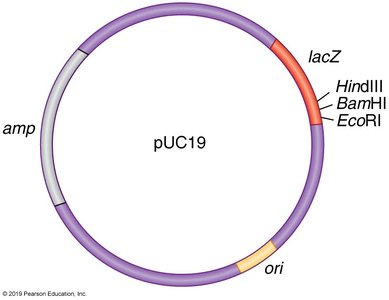
Plasmids and Vectors
Plasmids are circular DNA molecules used as vectors to carry foreign genes into host cells. They often contain selectable markers (e.g., antibiotic resistance genes) and multiple cloning sites for gene insertion.
ori: Origin of replication, necessary for plasmid replication in host cells.
amp: Ampicillin resistance gene, used for selection.
lacZ: Encodes β-galactosidase, used for blue/white screening.
Transformation and Cloning
Transformation is the process of introducing recombinant plasmids into host cells, typically E. coli. The host cells replicate the plasmid, producing many copies of the gene of interest. These cells can be used to produce the gene product or to isolate large quantities of the recombinant DNA.
Transformation: Uptake of foreign DNA by a cell from its environment.
Gene cloning: Production of multiple copies of a gene or DNA segment.
Polymerase Chain Reaction (PCR)
Principles and Components of PCR
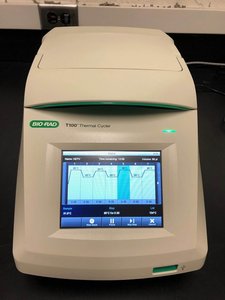
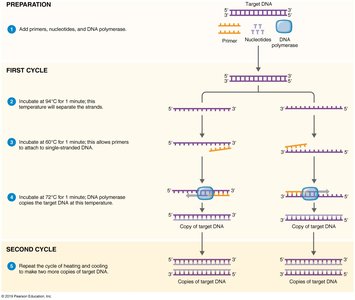
PCR is a technique used to amplify specific DNA regions from a small sample. It requires a DNA template, two primers flanking the region of interest, Taq polymerase (a heat-stable DNA polymerase), nucleotides, and a thermal cycler to control temperature changes.
DNA template: The DNA segment to be amplified.
Primers: Short DNA sequences that initiate DNA synthesis.
Taq polymerase: Enzyme from Thermus aquaticus that synthesizes DNA at high temperatures.
Thermal cycler: Machine that cycles through temperatures for denaturation, annealing, and extension.
Applications of PCR
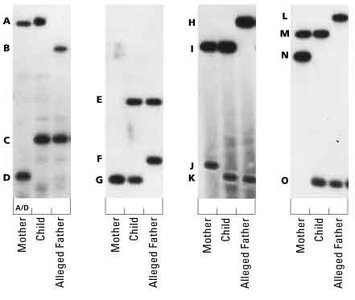
PCR is widely used in DNA testing, forensic science, medical diagnostics, and microbial detection. It allows for the amplification of specific DNA regions, which can then be analyzed by gel electrophoresis or sequencing.
DNA fingerprinting: Identification of individuals based on unique DNA patterns.
Pathogen detection: Identification of infectious agents in clinical samples.
Gene cloning: Amplification of genes for insertion into vectors.
Clinical Applications and Case Studies
Norovirus Outbreak Investigation
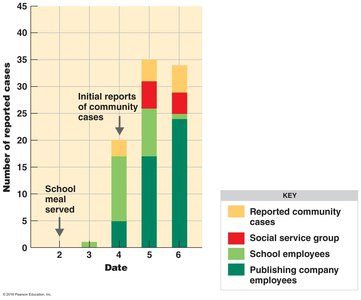
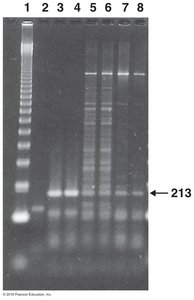
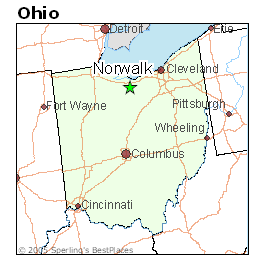
PCR and sequence analysis are used to trace the source of infectious disease outbreaks. In the case of norovirus, PCR confirmed infection in stool samples, and sequence identity linked the outbreak to a single food handler, leading to targeted public health interventions.
Norovirus: The most common cause of acute gastroenteritis outbreaks.
Sequence analysis: Comparison of DNA sequences to establish relationships between samples.
Methods for Inserting Foreign DNA into Cells
Techniques for DNA Introduction
Several methods are used to introduce foreign DNA into cells, including transformation, electroporation, gene gun, and microinjection. Each method is suited to different cell types and experimental needs.
Transformation: Uptake of naked DNA from the environment.
Electroporation: Use of electrical pulses to create pores in cell membranes for DNA entry.
Gene gun: Delivery of DNA-coated particles into cells using high-velocity propulsion.
Microinjection: Direct injection of DNA into cells using a fine needle.
Synthetic DNA
Artificial Gene Synthesis
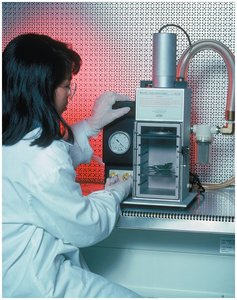
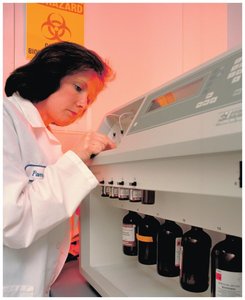
Synthetic DNA is produced using automated DNA synthesizers, allowing researchers to design and build genes with specific sequences. These synthetic genes can be assembled from shorter fragments and used in various applications, including gene cloning and protein production.
DNA synthesis machines: Devices that chemically assemble DNA strands based on input sequences.
Applications: Creation of custom genes for research, biotechnology, and medicine.
Production of Gene Products
Expression Systems
Different host organisms are used to express recombinant genes, each with advantages and disadvantages. E. coli is easy to grow but may produce endotoxins and does not secrete proteins efficiently. Yeast (Saccharomyces cerevisiae), plant cells, and mammalian cells are also used, especially for eukaryotic proteins.
E. coli: Fast growth, well-understood genetics, but may require cell lysis to recover products.
Yeast: Suitable for eukaryotic gene expression, secretes proteins.
Plant cells: Large-scale, low-cost production of complex molecules.
Mammalian cells: Best for human proteins, but harder to grow and maintain.
Therapeutic and Agricultural Applications
Medical Uses
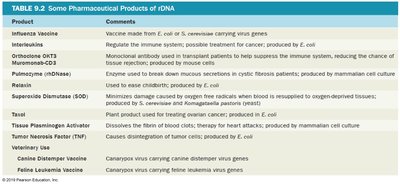
Recombinant DNA technology enables the production of human enzymes, hormones (e.g., insulin, human growth hormone), and vaccines. Gene therapy aims to replace defective genes, and DNA vaccines use genetically engineered viruses to induce immunity.
Subunit vaccines: Contain only parts of the pathogen, produced in genetically modified organisms.
Gene therapy: Experimental technique to treat or prevent disease by inserting genes into a patient's cells.
Agricultural Uses
Genetically modified crops can express traits such as insect resistance (e.g., Bt toxin), herbicide resistance, and delayed ripening. Antisense DNA technology is used to suppress unwanted gene expression, improving crop quality and shelf life.
Bacillus thuringiensis (Bt) toxin: Insecticidal protein expressed in transgenic plants.
Herbicide resistance: Introduction of genes conferring resistance to herbicides.
Antisense DNA: Binds to mRNA to block translation and suppress gene expression.
Genomics and Bioinformatics
Human Genome Project and Beyond
The Human Genome Project sequenced the entire human genome, providing a foundation for understanding biology and disease. Shotgun sequencing and bioinformatics are essential for analyzing the vast amounts of data generated. The Human Proteome Project aims to map all human proteins.
Bioinformatics: The use of computers to analyze biological data, such as DNA sequences.
NCBI: National Center for Biotechnology Information, a major resource for genetic data.
Safety and Ethical Issues
Considerations in DNA Technology
The use of recombinant DNA technology raises important safety and ethical questions. These include preventing accidental release of genetically modified organisms, ensuring food and environmental safety, protecting genetic privacy, and addressing the potential misuse of biotechnology.
Environmental safety: Preventing the spread of genetically modified organisms.
Genetic privacy: Controlling access to individuals' genetic information.
Ethical concerns: Issues related to gene editing, bioweapons, and genetically modified humans.
