 Back
BackBiotechnology and Recombinant DNA: Principles and Applications
Study Guide - Smart Notes
 Tailored notes based on your materials, expanded with key definitions, examples, and context.
Biotechnology and Recombinant DNA
Introduction to Biotechnology
Biotechnology involves the use of microorganisms, cells, or cell components to produce useful products such as foods, antibiotics, vitamins, and enzymes. Recombinant DNA (rDNA) technology, also known as genetic engineering, refers to the insertion or modification of genes to produce desired proteins or traits.
Biotechnology: Application of biological systems for industrial and other purposes.
Recombinant DNA technology: Manipulation of genetic material to alter the characteristics of an organism.
Applications: Production of pharmaceuticals, genetically modified organisms, and industrial enzymes.
Selection and Mutation
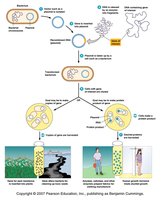
Selection and mutation are fundamental techniques in biotechnology for obtaining organisms with desirable traits.
Selection: Involves culturing naturally occurring microbes that produce a desired product.
Mutation: Use of mutagens to induce genetic changes, potentially resulting in beneficial traits.
Site-directed mutagenesis: Specific alteration of DNA sequences to change protein function.
Process: Select and culture microbes with the desired mutation for further use.
Restriction Enzymes
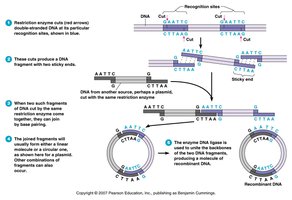
Restriction enzymes are essential tools in molecular biology, allowing precise cutting of DNA at specific sequences.
Function: Recognize and cut DNA at specific nucleotide sequences (typically 4, 6, or 8 bases long).
Biological role: Protect bacteria by destroying foreign (bacteriophage) DNA.
Host protection: Host DNA is protected from cleavage by methylation of cytosines.
Vectors
Vectors are DNA molecules used to transport foreign genetic material into another cell, where it can be replicated and/or expressed.
Types: Plasmids and viruses are commonly used as vectors.
Shuttle vectors: Can replicate in multiple host species, facilitating gene transfer among organisms.
Selection criteria: Based on host compatibility and the size of DNA to be cloned.
Polymerase Chain Reaction (PCR)
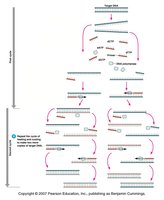
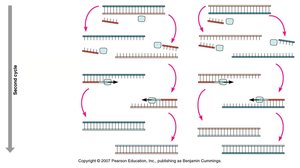
The polymerase chain reaction (PCR) is a technique used to amplify specific DNA sequences, making millions of copies from a small initial sample.
Applications: Cloning DNA, amplifying DNA for detection, sequencing, diagnosing genetic diseases, and detecting pathogens.
Process: Involves repeated cycles of denaturation, annealing, and extension.

Inserting Foreign DNA into Cells
Several methods are used to introduce foreign DNA into host cells, each with specific applications and advantages.
Transformation: Uptake of naked DNA by cells, often facilitated by CaCl2 and heat shock.
Electroporation: Application of an electric current to create temporary pores in cell membranes for DNA entry.
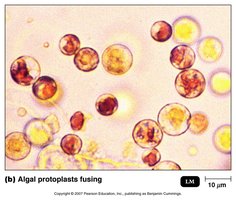
Protoplast fusion: Removal of cell walls allows fusion of different cells and exchange of genetic material.
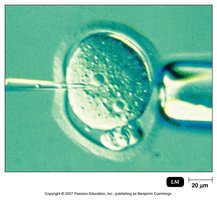
Microinjection: Direct injection of DNA into cells using a fine needle.
Gene gun: Physical delivery of DNA-coated particles into cells.
Obtaining DNA
DNA for genetic engineering can be obtained from various sources and prepared using different techniques.
Gene libraries: Collections of DNA fragments representing an organism's entire genome, stored in vectors such as plasmids or phages.
cDNA: Complementary DNA synthesized from mRNA using reverse transcriptase, representing expressed genes.
Synthetic DNA: Artificially created DNA sequences using automated synthesizers.
Use of E. coli in Biotechnology
Escherichia coli is a widely used host organism in biotechnology due to its well-characterized genetics and ease of cultivation.
Advantages: Rapid growth, known genome, and established genetic tools.
Considerations: Endotoxins in the outer membrane must be removed from products; cell lysis is required to extract products.
Therapeutic Applications
Biotechnology enables the development of new therapies and diagnostic tools.
Subunit vaccines: Use of nonpathogenic viruses carrying genes for pathogen antigens to stimulate immunity.
Gene therapy: Replacement of defective or missing genes to treat genetic disorders.
Human Genome Project: Sequencing of all human DNA to identify genes and their functions.
Human Proteome Project: Identification and characterization of all human proteins for diagnostics and treatments.
Scientific Applications
Recombinant DNA technology has revolutionized scientific research and forensic science.
Understanding DNA: Enables sequencing and analysis of genomes from various organisms.
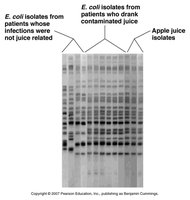
DNA fingerprinting: Identification of individuals based on unique DNA patterns, used in forensics and epidemiology.
Safety Issues and Ethics
The use of recombinant DNA technology raises important safety and ethical considerations.
Containment: Preventing accidental release of genetically modified organisms (GMOs).
Food safety: Ensuring GM crops are safe for consumption and the environment.
Privacy: Determining who has access to an individual's genetic information.
Additional info: This guide covers core concepts from Chapter 9 - Biotechnology & DNA Technology, including definitions, methods, applications, and ethical considerations relevant to microbiology students.
