 Back
Cell Structure and Cell Theory Study Guidance (A&P I Lab)
Study Guide - Smart Notes
 Tailored notes based on your materials, expanded with key definitions, examples, and context.
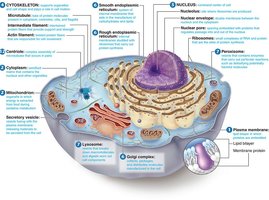
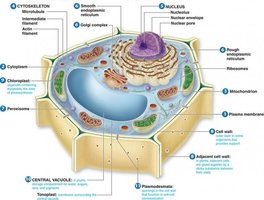
Q1. Describe what you see as differences between the animal cell and plant cell. What structures are different between the two that allow you to tell the difference between the two?
Background
Topic: Cell Structure and Classification
This question tests your understanding of the structural differences between plant and animal cells, which is fundamental to cell biology and microbiology. Recognizing these differences helps you identify cell types and understand their functions.
Key Terms and Concepts:
Cell wall: A rigid structure found in plant cells, absent in animal cells.
Central vacuole: Large storage organelle in plant cells.
Chloroplast: Organelle for photosynthesis, present in plant cells.
Lysosome: Organelle for digestion, more common in animal cells.
Plasma membrane: Surrounds all cells, but plant cells also have a cell wall.
Nucleus: Present in both, but location and shape may vary.
Step-by-Step Guidance
Examine diagrams or slides of both cell types. Identify the cell wall in plant cells, which is absent in animal cells.
Look for chloroplasts in plant cells, which are responsible for photosynthesis. Animal cells do not have chloroplasts.
Observe the central vacuole in plant cells, which is much larger than any vacuole found in animal cells.
Check for lysosomes, which are more prominent in animal cells and are involved in digestion.
Compare the overall shape: plant cells are often more rectangular due to the cell wall, while animal cells are more rounded.
Try solving on your own before revealing the answer!
Final Answer:
Plant cells have a cell wall, chloroplasts, and a large central vacuole, while animal cells lack these structures. Animal cells have lysosomes and are typically rounder in shape. These differences allow you to distinguish between the two cell types.
Q2. Drugs such as Penicillin are cell wall synthesis inhibitors. How would this affect bacterial cells? Would human cells be affected by the antibiotic? Why or why not?
Background
Topic: Antibiotics and Cell Structure
This question tests your understanding of how antibiotics target specific cellular structures and why they are effective against bacteria but not human cells.
Key Terms and Concepts:
Cell wall: A protective layer found in bacteria (prokaryotes), absent in human (animal) cells.
Penicillin: An antibiotic that inhibits the synthesis of bacterial cell walls.
Selective toxicity: The ability of a drug to target specific cells (bacteria) without harming others (human cells).
Step-by-Step Guidance
Recall that bacterial cells have a cell wall made of peptidoglycan, which is essential for their survival and shape.
Penicillin interferes with the synthesis of peptidoglycan, weakening the cell wall and causing bacterial cells to lyse (burst).
Human cells (animal cells) do not have a cell wall; they only have a plasma membrane.
Because penicillin targets cell wall synthesis, it does not affect human cells, demonstrating selective toxicity.
Try solving on your own before revealing the answer!
Final Answer:
Penicillin inhibits bacterial cell wall synthesis, causing bacteria to die. Human cells are not affected because they lack a cell wall, making penicillin selectively toxic to bacteria.
