 Back
BackCell Structure and Function: Bacterial External Structures
Study Guide - Smart Notes
 Tailored notes based on your materials, expanded with key definitions, examples, and context.
Cell Structure and Function
Introduction
This section explores the structural features of bacterial cells, focusing on their external components. Understanding these structures is essential for grasping how bacteria interact with their environment, evade host defenses, and contribute to disease processes.
Biological Characteristics of Bacteria
Bacterial Shapes and Sizes
Basic Shapes: Bacteria typically exhibit three main shapes: coccus (spherical), bacillus (rod-shaped), and spiral (including spirillum and spirochete forms).
Other Shapes: Some bacteria are vibrio (comma-shaped), coccobacillus (short rods), pleomorphic (variable shapes), or star-shaped.
Size: Bacteria generally range from 0.2–20 μm in diameter and less than 10 μm in length.
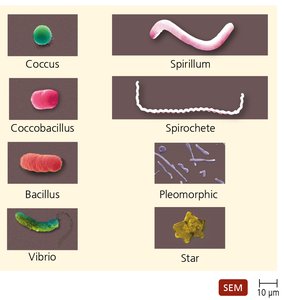
Bacteria: External Structures
Glycocalyces
The glycocalyx is a viscous, sticky layer external to the cell wall, playing a crucial role in bacterial survival and pathogenicity.
Types:
Capsule: Firmly attached to the cell wall; protects bacteria from host immune recognition.
Slime Layer: Loosely attached and water-soluble; facilitates attachment to surfaces.
Role in Virulence: Capsules prevent phagocytosis, while slime layers aid in surface adherence and biofilm formation.
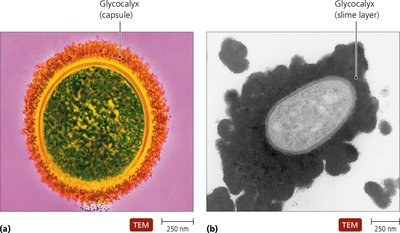
Bacteria: External Structures
Flagella
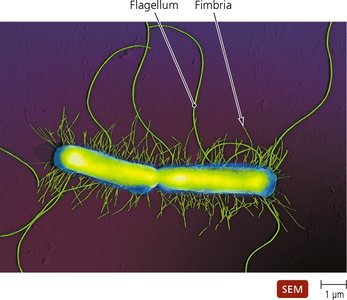
Flagella are long, whip-like appendages responsible for bacterial motility and chemotaxis. They are composed of the protein flagellin and are anchored in the cell wall and membrane.
Structure: Consists of a filament, hook, and basal body. The basal body differs between Gram-positive and Gram-negative bacteria.
Function: Enables movement (taxis), contributes to biofilm formation, and can trigger immune responses.
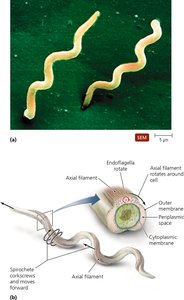
Distribution: Not all bacteria possess flagella. Spirochetes have specialized flagella called axial filaments.
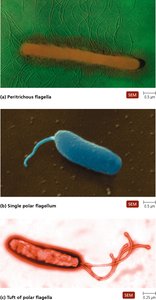
Flagellar Arrangements
Peritrichous: Flagella distributed over the entire cell surface.
Polar: Flagella located at one or both ends of the cell.
Tufts: Multiple flagella at one or both poles.
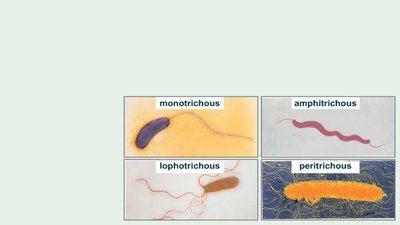
Axial Filaments
Axial filaments, also known as endoflagella, are unique to spirochetes. They are bundles of fibrils that wrap around the cell, enabling a corkscrew motion for movement and aiding in tissue penetration.
Function: Facilitates movement through viscous environments and may help evade immune detection.
Bacteria: External Structures
Fimbriae and Pili
Fimbriae: Short, bristle-like projections that help bacteria adhere to host tissues and form biofilms. They are more numerous and shorter than flagella.
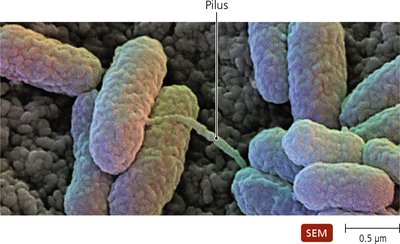
Pili (Conjugation Pili): Longer than fimbriae but shorter than flagella, pili are used for DNA transfer between cells (conjugation). Usually, only one or a few are present per cell.
Bacteria: External Structures
Biofilms
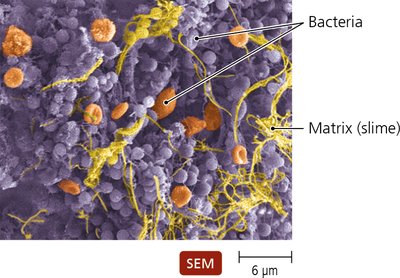
Biofilms are structured communities of bacteria adhering to surfaces and embedded in a self-produced matrix. They are highly resistant to antibiotics and immune responses.
Formation: Glycocalyces, fimbriae, and pili facilitate biofilm development.
Clinical Importance: Biofilms are implicated in two-thirds of human bacterial infections.
Quiz Review and Key Concepts
Summary of Key Points
Flagella are the main structures responsible for bacterial motility.
Capsules help bacteria evade immune defenses by preventing recognition and phagocytosis.
Pili are specialized fimbriae used for DNA transfer (conjugation) between bacterial cells.
Gram-negative bacteria have two pairs of rings in the flagellar basal body, while Gram-positive bacteria have one pair.

Table: Comparison of Bacterial External Structures
Structure | Main Function | Distribution |
|---|---|---|
Glycocalyx (Capsule/Slime Layer) | Protection, adherence, biofilm formation | Many bacteria |
Flagella | Motility, taxis | Some bacteria |
Fimbriae | Adherence, biofilm formation | Many bacteria |
Pili | DNA transfer (conjugation) | Some bacteria |
Axial Filaments | Motility (corkscrew motion) | Spirochetes |
Additional info:
Understanding bacterial external structures is fundamental for microbiology, as these features are targets for antibiotics, vaccines, and diagnostic tests.
Biofilm-associated infections are particularly challenging to treat due to their resistance to conventional therapies.
