 Back
BackCell Structure and Function in Microbiology
Study Guide - Smart Notes
 Tailored notes based on your materials, expanded with key definitions, examples, and context.
Cell Structure and Function
Properties of Living Things
All living organisms share several fundamental properties that distinguish them from non-living matter. These properties are essential for the maintenance and perpetuation of life.
Growth: Increase in size and/or number of cells.
Reproduction: Ability to produce new organisms, either sexually or asexually.
Response to Stimuli: Ability to sense and react to environmental changes.
Metabolism: Sum of all chemical reactions that provide energy and build cellular components.
Prokaryote vs Eukaryote
Key Differences
Cells are classified as either prokaryotic or eukaryotic based on structural and functional characteristics. This distinction is fundamental in microbiology.
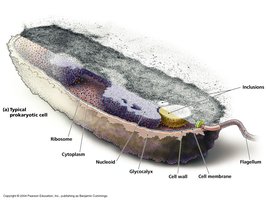
Prokaryote: No nucleus, no membrane-bound organelles, generally small and simple in structure. Includes Bacteria and Archaea.
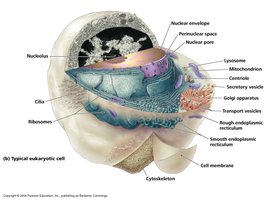
Eukaryote: Contains a nucleus and membrane-bound organelles, larger and more complex. Includes Protista, Fungi, Plants, and Animals.
Prokaryotic Cell Structure & Function
External Structures
Prokaryotic cells possess several external structures that contribute to their survival and interaction with the environment.
Glycocalyces: Gelatinous, sticky substances surrounding the cell. Two types: capsule (organized, firmly attached) and slime layer (loose, water-soluble).
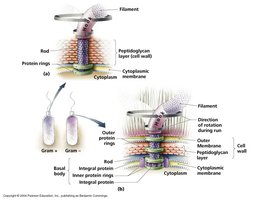
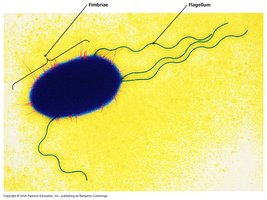
Flagella: Long, whip-like structures responsible for motility. They rotate to propel the cell and can move clockwise or counterclockwise.
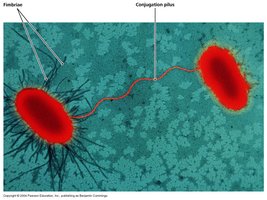
Fimbriae and Pili: Hair-like appendages for attachment and genetic exchange (pili).
Cell Wall
The cell wall provides structural support and shape to prokaryotic cells. It is absent in animal cells but present in most bacteria and archaea.
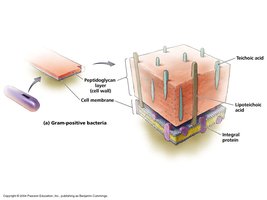
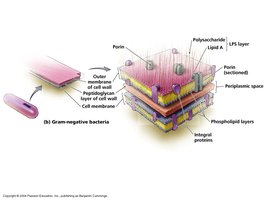
Bacterial Cell Walls: Composed mainly of peptidoglycan, a polymer of sugars (NAG and NAM) cross-linked by peptides.
Two Types: Gram-positive (thick peptidoglycan layer) and Gram-negative (thin peptidoglycan layer plus outer membrane).
Peptidoglycan Structure
NAG: N-acetylglucosamine
NAM: N-acetylmuramic acid
Chains of NAG and NAM are linked by tetrapeptide crossbridges.
Gram-Positive vs Gram-Negative Cell Walls
Gram-Positive: Thick peptidoglycan, teichoic acids, stains purple.
Gram-Negative: Thin peptidoglycan, outer membrane with lipopolysaccharide (LPS), stains pink, may impede drug treatment.
Archaeal Cell Walls
Composed of specialized polysaccharides and proteins (not peptidoglycan).
Gram-positive archaea stain purple; Gram-negative archaea stain pink.
Cytoplasmic (Cell) Membrane
The cytoplasmic membrane, also known as the phospholipid bilayer, controls the movement of substances into and out of the cell and is involved in energy production.
Composed of phospholipids and proteins (integral, peripheral, glycoproteins).
Described by the fluid mosaic model.
Maintains electrochemical gradients and cell integrity.
Transport Across the Membrane
Passive Processes: Do not require energy. Include diffusion, facilitated diffusion, and osmosis.
Active Processes: Require energy (ATP). Include active transport (uniport, antiport, symport) and group translocation (chemical modification during transport).
Osmosis and Tonicity
Isotonic Solution: No net movement of water.
Hypertonic Solution: Water moves out; cell shrinks.
Hypotonic Solution: Water moves in; cell may burst.
Cytoplasm of Prokaryotes
The cytoplasm contains the cell's internal components and is the site of many metabolic activities.
Cytosol: Liquid portion containing enzymes and nutrients.
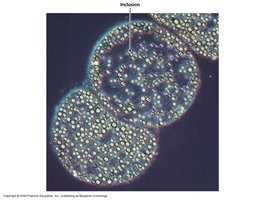
Inclusions: Storage granules for nutrients and other substances.
Ribosomes: Sites of protein synthesis (70S in prokaryotes).
Cytoskeleton: Maintains cell shape and aids in division.
Eukaryotic Cells
External Structures
Eukaryotic cells possess specialized external structures that facilitate movement, protection, and communication.
Glycocalyces: Aid in cell-to-cell recognition, communication, and adhesion (especially in animal cells).
Flagella: Composed of microtubules (tubulin); move in a wave-like (undulating) motion; usually found at one pole.
Cilia: Short, numerous projections that beat in coordination to move the cell or substances past the cell surface.
Eukaryotic Cell Walls
Eukaryotic cell walls, when present, are composed of various polysaccharides (e.g., cellulose in plants, chitin in fungi) and provide structural support and protection.
Summary Table: Prokaryotes vs Eukaryotes
Feature | Prokaryote | Eukaryote |
|---|---|---|
Nucleus | Absent | Present |
Membrane-bound Organelles | Absent | Present |
Size | Small (1-10 µm) | Larger (10-100 µm) |
Cell Wall Composition | Peptidoglycan (Bacteria), various (Archaea) | Polysaccharides (if present) |
Examples | Bacteria, Archaea | Protists, Fungi, Plants, Animals |
