 Back
Cell Structure and Function: Prokaryotic, Archaeal, and Eukaryotic Cells
Study Guide - Smart Notes
 Tailored notes based on your materials, expanded with key definitions, examples, and context.
Cell Structure and Function
Introduction to Cell Types
Cells are the fundamental units of life, and their structure and function vary across prokaryotic, archaeal, and eukaryotic domains. Understanding these differences is essential for microbiology students, as it forms the basis for studying microbial physiology, genetics, and classification.
Non-membranous Organelles: Ribosomes
Ribosomes are essential for protein synthesis in all cells. While both prokaryotic and eukaryotic cells possess ribosomes, their size and composition differ:
Prokaryotic ribosomes: 70S, composed of 50S and 30S subunits.
Eukaryotic ribosomes: 80S, composed of 60S and 40S subunits; found in cytosol and on endoplasmic reticulum membranes.
Function: Translate mRNA into polypeptides.
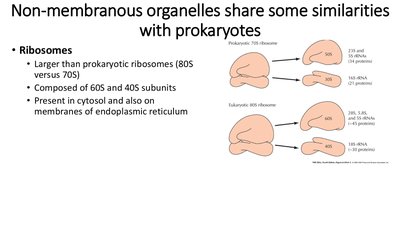
Example: Antibiotics such as tetracycline target prokaryotic ribosomes, inhibiting bacterial protein synthesis without affecting eukaryotic cells.
Membrane-bound Organelles: Mitochondria and Chloroplasts
Mitochondria and chloroplasts are unique eukaryotic organelles believed to have evolved from ancient prokaryotes via endosymbiosis. They are critical for energy production and photosynthesis, respectively.
Mitochondria:
Double membrane structure (phospholipid bilayer).
Site of ATP production via cellular respiration.
Matrix contains 70S ribosomes and circular DNA.
Chloroplasts:
Light-harvesting organelles in photosynthetic eukaryotes.
Double membrane structure.
Contain 70S ribosomes and DNA.
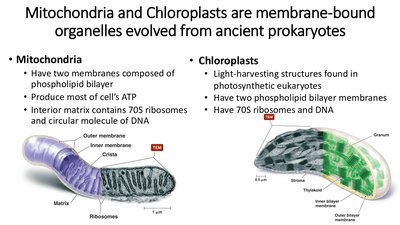
Example: The presence of 70S ribosomes and circular DNA in these organelles supports the endosymbiotic theory.
Non-membranous Organelles: Centrioles and Centrosome
Centrioles and the centrosome are important for cell division and organization of microtubules in eukaryotic cells. Prokaryotes, plants, algae, and most fungi lack centrioles.
Centrioles: Involved in mitosis, cytokinesis, and formation of flagella and cilia.
Composed of nine triplets of tubulin microtubules.
Centrosome: Region of cytoplasm where centrioles are found.
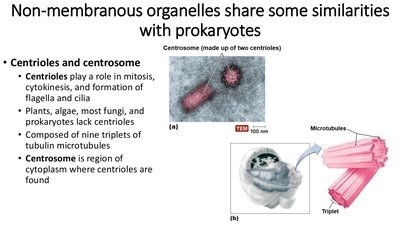
Example: Animal cells use centrioles to organize the mitotic spindle during cell division.
Comparative Table: Prokaryotic, Archaeal, and Eukaryotic Cells (Structural Features)
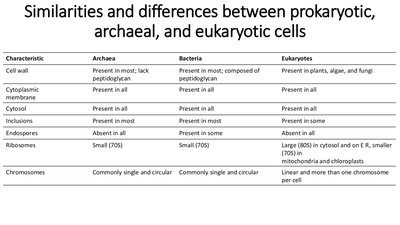
The following table summarizes key similarities and differences in cell structure among archaea, bacteria, and eukaryotes:
Characteristic | Archaea | Bacteria | Eukaryotes |
|---|---|---|---|
Cell wall | Present in most; lack peptidoglycan | Present in most; composed of peptidoglycan | Present in plants, algae, and fungi |
Cytoplasmic membrane | Present in all | Present in all | Present in all |
Cytosol | Present in all | Present in all | Present in all |
Inclusions | Present in most | Present in most | Present in some |
Endospores | Absent in all | Present in some | Absent in all |
Ribosomes | Small (70S) | Small (70S) | Large (80S) in cytosol and on ER, smaller (70S) in mitochondria and chloroplasts |
Chromosomes | Commonly single and circular | Commonly single and circular | Linear and more than one chromosome per cell |
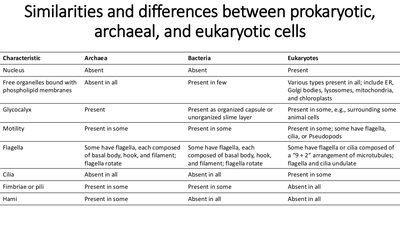
Comparative Table: Prokaryotic, Archaeal, and Eukaryotic Cells (Organelles and Motility)
This table highlights differences in organelles, motility structures, and surface features among cell types:
Characteristic | Archaea | Bacteria | Eukaryotes |
|---|---|---|---|
Nucleus | Absent | Absent | Present |
Free organelles bound with phospholipid membranes | Absent in all | Absent in all | Various types present (ER, Golgi, lysosomes, mitochondria, chloroplasts) |
Glycocalyx | Present | Present as capsule or slime layer | Present in some (surrounding animal cells) |
Motility | Present in some | Present in some | Present in some (flagella, cilia, pseudopods) |
Flagella | Some have flagella, each composed of basal body, hook, and filament; flagella rotate | Some have flagella, each composed of basal body, hook, and filament; flagella rotate | Some have flagella or cilia composed of microtubules; flagella undulate |
Cilia | Absent in all | Absent in all | Present in some |
Fimbriae or pili | Present in some | Present in some | Absent in all |
Hami | Present in some | Absent in all | Absent in all |
Summary
Understanding the structural and functional differences between prokaryotic, archaeal, and eukaryotic cells is fundamental in microbiology. These differences influence cellular processes, classification, and the response to antimicrobial agents.
