Back
BackCellular Inclusions and Endospores in Microbial Cells
Study Guide - Smart Notes
 Tailored notes based on your materials, expanded with key definitions, examples, and context.
Cellular Inclusions and Endospores
Cellular Inclusions: Storage and Survival Structures
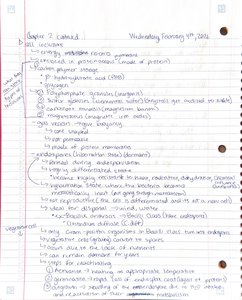
Microbial cells often contain specialized structures called inclusions that serve as storage sites for nutrients, energy, and other essential compounds. These inclusions help cells survive fluctuating environmental conditions by storing resources for later use.
Energy/Carbon Storage: Cells accumulate energy-rich compounds in the form of polymers.
Polyhydroxyalkanoates (PHAs): Biodegradable plastics, such as polyhydroxybutyrate (PHB), are stored as granules.
Glycogen: A polysaccharide used for energy storage, similar to starch in plants.
Polyphosphate granules: Inorganic phosphate storage, important for ATP synthesis.
Sulfur granules: Elemental sulfur storage, found in some chemolithotrophic bacteria.
Other Inclusions:
Gas vesicles: Protein-bound structures that provide buoyancy, allowing aquatic microbes to adjust their position in the water column.
Magnetosomes: Membrane-bound crystals of magnetite (Fe3O4) that enable cells to orient along magnetic fields (magnetotaxis).
Function: Inclusions are crucial for survival during nutrient limitation, environmental stress, and metabolic regulation.
Endospores: Dormant Survival Structures
Endospores are highly resistant, dormant structures formed by certain Gram-positive bacteria (notably Bacillus and Clostridium species) in response to adverse environmental conditions. Endospores allow bacteria to survive extreme heat, desiccation, radiation, and chemical damage.
Key Features:
Highly resistant: Endospores withstand harsh conditions that would kill vegetative cells.
Dormant state: Metabolic activity is minimal; spores can remain viable for years.
Structure: Multiple protective layers, including a thick spore coat, cortex, and core containing dipicolinic acid and calcium (Ca2+), which stabilize DNA and proteins.
Formation (Sporulation): Triggered by nutrient depletion or environmental stress. The process involves asymmetric cell division, engulfment, and maturation of the spore.
Germination: When conditions improve, endospores return to vegetative growth through germination, reactivating metabolism and cell division.
Examples: Bacillus anthracis (anthrax), Clostridium difficile (C. diff), and other members of the Bacillus and Clostridium genera.
Comparison Table: Inclusions vs. Endospores
Feature | Inclusions | Endospores |
|---|---|---|
Function | Storage of nutrients/energy | Survival under extreme conditions |
Structure | Granules, vesicles, crystals | Multi-layered, highly resistant |
Occurrence | Many bacteria and archaea | Specific Gram-positive genera |
Examples | PHB, glycogen, magnetosomes | Bacillus, Clostridium |
Additional info:
Endospores are not a means of reproduction; they are a survival mechanism.
Magnetosomes are unique to certain aquatic bacteria and are used for navigation.
Gas vesicles are especially important for cyanobacteria and other planktonic microbes.