 Back
BackMidterm
Study Guide - Smart Notes
 Tailored notes based on your materials, expanded with key definitions, examples, and context.
Introduction to Microbiology
Definition and Scope
Microbiology is the study of microorganisms, which are organisms too small to be seen with the naked eye. These include bacteria, archaea, fungi, protozoa, viruses, and some multicellular parasites. Microbes are ubiquitous and play essential roles in ecosystems, human health, and disease.
Microorganism (Microbe): Any microscopic organism, including bacteria, archaea, fungi, protozoa, and viruses.
Germ: A term often used for microbes that can cause disease.
Viruses: Acellular entities often included in the study of microbiology due to their impact on living organisms.
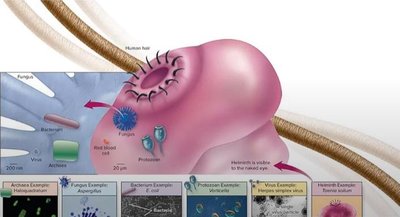
This image illustrates the relative sizes of various microbes (bacteria, archaea, fungi, protozoa, viruses) compared to a human hair, highlighting the microscopic scale of these organisms.
Classification of Microorganisms
Prokaryotes vs. Eukaryotes
Microorganisms are classified based on cellular organization into prokaryotes and eukaryotes.
Prokaryotic Cells: Lack a membrane-bound nucleus and organelles. Includes Bacteria and Archaea.
Eukaryotic Cells: Possess a membrane-bound nucleus and organelles. Includes animals, plants, fungi, and protists.
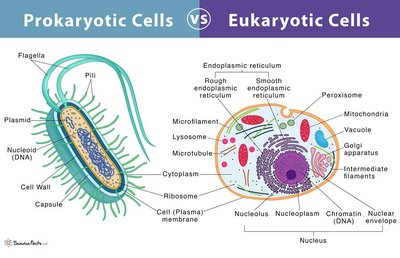
This diagram compares the internal structures of prokaryotic and eukaryotic cells, emphasizing the presence of organelles and a nucleus in eukaryotes.
Prokaryotic Microorganisms
Bacteria
Bacteria are unicellular prokaryotes with diverse metabolic capabilities and structural features.
Cell wall typically contains peptidoglycan.
Reproduce by binary fission (asexual reproduction).
Genetic material is usually a single, circular DNA molecule.
Can be autotrophic (photosynthetic) or heterotrophic.
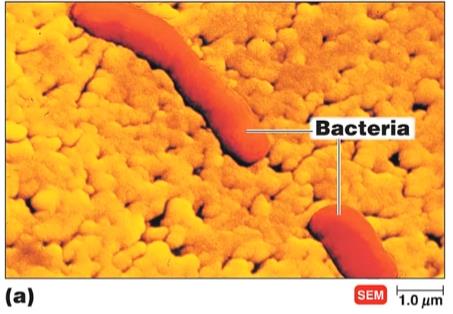
SEM image showing rod-shaped bacteria, a common bacterial morphology.
Archaea
Archaea are prokaryotes distinct from bacteria, often found in extreme environments.
Cell wall lacks peptidoglycan; contains pseudomurein.
Many are extremophiles (e.g., thermophiles, halophiles, methanogens).
Reproduce by binary fission and possess circular DNA.
Eukaryotic Microorganisms
Fungi
Fungi are eukaryotic organisms that can be unicellular (yeasts) or multicellular (molds, mushrooms).
Cell wall composed of chitin.
Heterotrophic; obtain nutrients by absorption.
Reproduce sexually or asexually via spores.
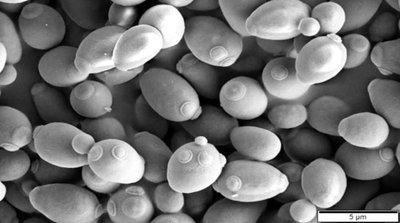
SEM image of yeast cells, a unicellular form of fungi.
Protozoa
Protozoa are unicellular eukaryotes, often motile and heterotrophic.
Usually lack cell walls.
Move using pseudopods, flagella, or cilia.
Can reproduce sexually or asexually.
Some are pathogenic, e.g., Trypanosoma causes African sleeping sickness.
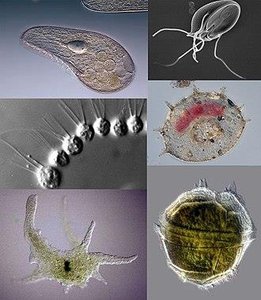
Microscopic images showing the diversity of protozoan morphology.
Viruses
General Characteristics
Viruses are acellular infectious agents that require a host cell for replication.
Composed of genetic material (DNA or RNA) surrounded by a protein coat (capsid).
Some have an additional lipid envelope derived from the host cell membrane.
Obligate intracellular parasites; lack independent metabolism.
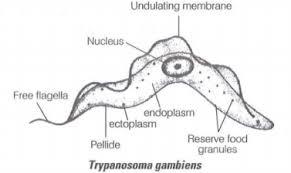
Illustration of various virus morphologies, including spherical, rod-like, and complex (bacteriophage) forms.
Multicellular Animal Parasites
Helminths
Helminths are multicellular eukaryotic parasites, including flatworms and roundworms, with complex life cycles involving microscopic stages.
No cell wall; heterotrophic.
Reproduce sexually or asexually.
Some stages are microscopic and relevant to microbiology.
Microbial Diversity and Ubiquity
Microbes in the Environment
Microbes are found in virtually every environment on Earth, from deep in the Earth's crust to polar ice caps, oceans, and within living organisms. They are essential for nutrient cycling, decomposition, and maintaining ecosystem balance.
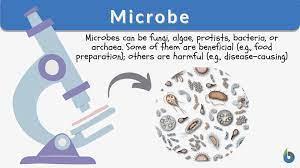
Illustration showing the role of microbes in global biogeochemical cycles and their ubiquity in diverse environments.
Taxonomy and Nomenclature
Classification and Naming
Microorganisms are classified using a hierarchical system: Domain, Kingdom, Phylum, Class, Order, Family, Genus, Species. Scientific names are assigned using binomial nomenclature (Genus species), which is italicized or underlined.
Taxonomy: Science of classifying organisms.
Nomenclature: Assignment of scientific names.
Classification: Arrangement into hierarchical groups.
Identification: Determining the identity of an organism.
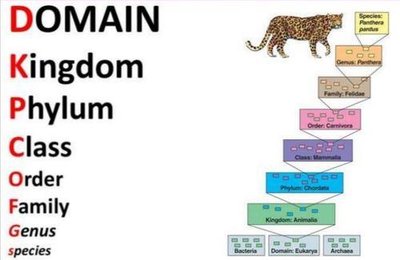
Example of binomial nomenclature, showing the distinction between common and scientific names.
Cell Structure and Function
Components of All Cells
All cells share certain fundamental structures:
Plasma (Cell) Membrane: Phospholipid bilayer separating the cell from its environment.
Chromosomes: DNA molecules carrying genetic information.
Ribosomes: Sites of protein synthesis.
Cytosol: Semi-fluid substance inside the cell membrane.
Prokaryotic vs. Eukaryotic Cell Structure
Key differences between prokaryotic and eukaryotic cells include the presence of a nucleus, organelles, and the structure of genetic material.
Prokaryotes: Circular DNA, no nucleus, no membrane-bound organelles.
Eukaryotes: Linear chromosomes, nucleus, membrane-bound organelles.
Summary Table: Major Groups of Microorganisms
Group | Cell Type | Cell Wall | Genetic Material | Reproduction | Examples |
|---|---|---|---|---|---|
Bacteria | Prokaryotic | Peptidoglycan | Circular DNA | Binary fission | Escherichia coli |
Archaea | Prokaryotic | Pseudomurein | Circular DNA | Binary fission | Halophiles, Methanogens |
Fungi | Eukaryotic | Chitin | Linear DNA | Sexual/Asexual | Yeasts, Molds |
Protozoa | Eukaryotic | Usually none | Linear DNA | Sexual/Asexual | Trypanosoma |
Viruses | Acellular | None | DNA or RNA | Host-dependent | Influenza virus, HIV |
Helminths | Eukaryotic | None | Linear DNA | Sexual/Asexual | Flatworms, Roundworms |
Additional info: This summary table provides a quick reference for distinguishing the major groups of microorganisms by their cellular structure, genetic material, and reproductive strategies.
