 Back
BackDNA Viruses Infecting Humans: Structure, Pathogenesis, and Clinical Manifestations
Study Guide - Smart Notes
 Tailored notes based on your materials, expanded with key definitions, examples, and context.
DNA Viruses Infecting Humans
Overview of Human DNA Viruses
DNA viruses are a diverse group of pathogens that infect humans, causing a wide range of diseases. They are classified based on their structure (naked or enveloped), genome type (single or double-stranded DNA), and replication strategies. Major families include Papillomaviridae, Polyomaviridae, Adenoviridae, Parvoviridae, Herpesviridae, Poxviridae, and Hepadnaviridae.
Papillomaviridae (Human Papillomavirus, HPV)
Structure and General Features
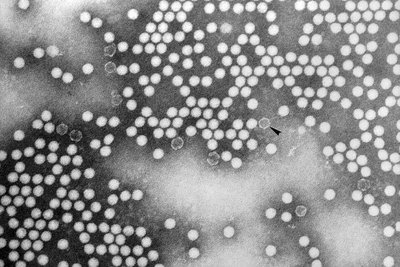
Small, naked, icosahedral capsids
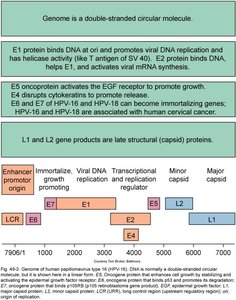
Circular double-stranded DNA (dsDNA)
Highly tissue-specific; most infections are transient
Persistent infections may rarely lead to tumors (e.g., squamous cell carcinoma)
Clinical Manifestations of HPV
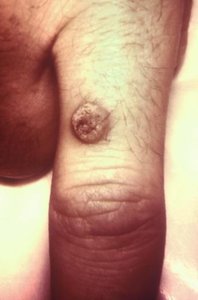
Papilloma = wart; 90% of infections are asymptomatic
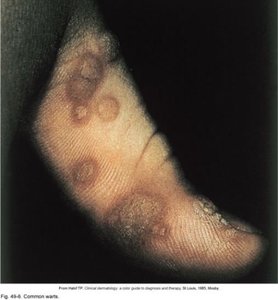
Common warts: Painless, elevated, solid, rough growths
Plantar warts: Deep warts on the soles of the feet
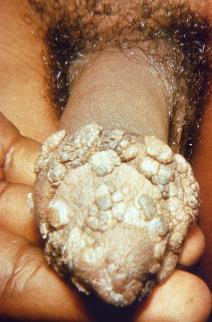
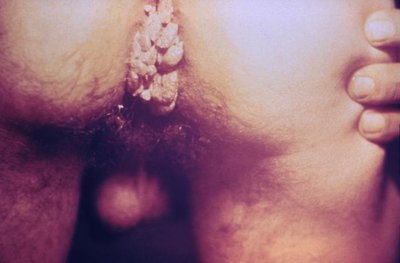
Genital warts: Most common sexually transmitted infection (STI) in the U.S.; can range from tiny, flat, painless bumps to extensive, branching solid masses (condylomata acuminata)
Transmission: Direct contact or contaminated fomites; incubation period ranges from 2 weeks to over a year

HPV Pathogenesis and Replication
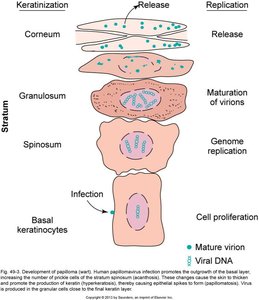
HPV infects basal keratinocytes in the skin or mucosa, leading to cell proliferation and wart formation. The virus requires differentiation of host cells for its life cycle, making it difficult to study in vitro.
HPV Genotypes and Cancer Risk
Over 230 genotypes identified; classified as genital-mucosal (~40 types) or non-genital cutaneous
15 high-risk types (e.g., HPV 16, 18) are associated with increased risk of cancer (cervical, head, and neck)
HPV causes more head and neck cancers than cervical cancer in the U.S.
HPV Detection, Treatment, and Prevention
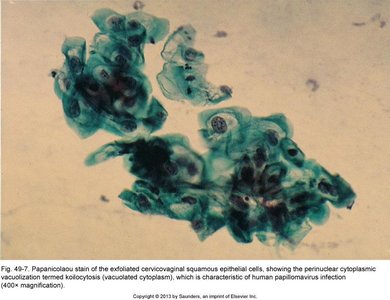
Early detection: Visual inspection, Pap smear, HPV DNA tests
Most warts regress spontaneously; treatments include podophyllin, cauterization, freezing, or laser surgery
Vaccines: Three effective recombinant protein vaccines (e.g., Gardasil 9) targeting high-risk and common wart-causing strains; most effective if given before sexual activity
HPV and Cancer Progression
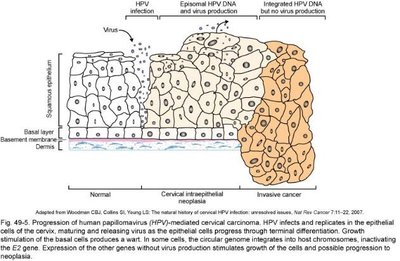
High-risk HPV types can integrate their DNA into host cells, disrupting regulatory genes and promoting oncogenesis. Viral proteins E6 and E7 inactivate tumor suppressors p53 and Rb, leading to uncontrolled cell proliferation.
Polyomaviridae
Structure and General Features
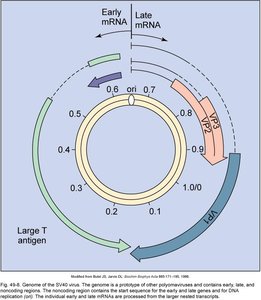
Small, naked, icosahedral capsids
Circular dsDNA genome
Most infections are transient; persistent infections rarely lead to tumors
Human Polyomaviruses and Disease
Common in humans; >13 types identified
Diseases mainly in immunosuppressed individuals (e.g., BK and JC viruses)
JC virus: Causes progressive multifocal leukoencephalopathy (PML), a fatal brain infection in immunocompromised patients
BK virus: Causes nephropathy in renal transplant patients
Polyomaviruses of the Skin
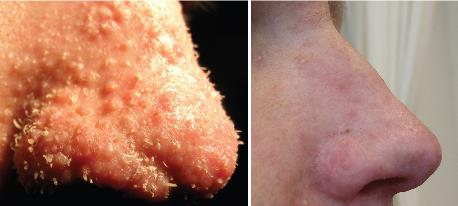
Merkel cell polyomavirus (MCV): Associated with Merkel cell carcinoma, a rare aggressive skin cancer
Other skin polyomaviruses: May cause dermatoses in immunocompromised individuals
Adenoviridae
Structure and Clinical Features
Over 50 types; naked, icosahedral capsids
Infect lymphoid tissue, respiratory or intestinal epithelia, or conjunctiva
Spread by respiratory, ocular secretions, fecal-oral route, or waterborne transmission
Diseases: Colds, pharyngitis, conjunctivitis, pneumonia, acute hemorrhagic cystitis, gastroenteritis
Oncogenic in animals, not in humans
Parvoviridae
Structure and Clinical Features
Very small, naked, icosahedral capsids
Linear single-stranded DNA (ssDNA) genome
Human parvovirus B19: Causes erythema infectiosum (fifth disease) in children, characterized by a biphasic illness with fever and a lacy rash
Can cause severe anemia in fetuses and individuals with hemolytic disorders
Herpesviridae
Structure and General Features
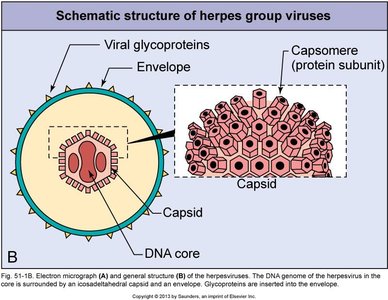
Large, enveloped, icosahedral capsids with dsDNA
Replicate in the nucleus; establish latency and can reactivate
Clinical complications are more severe in immunocompromised individuals
Herpes Simplex Viruses (HSV-1 and HSV-2)
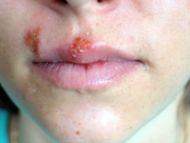
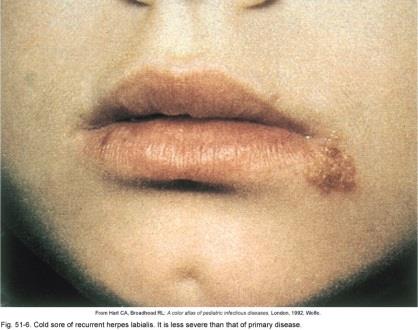
HSV-1: Usually causes oral lesions (cold sores), but can also cause genital infections
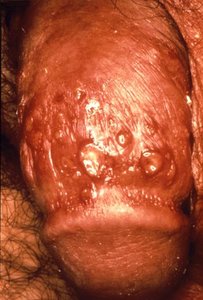
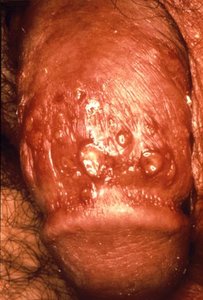
HSV-2: Primarily causes genital lesions, but can also infect the oral region
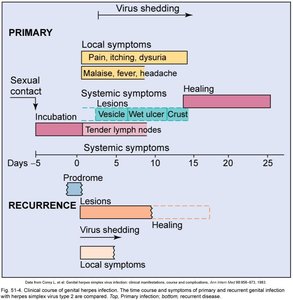
Both establish latency in sensory ganglia and can reactivate
HSV Epidemiology and Pathogenesis
Transmitted by close contact with secretions, lesions, or asymptomatic shedding
Virus multiplies in sensory neurons, migrates to ganglia (latency), and reactivates under stress, fever, UV light, or hormonal changes

Clinical Manifestations of HSV
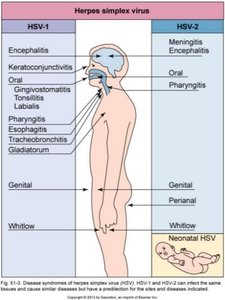
Herpes labialis: Fever blisters/cold sores
Herpetic gingivostomatitis: Generalized oral infection, especially in children
Herpetic keratitis: Eye infection, can lead to blindness
Herpes genitalis: Painful genital ulcers, recurrent episodes
Herpetic whitlow: Painful infection of fingers, common in healthcare workers
HSV encephalitis: Most common sporadic viral encephalitis in the U.S.
Diagnosis, Treatment, and Control of HSV
Diagnosis: Clinical appearance, Tzanck smear (multinucleated giant cells), immunofluorescence, PCR, viral culture
Treatment: Nucleoside analogues (e.g., acyclovir), topical or systemic therapy
Other Herpesviruses
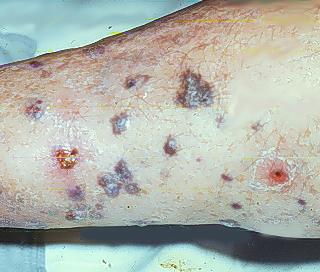
Varicella-zoster virus (VZV): Causes chickenpox (primary infection) and shingles (reactivation)
Epstein-Barr virus (EBV): Infectious mononucleosis, associated with Burkitt lymphoma, nasopharyngeal carcinoma
Cytomegalovirus (CMV): Congenital infections, mononucleosis-like syndrome, severe disease in immunocompromised
HHV-6, HHV-7: Roseola, pityriasis rosea, possible links to other diseases
HHV-8 (KSHV): Kaposi's sarcoma, especially in AIDS patients
Poxviridae
Structure and Clinical Features
Largest and most complex animal viruses; lack typical nucleocapsid
Replicate in the cytoplasm of epidermal and subcutaneous cells
Cause skin pustules (pox) that leave scars
Major Poxvirus Diseases
Smallpox (variola): First disease eradicated by vaccination; caused severe systemic illness and characteristic rash
Molluscum contagiosum: Benign skin lesions, usually self-limited
Mpox (monkeypox): Similar to smallpox but milder; zoonotic
Hepadnaviridae (Hepatitis B Virus, HBV)
Structure and Replication
Enveloped, icosahedral capsid; partially double-stranded DNA genome
Uses reverse transcriptase in replication
Hepatitis B Virus and Disease
Transmission: Blood, sexual contact, perinatal
Infects hepatocytes; can cause acute or chronic hepatitis
Chronic infection increases risk of cirrhosis and hepatocellular carcinoma
Prevention: Subunit vaccine, first dose at birth
Additional info: This guide covers the structure, replication, pathogenesis, clinical manifestations, and prevention of major DNA viruses infecting humans, with emphasis on those most relevant to medical microbiology and infectious disease.
