 Back
BackEukaryotic Microorganisms: Structure, Classification, and Examples
Study Guide - Smart Notes
 Tailored notes based on your materials, expanded with key definitions, examples, and context.
Eukaryotic Microorganisms: Structure, Classification, and Examples
Overview of Microbial Domains
The three domains of life—Bacteria, Archaea, and Eukarya—represent the major evolutionary lineages of cellular organisms. Eukaryotic microorganisms, which include fungi, protozoa, and simple algae, are distinguished from prokaryotes by their complex cellular organization.
Comparison of Prokaryotic and Eukaryotic Cells
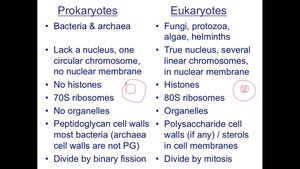
Understanding the differences between prokaryotic and eukaryotic cells is fundamental in microbiology. The following table summarizes the key distinctions:
Feature | Prokaryotes | Eukaryotes |
|---|---|---|
Examples | Bacteria & Archaea | Fungi, protozoa, algae, helminths |
Nucleus | Lack a nucleus; one circular chromosome, no nuclear membrane | True nucleus; several linear chromosomes in nuclear membrane |
Histones | No | Yes |
Ribosomes | 70S | 80S |
Organelles | No | Yes |
Cell Wall | Peptidoglycan (most); archaea cell walls not peptidoglycan | Polysaccharide (if any); sterols in membranes |
Cell Division | Binary fission | Mitosis |
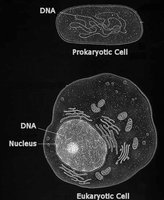
The structural differences are also evident in cell diagrams:
Eukarya: Supergroups and Major Lineages
Supergroup Unikonta
The Unikonta supergroup includes heterotrophic organisms such as amoebas, animals, and fungi. This group branched off early in eukaryotic evolution. Two important life stages are observed in many protozoa:
Cyst: An active resting stage, often resistant to harsh conditions.
Trophozoite: The active, feeding stage.
Supergroup Arcaeplastida
Members of Arcaeplastida are descended from an ancestor that engulfed a cyanobacterium, leading to the evolution of chloroplasts in green algae, red algae, and true plants. These organisms are autotrophic, meaning they produce their own energy via photosynthesis.
Supergroup SAR
The SAR supergroup is composed of alveolates, rhizarians, and stramenopiles. This group likely originated from a heterotroph engulfing a red alga. Some members possess cilia for movement. The classification and relationships within SAR are still under active research.
Supergroup Excavata
Excavata are primarily unicellular species characterized by a feeding groove excavated from one side of the cell and the presence of one or more flagella. Like some other protozoa, they may have cyst and trophozoite stages.
Fungi: Structure, Types, and Importance
General Characteristics of Fungi
Fungi are eukaryotic organisms that include yeasts, molds, and mushrooms. They play essential roles in decomposition, food production, and as pathogens.
Saccharomyces cerevisiae (Budding Yeast)
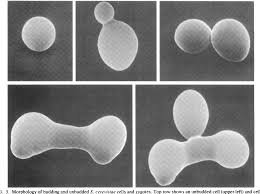
Saccharomyces cerevisiae is a single-celled yeast used in the production of bread, beer, and wine. Candida albicans is another yeast that can cause infections such as oral thrush.
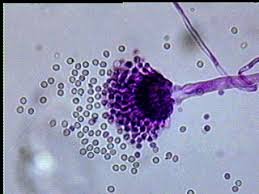
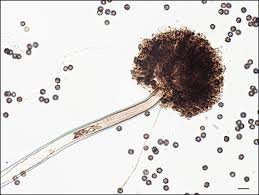
Aspergillus
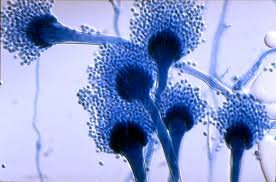
Aspergillus is a common mold found both indoors and outdoors. Its spores are ubiquitous in the air but typically do not cause illness in healthy individuals.
Penicillium
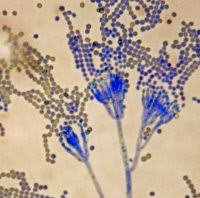
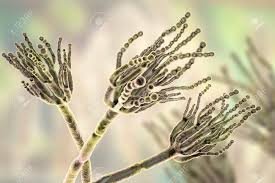
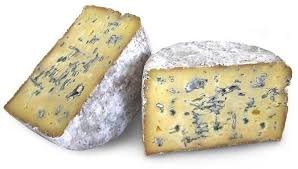
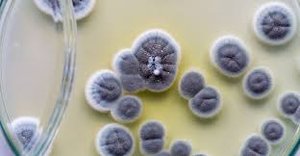
Penicillium is an important genus of mold found in the environment. Some species produce the antibiotic penicillin, while others are used in cheese production (e.g., Brie, Roquefort, Blue cheese).

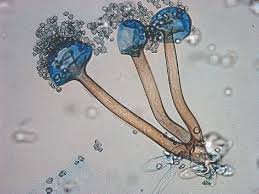
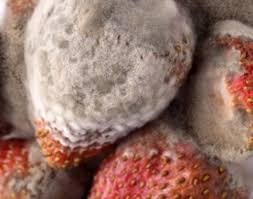
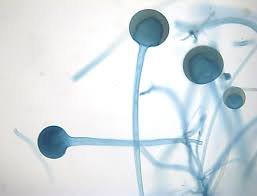
Rhizopus (Common Bread Mold)
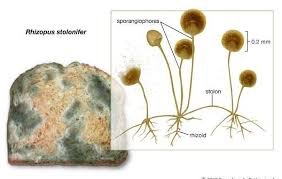
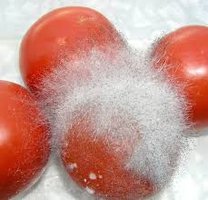
Rhizopus is a genus of saprophytic molds commonly found on decaying organic matter, including bread, fruits, and vegetables. Some species are also parasitic on animals.
Protozoa: Diversity and Medical Importance
General Characteristics of Protozoa
Protozoa are single-celled eukaryotes that may be free-living or parasitic. They feed on organic matter, including other microorganisms and organic tissues.
Family Amoebidae (Supergroup Unikonta)
Amoebas are unicellular, heterotrophic organisms capable of altering their shape. They are common in soil and aquatic environments, and some are parasitic in humans (e.g., Naegleria fowleri, the brain-eating amoeba).
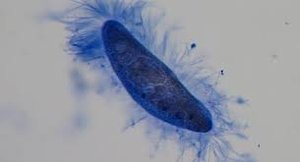
Phylum Ciliophora (SAR Supergroup): Paramecium
Paramecium is a ciliated protozoan that uses cilia for locomotion. It contains both macronuclei (for everyday functions) and micronuclei (for reproduction).
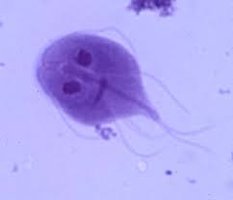
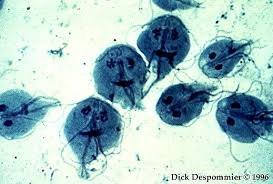
Giardia lamblia (Excavata Supergroup)
Giardia lamblia is a microscopic parasite that causes giardiasis, a diarrheal illness. It has two main life stages: the cyst (resting) stage and the trophozoite (active) stage.
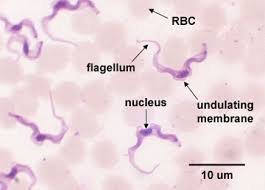
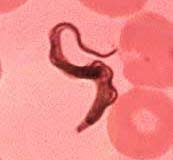
Trypanosoma gambiense (Excavata Supergroup)
Trypanosoma gambiense is a crescent-shaped parasite responsible for African trypanosomiasis (African sleeping sickness). It is transmitted by the tsetse fly in sub-Saharan Africa.
Protist: Euglena (Excavata Supergroup)
Euglena is a unicellular, flagellated, photosynthetic organism that is not classified as an animal, plant, or fungus. It is capable of both autotrophic and heterotrophic nutrition, depending on environmental conditions.
Summary Table: Major Eukaryotic Microorganisms
Group | Example Organisms | Key Features | Medical/Economic Importance |
|---|---|---|---|
Fungi | Saccharomyces, Aspergillus, Penicillium, Rhizopus | Cell walls, spores, heterotrophic | Fermentation, antibiotics, food spoilage, infections |
Protozoa | Amoeba, Paramecium, Giardia, Trypanosoma, Euglena | Motility (cilia, flagella, pseudopodia), no cell wall | Parasitic diseases, ecological roles |
Additional info: The classification of eukaryotic microorganisms is continually refined as molecular and genetic studies provide new insights into evolutionary relationships. Understanding these organisms is essential for microbiology, medicine, and biotechnology.
