 Back
Genetics and Molecular Biology in Microorganisms: Structure, Function, and Genetic Exchange
Study Guide - Smart Notes
 Tailored notes based on your materials, expanded with key definitions, examples, and context.
Genetics and Genes
Introduction to Genetics
Genetics is the scientific study of heredity, focusing on how traits are transmitted from parents to offspring, how these traits are expressed and vary, the structure and function of genetic material, and the mechanisms by which genetic material changes.
Transmission of Traits: Involves the passage of genetic information from one generation to the next.
Expression and Variation: Explains how genetic information results in observable characteristics and how these can differ among individuals.
Structure and Function: Examines the molecular composition and roles of genetic material.
Genetic Change: Studies mutations and recombination events that alter genetic information.
Levels of Structure and Function of the Genome
Genome Organization
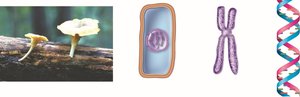
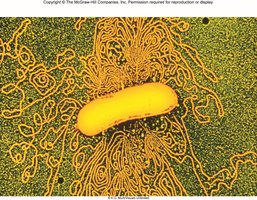
The genome is the complete set of genetic material in a cell, including chromosomes and, in some cases, extrachromosomal elements like plasmids or organellar DNA. In cells, the genome is composed of DNA, while in viruses, it may be DNA or RNA.
Chromosomes: DNA complexed with proteins, forming the main genetic material.
Levels of Organization: Genetic information is organized at the molecular, chromosomal, cellular, and organismal levels.
Microbial Genomes
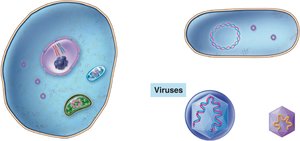
Microbial genomes vary in structure:
Bacterial Chromosomes: Typically a single, circular DNA molecule.
Eukaryotic Chromosomes: Multiple, linear DNA molecules found in the nucleus.
Viruses: May have DNA or RNA genomes, which can be single- or double-stranded.
Extrachromosomal DNA: Includes plasmids (in bacteria, some fungi, and protozoa) and organellar DNA (mitochondria, chloroplasts).
Genes and Their Expression
Gene Structure and Function
A gene is a segment of DNA that contains the necessary code to make a protein or RNA molecule. Genes are the fundamental units of heredity and are responsible for specific traits.
Structural Genes: Code for proteins.
RNA Genes: Code for functional RNA molecules (e.g., rRNA, tRNA).
Regulatory Genes: Control gene expression.
Genotype and Phenotype
The genotype is the genetic makeup of an organism, while the phenotype is the observable expression of the genotype.
Genotype: All genes present in an organism.
Phenotype: Observable traits resulting from gene expression.
Genome Size Variation
Genome sizes vary widely among organisms:
Smallest Virus: 4–5 genes.
Escherichia coli: ~4,288 genes on a single chromosome.
Human Cell: ~31,000 genes on 46 chromosomes.
DNA Structure and Replication
DNA Structure
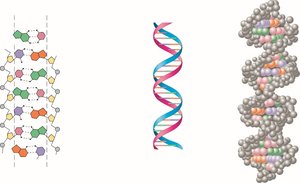
DNA is a double-stranded helix composed of nucleotides. Each nucleotide consists of a deoxyribose sugar, a phosphate group, and a nitrogenous base (adenine, guanine, cytosine, or thymine).
Sugar-Phosphate Backbone: Formed by covalent bonds between the 5′ and 3′ carbons of deoxyribose sugars.
Base Pairing: Adenine pairs with thymine (2 hydrogen bonds), guanine pairs with cytosine (3 hydrogen bonds).
Antiparallel Strands: DNA strands run in opposite directions (5′→3′ and 3′→5′).
DNA Packaging in Eukaryotes
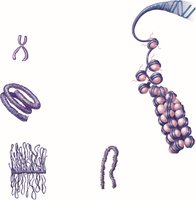
In eukaryotes, DNA is wrapped around histone proteins to form nucleosomes, which further coil and condense to form chromosomes.
Nucleosome: DNA wrapped around histone proteins.
Chromatin: Loosely packed DNA-protein complex.
Chromosome: Highly condensed structure visible during cell division.
Significance of DNA Structure
Maintenance of Genetic Code: Complementary base pairing ensures accurate replication.
Genetic Diversity: Sequence variation provides unique traits for each organism.
DNA Replication
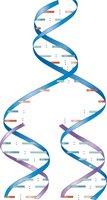
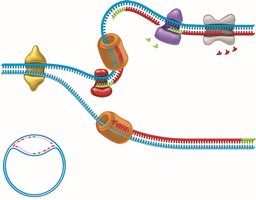
DNA replication is a semiconservative process, meaning each new DNA molecule consists of one parental and one newly synthesized strand. Replication involves multiple enzymes and occurs at the replication fork.
Helicase: Unwinds the DNA double helix.
Primase: Synthesizes RNA primers.
DNA Polymerase III: Adds nucleotides in the 5′→3′ direction.
Leading Strand: Synthesized continuously.
Lagging Strand: Synthesized discontinuously as Okazaki fragments.
DNA Polymerase I: Removes RNA primers and replaces them with DNA.
Ligase: Seals nicks between Okazaki fragments.
Enzymes Involved in DNA Replication
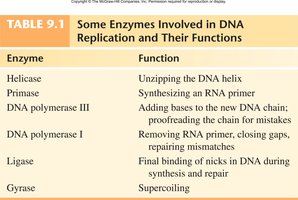
Enzyme | Function |
|---|---|
Helicase | Unzipping the DNA helix |
Primase | Synthesizing an RNA primer |
DNA polymerase III | Adding bases to the new DNA chain; proofreading the chain for mistakes |
DNA polymerase I | Removing RNA primer, closing gaps, repairing mismatches |
Ligase | Final binding of nicks in DNA during synthesis and repair |
Gyrase | Supercoiling |
Gene Expression: Transcription and Translation
Central Dogma of Molecular Biology
The flow of genetic information follows the central dogma: DNA → RNA → Protein. This involves two main processes: transcription and translation.
Transcription: DNA is used as a template to synthesize RNA.
Translation: RNA is used to direct protein synthesis.
Types of RNA
Messenger RNA (mRNA): Carries the genetic code from DNA to the ribosome; sequence is read in codons (triplets).
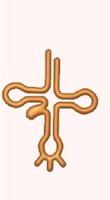
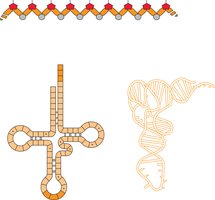
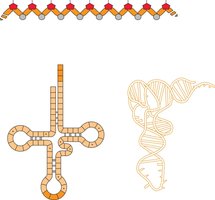
Transfer RNA (tRNA): Brings specific amino acids to the ribosome; contains an anticodon that pairs with mRNA codons.
Ribosomal RNA (rRNA): Structural and catalytic component of ribosomes.
Transcription
During transcription, RNA polymerase binds to the promoter region of a gene and synthesizes a complementary RNA strand in the 5′→3′ direction. In RNA, uracil replaces thymine.
Translation
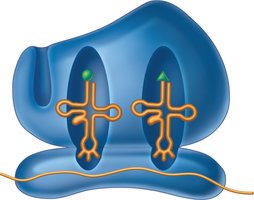
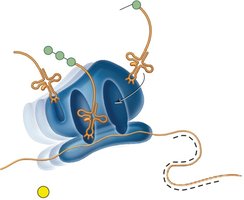
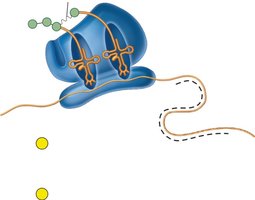
Translation occurs at the ribosome, where mRNA codons are read and matched with tRNA anticodons, leading to the assembly of a polypeptide chain. The process continues until a stop codon is reached (UAA, UAG, UGA).
Gene-Protein Connection
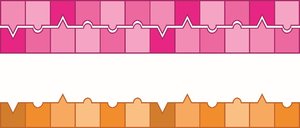
Each triplet codon in mRNA specifies a particular amino acid. The sequence of amino acids determines the protein's structure and function, which in turn determines the phenotype of the organism.
Eukaryotic vs. Prokaryotic Gene Expression
Eukaryotes: Transcription occurs in the nucleus; translation in the cytoplasm. mRNA is processed (splicing of introns) before translation.
Prokaryotes: Transcription and translation are coupled; mRNA is often polycistronic (encodes multiple proteins).
Regulation of Gene Expression
Operons in Prokaryotes
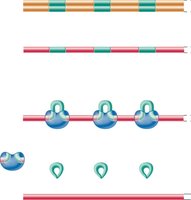
In prokaryotes, genes are often organized into operons, which are groups of genes regulated together.
Inducible Operons: Turned on by the presence of a substrate (e.g., lac operon).
Repressible Operons: Turned off by the product of the pathway (e.g., trp operon).
Mutations and DNA Repair
Types and Causes of Mutations
Mutation: A change in the DNA sequence that may affect phenotype.
Wild Type: The natural, non-mutated form.
Mutant: An organism with a mutation.
Induced Mutations: Caused by mutagens (chemicals, radiation).
Spontaneous Mutations: Occur naturally during DNA replication.
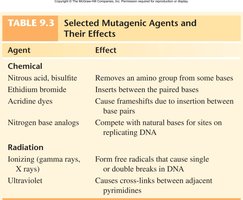
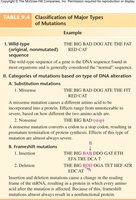
Categories of Mutations
Point Mutation: Addition, deletion, or substitution of a single base.
Missense Mutation: Changes one amino acid.
Nonsense Mutation: Changes a codon to a stop codon.
Silent Mutation: Alters a base but does not change the amino acid.
Frameshift Mutation: Alters the reading frame by insertion or deletion.
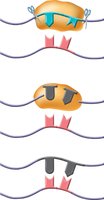
DNA Repair Mechanisms
Proofreading: DNA polymerase corrects errors during replication.
Mismatch Repair: Fixes incorrectly paired bases.
Light Repair: Repairs UV-induced damage.
Excision Repair: Removes and replaces damaged DNA segments.
The Ames Test
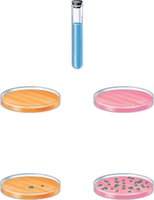
The Ames test screens chemicals for mutagenic potential using a mutant strain of Salmonella typhimurium that cannot synthesize histidine. Chemicals that increase the rate of back-mutation are considered mutagenic and potentially carcinogenic.
Genetic Recombination in Bacteria
Mechanisms of Genetic Exchange
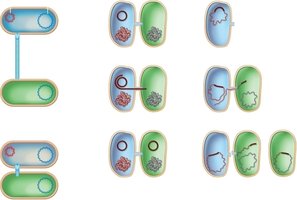
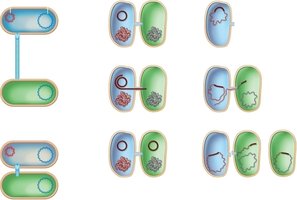
Conjugation: Direct transfer of DNA between bacteria via a pilus. Involves F plasmid (fertility factor) and can result in high-frequency recombination (Hfr) when the plasmid integrates into the chromosome.
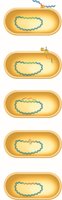
Transformation: Uptake of free DNA fragments from the environment by a competent cell.
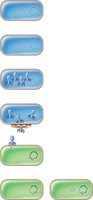
Transduction: Transfer of bacterial DNA by bacteriophages (viruses that infect bacteria). Includes generalized and specialized transduction.
Transposons
Transposons, or "jumping genes," are DNA segments that can move within the genome, causing rearrangements and potentially altering gene function. They can move between chromosomes and plasmids.
Genetics of Viruses
Viral Genomes and Replication
Viral genomes may consist of DNA or RNA and contain only the genes necessary for viral replication. Viruses rely on host cell machinery for replication and gene expression.
Double-Stranded DNA Viruses: Replicate in the host nucleus using host and viral enzymes.
Single-Stranded RNA Viruses: Replicate in the cytoplasm; positive-strand RNA can serve directly as mRNA.
*Additional info: This guide covers the core concepts of microbial genetics, including DNA structure, replication, gene expression, mutation, repair, and genetic exchange mechanisms, with emphasis on their relevance to microbiology and microbial diversity.*
