 Back
Host–Microbe Interactions and Pathogenesis: Microbiology Study Guide
Study Guide - Smart Notes
 Tailored notes based on your materials, expanded with key definitions, examples, and context.
Host–Microbe Interactions and Pathogenesis
Overview of Host–Microbe Interactions
Host–microbe interactions are complex and not always harmful. The human body is colonized by normal microbiota, which inhabit the skin, digestive, genital, urinary, and respiratory systems. These interactions can be mutualistic, commensal, or pathogenic.
Normal microbiota provide benefits such as vitamin production, competition with pathogens, and immune system maturation.
Mutualism describes a relationship where both host and microbe benefit.
Dysbiosis is a disruption of the normal microbiota balance, often caused by antibiotics, leading to diseases such as Clostridioides difficile infection.
Pathogens are microbes that cause disease and possess adaptations for interacting with host tissues.
Some microbes are harmless in one host but pathogenic in another due to host factors (e.g., Group B Streptococci in women vs. newborns).
Opportunistic pathogens cause disease when host defenses are compromised or when they access unusual sites.
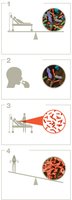
Tropism and Pathogenicity
Tropism refers to a pathogen's preference for specific hosts or tissues. Pathogenicity is the ability to cause disease, while virulence describes the degree of disease caused. Virulence factors are mechanisms that help pathogens overcome host defenses.
Tropism can change over time, especially in emerging pathogens.
Host factors (age, gender, health) influence disease development.
Virulence factors include adhesion molecules, toxins, and enzymes.
Virulence and Transmission
Virulence is shaped by both pathogen and host properties. Transmission mode often correlates with virulence factors. The basic reproduction number () measures transmissibility, while the effective reproduction number () is used during epidemics.
Virulence factors may directly damage host cells or provoke dangerous immune responses.
Pathogens evolve new virulence factors in response to environmental and host pressures.
Attenuated pathogens are weakened and often used in vaccines.
Dosage and Toxin Exposure
The infectious dose-50 () is the number of cells or virions needed to infect 50% of exposed hosts. The lethal dose-50 () is the amount of toxin required to kill 50% of affected hosts.
Lower indicates higher infectivity.
and values depend on species, immune fitness, and exposure route.
Toxins as Virulence Factors
Toxins are molecules that cause tissue damage and suppress immune responses. Toxigenic microbes produce toxins, and toxemia refers to toxins in the bloodstream. There are two main classes: endotoxins and exotoxins.
Endotoxins are lipid A components of lipopolysaccharide (LPS) in Gram-negative bacteria, released upon cell death.
Endotoxins cause symptoms such as fever, hypotension, and septic shock.
Endotoxemia can arise from infections or medical complications.
Endotoxins are not easily neutralized and lack vaccines.
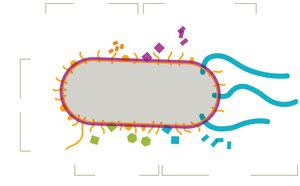
Exotoxins are soluble proteins produced by both Gram-positive and Gram-negative bacteria, affecting various cell types.
Exotoxins are classified by their mode of action: membrane-acting, membrane-damaging, and intracellular (AB toxins).
Examples include neurotoxins, enterotoxins, and superantigens.
Five Steps to Infection
To establish infection, pathogens must complete five steps: entry, adhesion, invasion, evasion, and transmission.
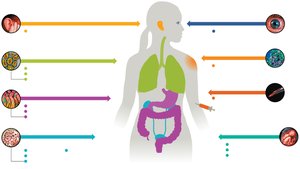
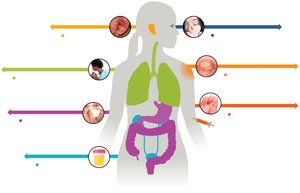
Entry: Pathogens enter via portals such as mucous membranes, skin, respiratory, GI, urogenital, and transplacental routes.
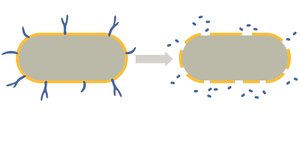
Adhesion: Pathogens use adhesins (cell wall components, capsules, fimbriae, pili) to stick to host tissues.
Invasion: Pathogens invade tissues and obtain nutrients, causing cytopathic effects. They may remain on the surface, enter cells, or pass between cells.
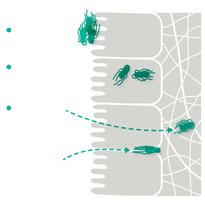
Evasion: Pathogens evade immune defenses through intracellular lifestyle, latency, antigenic masking, mimicry, variation, and immune suppression.

Transmission: Pathogens exit via portals such as feces, urine, blood, saliva, mucus, and semen. Symptoms like sneezing and diarrhea facilitate transmission.
Biofilms and Quorum Sensing
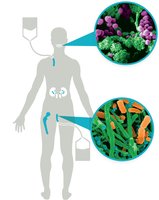
Bacteria form biofilms on natural and manmade surfaces, contributing to persistent infections. Quorum sensing allows bacteria to coordinate activities based on population density.
Biofilms are common on implanted devices and in organs (e.g., catheters, kidney stones).
Biosafety Levels and Infection Control
Biosafety levels (BSL) dictate safety practices in healthcare and laboratory settings. There are four levels, each with increasing precautions.
BSL-1: Minimal risk, well-characterized agents.
BSL-2: Moderate risk, infectious agents not airborne.
BSL-2+: Dangerous, incurable, not vaccine preventable (e.g., HIV).
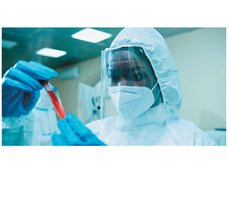
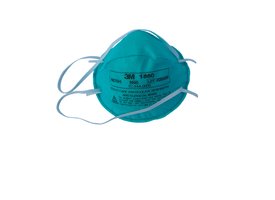
BSL-3: Serious or lethal diseases, often airborne; requires PPE and restricted access.
BSL-4: Highest risk, exotic pathogens with no cures (e.g., Ebola).
Infection Control Practices
Healthcare facilities use standard and transmission precautions to protect workers and patients.
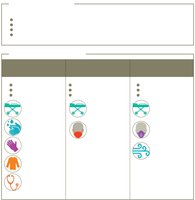
Standard precautions: Hand hygiene, gloves, barrier clothing, disinfection, proper waste management.
Transmission precautions: Contact, droplet, and airborne precautions based on suspected or known infectious agents.
Visual Summary
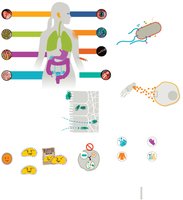
The five steps to infection, virulence factors, biosafety levels, and infection control practices are visually summarized for quick review.
Key Terms and Concepts
Pathogen: Disease-causing microbe.
Virulence: Degree of pathogenicity.
Virulence factors: Mechanisms aiding infection and immune evasion.
Biofilm: Community of microbes attached to a surface.
Adhesins: Molecules used by pathogens to adhere to host cells.
Invasins: Enzymes facilitating tissue invasion.
Siderophores: Molecules that bind and transport iron.
Endotoxin: Lipid A component of LPS in Gram-negative bacteria.
Exotoxin: Soluble protein toxin secreted by bacteria.
BSL: Biosafety level, indicating required precautions.
Equations
Basic reproduction number:
Infectious dose-50:
Lethal dose-50:
Table: Comparison of Endotoxins and Exotoxins
Feature | Endotoxins | Exotoxins |
|---|---|---|
Source | Gram-negative bacteria (LPS) | Gram-positive and Gram-negative bacteria |
Chemical Nature | Lipid A (lipopolysaccharide) | Protein |
Release | Upon cell death | Secreted actively |
Effects | Fever, shock, inflammation | Varied (neurotoxic, cytotoxic, etc.) |
Neutralization | Not easily neutralized | Often neutralized by antitoxins |
Vaccine Availability | No | Yes, for some |
Table: Biosafety Level Precautions
BSL | Agents | Precautions |
|---|---|---|
1 | Minimal risk, non-pathogenic | Basic hygiene, no special equipment |
2 | Moderate risk, infectious but not airborne | Gloves, lab coats, limited access |
3 | Serious, airborne pathogens | PPE, respirators, restricted access |
4 | High risk, exotic pathogens | Full-body suits, specialized facilities |
