 Back
BackImmunology Review: Innate and Acquired Immunity, Cells, Responses, and Vaccines
Study Guide - Smart Notes
 Tailored notes based on your materials, expanded with key definitions, examples, and context.
Immune System Overview
Introduction to Immunology
The immune system is a complex network of cells, tissues, and organs that protects the body from pathogens and disease. It is divided into innate (nonspecific) and acquired (specific) immunity, each with distinct mechanisms and components.
Pathogen: Any microorganism capable of causing disease, such as bacteria, viruses, fungi, or parasites.
Immunity: The ability of an organism to resist infection or disease.
Immune Response Structure
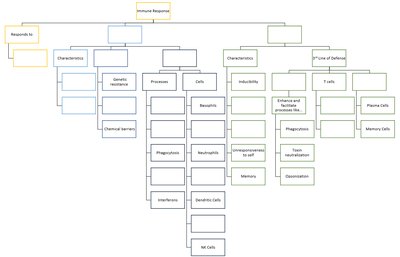
The immune response is organized into three lines of defense:
1st Line of Defense: Physical and chemical barriers (e.g., skin, mucous membranes, lysozyme).
2nd Line of Defense: Innate immune cells and processes (e.g., phagocytosis, inflammation, complement, fever).
3rd Line of Defense: Acquired immunity (e.g., T cells, B cells, antibodies).
Cells and Organs of the Immune System
White Blood Cells (Leukocytes) and Their Functions
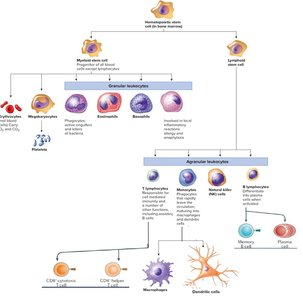
White blood cells are the primary cellular components of the immune system, classified as granulocytes and agranulocytes.
Granulocytes: Include neutrophils, eosinophils, and basophils. They are involved in phagocytosis and inflammation.
Agranulocytes: Include lymphocytes (T cells, B cells, NK cells) and monocytes/macrophages.
Platelets: Involved in clotting and inflammation.
Major Organs of the Immune System
Bone Marrow: Site of hematopoiesis; produces all blood cells.
Thymus: Site of T cell maturation.
Spleen: Filters blood, stores immune cells, breaks down red blood cells.
Lymph Nodes: Sites of immune cell activation and proliferation.
Tonsils: Protect against pathogens entering through the mouth and throat.
Innate Immunity
Characteristics and Components
Innate immunity provides immediate, nonspecific defense against pathogens.
Physical Barriers: Skin, mucous membranes, normal microbiota.
Chemical Barriers: Lysozyme, sebum, perspiration, mucus.
Cellular Components: Neutrophils, macrophages, dendritic cells, NK cells.
Processes of Innate Immunity
Phagocytosis: The engulfment and destruction of pathogens by phagocytes.
Inflammation: Characterized by redness, heat, swelling, pain, and loss of function; recruits immune cells to infection sites.
Fever: Elevated body temperature induced by pyrogens; inhibits pathogen growth.
Interferons: Proteins that inhibit viral replication.
Complement System: A group of proteins that enhance phagocytosis, lyse pathogens, and promote inflammation.
Acquired (Adaptive) Immunity
Characteristics and Main Features
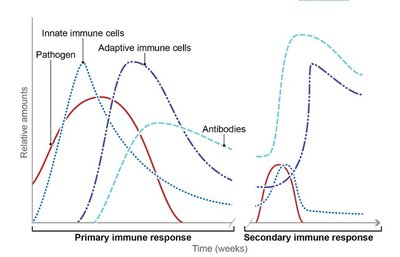
Acquired immunity is specific, inducible, and has memory. It is mediated by lymphocytes and antibodies.
Inducibility: Activated in response to specific antigens.
Specificity: Targets particular pathogens.
Memory: Provides long-lasting protection.
Antigens and Antibodies
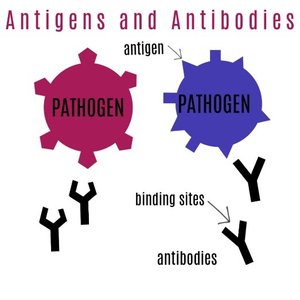
Antigen: Any molecule recognized as foreign by the immune system; triggers an immune response.
Antibody: A protein produced by B cells that binds specifically to antigens.
Immunoglobulins: Classes of antibodies (IgG, IgM, IgA, IgE, IgD).
Major Histocompatibility Complex (MHC)
MHC Class I: Present on all nucleated cells; present endogenous antigens to cytotoxic T cells.
MHC Class II: Present on antigen-presenting cells; present exogenous antigens to helper T cells.
Lymphocytes and Their Roles
T Cells: Include helper T cells (CD4+), cytotoxic T cells (CD8+), and regulatory T cells.
B Cells: Differentiate into plasma cells (produce antibodies) and memory cells.
Antigen-Presenting Cells: Dendritic cells, macrophages, B cells; present antigens to T cells.
Types of Immune Responses
Humoral Immunity: Mediated by antibodies produced by B cells.
Cell-Mediated Immunity: Mediated by T cells.
Types of Immunity
Passive vs. Active Immunity
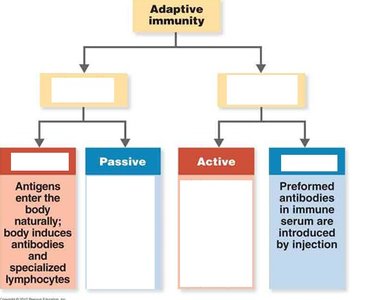
Immunity can be acquired naturally or artificially, and can be passive or active.
Passive Immunity: Transfer of preformed antibodies (e.g., maternal antibodies, immune serum).
Active Immunity: Exposure to antigens induces antibody and lymphocyte production (e.g., infection, vaccination).
Immunizations and Vaccines
Types of Vaccines
Vaccines stimulate active immunity and are classified by their composition and method of action.
Attenuated (Live) Vaccines: Contain weakened pathogens; induce strong, long-lasting immunity.
Inactivated (Killed) Vaccines: Contain killed pathogens; safer but may require boosters.
Toxoid Vaccines: Contain inactivated toxins; protect against toxin-mediated diseases.
mRNA Vaccines: Contain messenger RNA encoding antigen; induce immune response without pathogen exposure.
Herd Immunity
Herd Immunity: When a sufficient proportion of a population is immune, the spread of disease is limited.
Herd Immunity Threshold: The minimum percentage of immune individuals required to prevent disease spread.
Serology and ELISA
Serology
Serology is the study of blood serum and its immune components, used to diagnose infections and monitor immunity.
ELISA (Enzyme-Linked Immunosorbent Assay): A test that detects antibodies or antigens in a sample.
Limitations: May not distinguish between current and past infections; false positives/negatives possible.
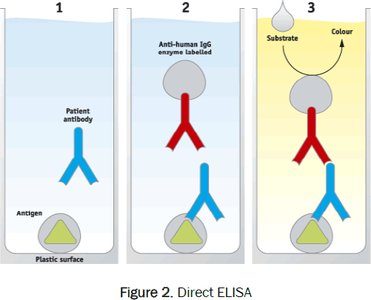
How ELISA Works
Antigen is attached to a surface.
Patient antibody binds to antigen.
Enzyme-labeled secondary antibody binds to patient antibody.
Substrate is added; color change indicates presence of antibody.
Summary Table: Types of Vaccines
Type | Function | Advantages | Disadvantages | Example |
|---|---|---|---|---|
Attenuated | Live, weakened pathogen | Strong, long-lasting immunity | Risk in immunocompromised | MMR vaccine |
Inactivated | Killed pathogen | Safe, stable | Weaker, needs boosters | Polio vaccine |
Toxoid | Inactivated toxin | Protects against toxins | May need boosters | Tetanus vaccine |
mRNA | Encodes antigen | No pathogen exposure | New technology | COVID-19 vaccine |
Key Terms and Concepts
Phagocytosis: Cellular process of engulfing pathogens.
Cytokines: Signaling molecules in immune response.
PAMPs: Pathogen-associated molecular patterns recognized by innate immune cells.
Toll-like Receptors (TLR): Receptors that detect PAMPs.
Opsonization: Process of marking pathogens for phagocytosis.
Superantigens: Molecules that cause excessive immune activation.
Adjuvant: Substance added to vaccines to enhance immune response.
Additional info:
Immunology is covered in Ch. 14 (Innate Immunity), Ch. 15 (Adaptive Immunity), Ch. 17 (Immunizations), and Ch. 18 (Immune Disorders) of a typical Microbiology course.
Cell diagrams and flowcharts reinforce understanding of immune cell lineages and response mechanisms.
