 Back
BackInfection, Infectious Diseases, and Epidemiology: Study Notes
Study Guide - Smart Notes
 Tailored notes based on your materials, expanded with key definitions, examples, and context.
Introduction to Microbiology
Definition and Scope
Microbiology is the scientific study of microbes, which includes both living organisms and infectious agents too small to be seen with the naked eye. The field encompasses bacteria, viruses, fungi, protozoa, and other microscopic entities.
Microorganism: A living organism too small to be seen without a microscope.
Microbe: Includes both microorganisms and non-living infectious agents (e.g., viruses).
Cell: The smallest, most basic unit of life.
Organism: Any individual form of life, unicellular or multicellular.
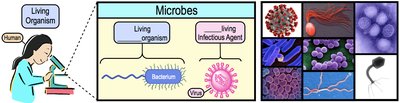
Example: SARS-CoV-2 (Covid-19 virus) is a microbe but not a microorganism because it is not a living organism.
History of Microbiology
Discovery of Microorganisms
The existence of microorganisms was first revealed in the late 17th century:
Robert Hooke (1665): First to visualize and depict a microorganism (bread mold Mucor).
Antonie van Leeuwenhoek (1674): Observed protozoa and bacteria, calling them "animalicules." His work marked the beginning of microbiology as a science.
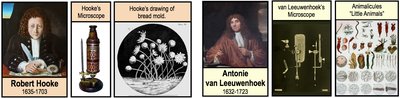
Note: Early microscopes were not powerful enough to observe viruses.
Symbiotic Relationships
Types of Symbiosis
Symbiosis refers to biological interactions between two different organisms or species. There are three main types:
Mutualism: Both organisms benefit (e.g., flowers and bees).
Commensalism: One organism benefits, the other is unaffected (e.g., barnacles on whales).
Parasitism: One organism benefits at the expense of the other (e.g., ticks feeding on dogs).
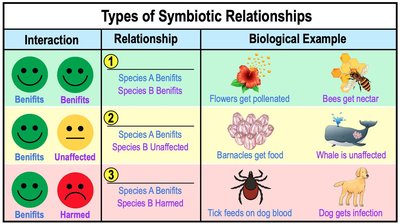
All pathogens are considered parasites.
The Human Microbiome
Resident vs. Transient Microbiota
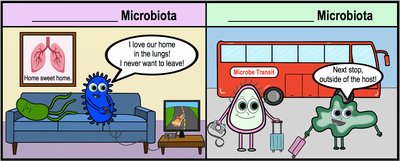
The human microbiome consists of communities of microbes that live on and within the human body. These microbes can be classified as:
Resident Microbiota: Long-term inhabitants of the host.
Transient Microbiota: Temporary inhabitants, often including pathogens.
Factors Influencing the Microbiome
Many factors affect the composition of the human microbiome, including birth method, diet, environment, genetics, and exposure to antibiotics.
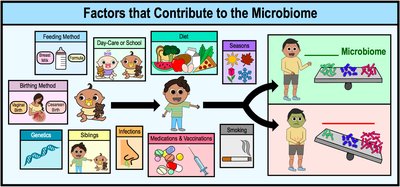
Microbiome and Immunity
The microbiome plays a crucial role in stimulating and educating the immune system, protecting against pathogens, and promoting immune tolerance.
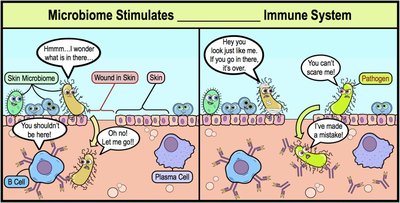
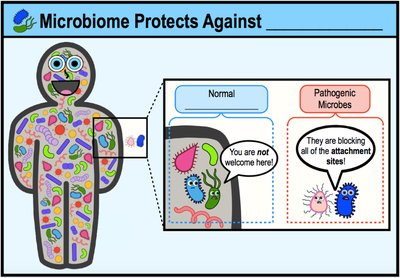
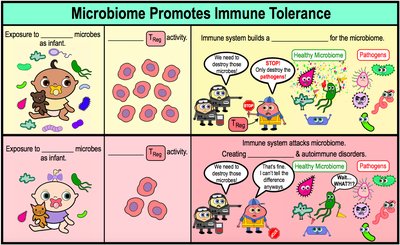
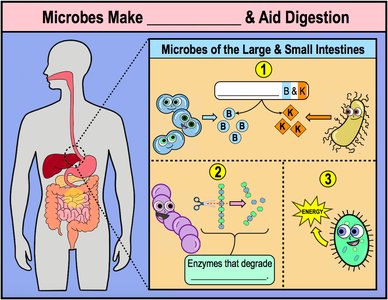
Microbiome and Digestion
Microbes in the gut produce essential nutrients (e.g., vitamins B and K) and enzymes that aid in the digestion of complex carbohydrates.
Characteristics of Infectious Disease
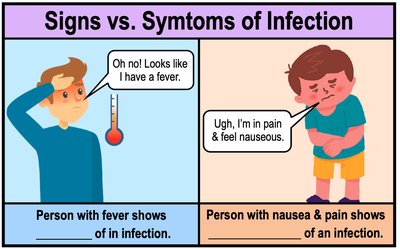
Signs vs. Symptoms
Signs: Objective evidence of disease (e.g., fever, rash).
Symptoms: Subjective experiences (e.g., pain, nausea).
Communicable vs. Noncommunicable Diseases
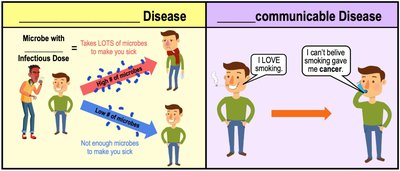
Communicable Diseases: Spread from one host to another (e.g., influenza).
Noncommunicable Diseases: Not spread between hosts (e.g., cancer).
Virulence and Pathogenicity
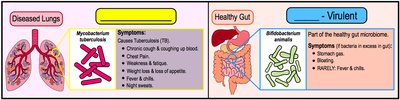
Virulence: Degree of pathogenicity; more virulent organisms are more likely to cause disease.
Virulence Factors: Traits that enable a pathogen to cause disease (e.g., toxins, capsules).
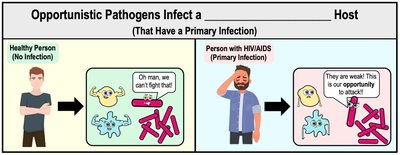
Primary vs. Secondary Infections
Primary Infection: Initial infection by a primary pathogen.
Secondary Infection: Subsequent infection by opportunistic pathogens in a compromised host.
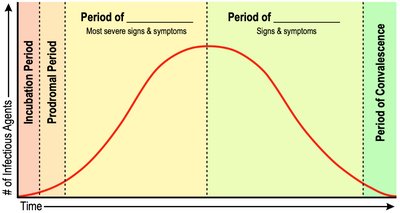
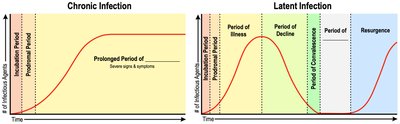
Stages of Infectious Disease Progression
Incubation Period
Prodromal Period
Period of Illness
Period of Decline
Period of Convalescence
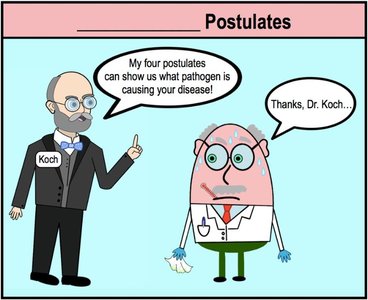
Koch’s Postulates
Establishing Causation in Infectious Disease
Robert Koch developed four postulates to link specific microbes to specific diseases:
Microbe must be present in every case of the disease.
Microbe must be isolated and grown in pure culture.
Pure culture must cause disease when introduced into a healthy host.
Microbe must be re-isolated from the experimentally infected host.
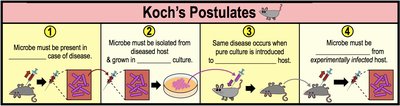
Limitations: Some pathogens cannot be cultured, and some diseases have asymptomatic carriers or are caused by multiple factors.
Epidemiology
Key Terms and Concepts
Epidemiology: Study of the distribution, patterns, and determinants of health and disease in populations.
Incidence: Number of new cases in a population during a specific time period.
Prevalence: Total number of cases (new and pre-existing) in a population at a specific time.
Mortality Rate: Proportion of deaths among the entire population.
Case-Fatality Rate (CFR): Proportion of deaths among diagnosed individuals.
Formulas:
Incidence Proportion:
Prevalence Proportion:
Chain of Infection
The spread of infectious disease follows a series of steps:
Pathogen in reservoir
Portal of exit
Transmission
Portal of entry
Colonization of susceptible host
Reservoirs of Infection
Human Reservoirs: Infected individuals (symptomatic or asymptomatic carriers).
Non-Human Reservoirs: Animals (zoonoses), environment (soil, water).
Modes of Disease Transmission
Vertical Transmission: Mother to offspring (e.g., during birth or breastfeeding).
Horizontal Transmission: All other forms (direct or indirect contact, airborne, vector-borne, vehicle-borne).
Direct vs. Indirect Transmission
Direct: Physical contact or respiratory droplets.
Indirect: Airborne (droplet nuclei), vehicle-borne (fomites, food, water), vector-borne (mechanical or biological vectors).
Emerging and Re-Emerging Infectious Diseases
Emerging: New or increasing in incidence (e.g., COVID-19).
Re-Emerging: Previously controlled but now increasing again (e.g., tuberculosis).
Healthcare-Associated Infections (HAIs)
Infections acquired in healthcare settings.
Risk factors include other patients, hospital environment, healthcare workers, visitors, and invasive procedures.
Prevention involves infection control committees and practitioners.
Types of Epidemiological Studies
Descriptive: Who, where, and when.
Analytical: Observational comparisons to find associations (why/how).
Experimental: Interventions to determine effectiveness of prevention/control measures.
Summary Table: Types of Symbiotic Relationships
Interaction | Relationship | Biological Example |
|---|---|---|
Both benefit | Mutualism | Flowers get pollinated, bees get nectar |
One benefits, one unaffected | Commensalism | Barnacles get food, whale is unaffected |
One benefits, one harmed | Parasitism | Tick feeds on dog blood, dog gets infection |
Additional info: These notes are based on Bauman's "Microbiology with Diseases by Body System," Ch. 14, and are structured to provide a comprehensive overview for college-level microbiology students preparing for exams.
