 Back
BackCh 14 Infection, Infectious Diseases, and Epidemiology: Study Notes
Study Guide - Smart Notes
 Tailored notes based on your materials, expanded with key definitions, examples, and context.
Symbiotic Relationships Between Microbes and Their Hosts
Types of Symbiosis
Symbiosis refers to the close association between two different biological species. In microbiology, humans and microbes engage in various types of symbiotic relationships:
Mutualism: Both organisms benefit from the relationship.
Commensalism: One organism benefits, while the other is neither helped nor harmed.
Amensalism: One organism is harmed, while the other is unaffected.
Parasitism: One organism benefits at the expense of the other.
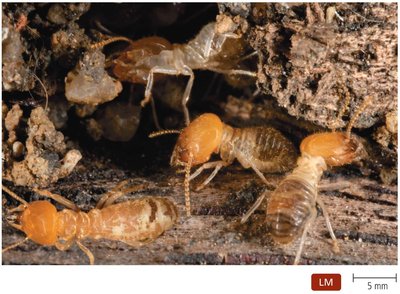
Example: Protozoans in termite intestines digest cellulose with the help of bacteria, benefiting both the protozoans and termites (mutualism).
Normal Microbiota of Humans
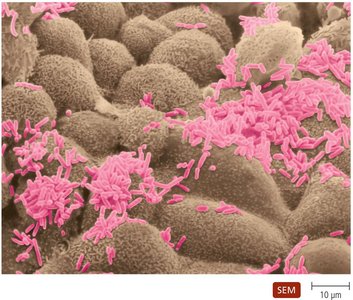
The microbiome consists of all microorganisms that colonize the body's surfaces without causing disease under normal conditions. These are also called normal microbiota, normal flora, or indigenous microbiota.
Resident microbiota: Remain throughout a person's life, mostly commensal.
Transient microbiota: Present for short periods (hours to months), often eliminated by competition, body defenses, or changes in the body.
Distribution of Resident Microbiota
Resident microbiota are found in various body regions, each with characteristic genera:
Region | Genera | Notes |
|---|---|---|
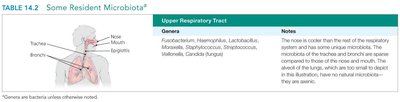
Upper Respiratory Tract | Fusobacterium, Haemophilus, Lactobacillus, Moraxella, Staphylococcus, Streptococcus, Malassezia (fungus), Candida (fungus) | The nose is cooler than the rest of the respiratory system and has unique microbiota. The microbiota of the trachea and bronchi are similar to those of the nose and mouth. The alveoli of the lungs have no normal microbiota—they are axenic. |
Region | Genera | Notes |
|---|---|---|
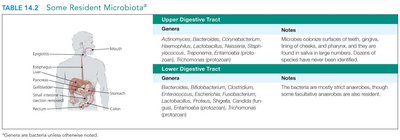
Upper Digestive Tract | Actinomyces, Bacteroides, Corynebacterium, Haemophilus, Lactobacillus, Neisseria, Staphylococcus, Treponema, Entamoeba (protozoan), Neisseria (gonococcus) | Microbes colonize surfaces of teeth, gingiva, lining of cheeks, and pharynx, and they are found in saliva in large numbers. Duodenum of small intestine has fewer bacteria. |
Lower Digestive Tract | Bacteroides, Bifidobacterium, Clostridium, Enterococcus, Escherichia, Lactobacillus, Proteus, Shigella, Candida (fungus), Entamoeba (protozoan), Trichomonas (protozoan) | The bacteria are mostly strict anaerobes, though some facultative anaerobes are also resident. |
Region | Genera | Notes |
|---|---|---|
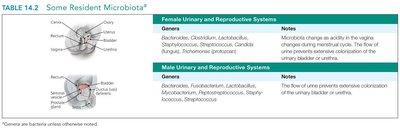
Female Urinary and Reproductive Systems | Bacteroides, Clostridium, Lactobacillus, Staphylococcus, Streptococcus, Candida (fungus), Trichomonas (protozoan) | Microbiota change as acidity in the vagina changes during menstrual cycle. The flow of urine prevents extensive colonization of the urinary bladder or urethra. |
Male Urinary and Reproductive Systems | Bacteroides, Clostridium, Lactobacillus, Mycobacterium, Pseudomonas, Staphylococcus, Streptococcus | The flow of urine prevents extensive colonization of the urinary bladder or urethra. |
Region | Genera | Notes |
|---|---|---|
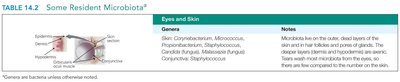
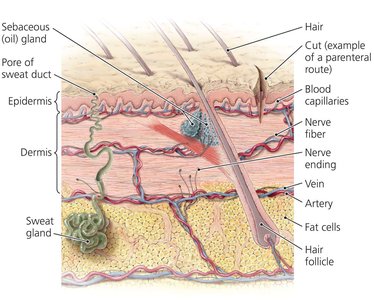
Skin | Corynebacterium, Micrococcus, Propionibacterium, Staphylococcus, Candida (fungus), Malassezia (fungus) | Microbes live on the outer dead layers of the skin and in hair follicles and pores of glands. The deeper layers (dermis and hypodermis) are axenic. |
Eyes | Corynebacterium, Staphylococcus | Tears wash most microbiota from the eyes, so fewer are present compared to the skin. |
Development and Acquisition of the Microbiome
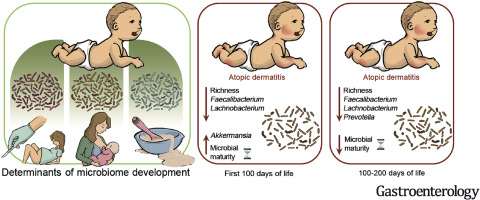
The human fetus develops in a sterile environment. Microbiome acquisition begins during birth and continues in the first months of life, influenced by birth mode, diet, and environment. Early microbiome composition can affect immune development and susceptibility to atopic disorders.
Opportunistic Pathogens
Normal microbiota can become opportunistic pathogens under certain conditions, such as:
Introduction into unusual body sites
Immune suppression
Changes in the normal microbiota (e.g., antibiotic use)
Stressful conditions
Reservoirs of Infectious Diseases
Types of Reservoirs
Reservoirs are sites where pathogens are maintained as sources of infection:
Animal reservoirs: Zoonoses are diseases naturally spread from animal hosts to humans (e.g., rabies, malaria).
Human carriers: Asymptomatic individuals can transmit pathogens (e.g., tuberculosis, AIDS).
Nonliving reservoirs: Soil, water, and food contaminated with pathogens (e.g., Clostridium in soil).
The Invasion and Establishment of Microbes in Hosts: Infection
Contamination vs. Infection
Contamination: Presence of microbes in or on the body.
Infection: When microbes evade defenses, multiply, and establish themselves in the body.
Portals of Entry
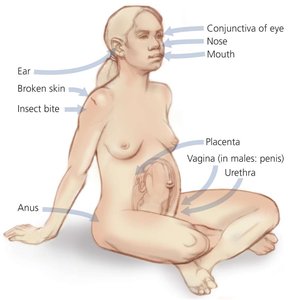
Pathogens enter the body through specific portals:
Skin: Barrier to most microbes; entry via cuts, hair follicles, or by burrowing organisms.
Mucous membranes: Line body cavities open to the environment; respiratory tract is the most common entry site.
Placenta: Usually an effective barrier, but some pathogens can cross and infect the fetus.
Parenteral route: Circumvents normal portals by direct deposition into tissues (e.g., punctures, injections).
Pathogens Crossing the Placenta
Pathogen | Condition in Adult | Effect on Embryo/Fetus |
|---|---|---|
Toxoplasma gondii (protozoan) | Toxoplasmosis | Abortion, epilepsy, microcephaly, blindness, etc. |
Treponema pallidum (bacterium) | Syphilis | Abortion, birth defects, death |
Listeria monocytogenes (bacterium) | Listeriosis | Granulomatosis infantiseptica, death |
Cytomegalovirus (DNA virus) | Usually asymptomatic | Deafness, microcephaly, mental retardation |
Lentivirus (HIV, RNA virus) | AIDS | Immunosuppression (AIDS) |
Rubivirus (RNA virus) | German measles | Severe birth defects or death |
The Nature of Infectious Disease
Manifestations of Disease
Symptoms: Subjective characteristics felt only by the patient (e.g., pain, nausea).
Signs: Objective manifestations observed or measured by others (e.g., fever, rash).
Syndrome: Group of symptoms and signs that characterize a disease.
Asymptomatic (subclinical): Infections without symptoms but with detectable signs.
Categories of Diseases
Category | Description | Examples |
|---|---|---|
Hereditary | Genetic errors from parents | Sickle-cell anemia, Down syndrome |
Congenital | Defects present at birth | Fetal alcohol syndrome |
Degenerative | Result from aging | Renal failure |
Nutritional | Lack of essential nutrients | Rickets |
Endocrine | Hormonal imbalances | Addison’s disease |
Mental | Emotional or psychosomatic | Skin rash, GI distress |
Immunological | Immune system dysfunction | Allergies, autoimmune diseases |
Neoplastic | Abnormal cell growth | Cancer |
Infectious | Caused by infectious agents | Colds, influenza |
Iatrogenic | Result of medical treatment | Yeast vaginitis after antibiotics |
Idiopathic | Unknown cause | Alzheimer’s disease |
Nosocomial | Acquired in healthcare settings | Pseudomonas infection in burn patient |
Etiology and Koch’s Postulates
Etiology is the study of the cause of disease. Robert Koch developed postulates to prove a specific pathogen causes a specific disease:
The suspected agent must be present in every case of the disease.
The agent must be isolated and grown in pure culture.
The cultured agent must cause the disease when inoculated into a healthy host.
The same agent must be reisolated from the diseased experimental host.
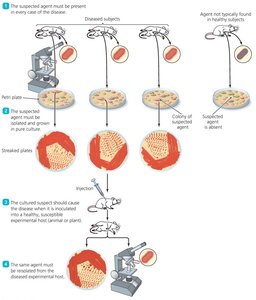
Exceptions include pathogens that cannot be cultured, diseases caused by multiple agents, and ethical limitations.
Virulence and Virulence Factors
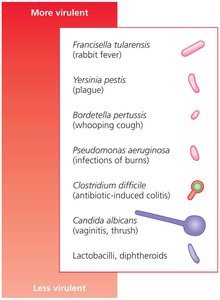
Pathogenicity is the ability to cause disease; virulence is the degree of pathogenicity. Virulence factors include:
Adhesion factors
Biofilms
Extracellular enzymes
Toxins (exotoxins and endotoxins)
Antiphagocytic factors
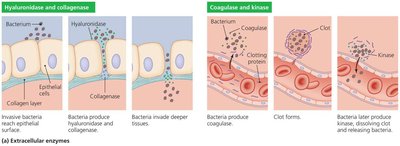
Extracellular Enzymes
Secreted by pathogens to dissolve host chemicals, aiding invasion and evasion of defenses. Mutants lacking these enzymes are often avirulent.
Biofilms
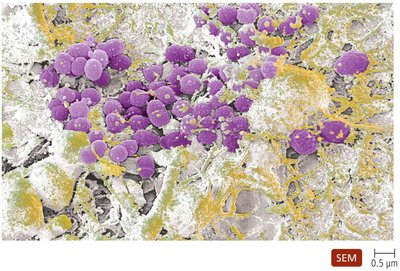
Bacteria can form biofilms, such as dental plaque, which protect them from host defenses and antibiotics.
Toxins
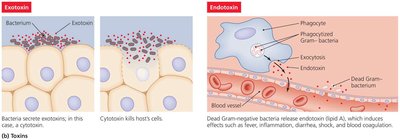
Toxins are chemicals that damage host tissues or trigger damaging immune responses. Toxemia is the presence of toxins in the blood.
Exotoxins: Secreted proteins, often highly toxic (e.g., botulinum toxin).
Endotoxins: Lipid A component of Gram-negative bacterial LPS, released upon cell death.
Feature | Exotoxins | Endotoxins |
|---|---|---|
Source | Mainly Gram-positive and Gram-negative bacteria | Gram-negative bacteria |
Chemical Nature | Protein or short peptide | Lipid A of LPS |
Toxicity | High | Low (may be fatal in high doses) |
Heat Stability | Unstable above 60°C | Stable up to 121°C |
Fever Producing? | No | Yes |
Antigenicity | Strong | Weak |
Toxoid Formation | Possible | Not feasible |
Representative Diseases | Botulism, tetanus, diphtheria | Typhoid fever, endotoxic shock |
Antiphagocytic Factors
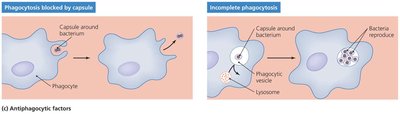
These factors help pathogens evade phagocytosis by host immune cells:
Bacterial capsules (not recognized as foreign, slippery)
Antiphagocytic chemicals (prevent lysosome fusion, destroy phagocytes)
The Stages of Infectious Disease
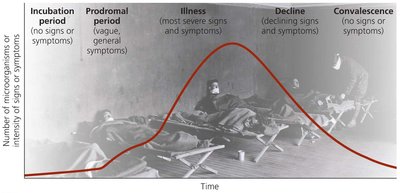
Infectious diseases typically progress through five stages:
Incubation period: No signs or symptoms.
Prodromal period: Mild, general symptoms.
Illness: Most severe signs and symptoms.
Decline: Declining signs and symptoms.
Convalescence: No signs or symptoms.
Transmission of Infectious Diseases
Portals of Exit
Pathogens leave the host through various portals, often the same as entry points, in secretions or excretions.
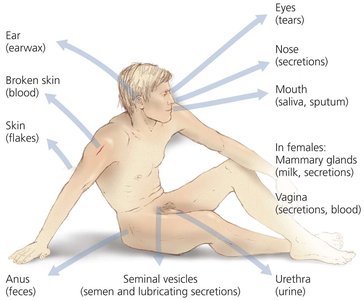
Modes of Transmission
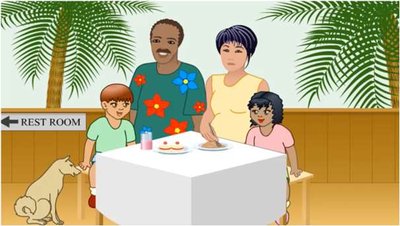
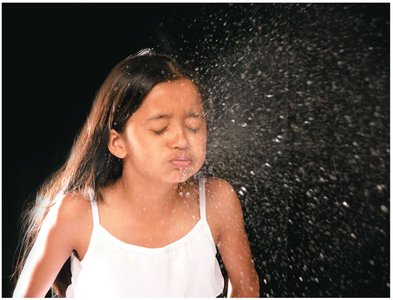
Contact transmission: Direct (person-to-person), indirect (fomites), or droplet (short-range aerosols).
Vehicle transmission: Airborne (long-range aerosols), waterborne, foodborne, or via bodily fluids.
Vector transmission: Biological (e.g., mosquitoes) or mechanical (e.g., houseflies).
Classification of Infectious Diseases
Term | Definition |
|---|---|
Acute disease | Symptoms develop rapidly, short course |
Chronic disease | Mild symptoms, develop slowly, last long |
Subacute disease | Symptoms and course between acute and chronic |
Asymptomatic disease | No symptoms |
Latent disease | Appears long after infection |
Communicable disease | Transmitted from host to host |
Contagious disease | Easily spread communicable disease |
Noncommunicable disease | Not spread person-to-person |
Local infection | Confined to a small region |
Systemic infection | Widespread, often via blood or lymph |
Focal infection | Site that serves as a source for other sites |
Primary infection | Initial infection |
Secondary infection | Follows a primary infection |
Epidemiology of Infectious Diseases
Frequency of Disease
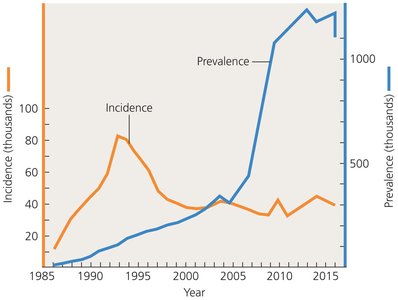
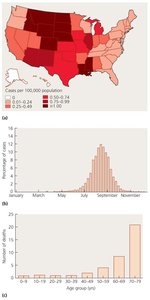
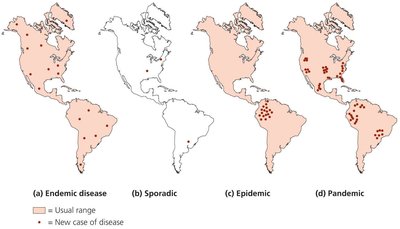
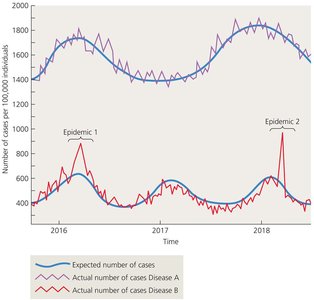
Incidence: Number of new cases in a given area and time period.
Prevalence: Total number of cases in a given area and time period.
Epidemiological Studies
Descriptive epidemiology: Tabulation of data, identification of index case.
Analytical epidemiology: Determines probable cause, mode of transmission, and prevention methods; often retrospective.
Experimental epidemiology: Tests hypotheses, applies Koch’s postulates.
Nosocomial (Healthcare-Associated) Infections
Exogenous: Acquired from the healthcare environment.
Endogenous: Arise from normal microbiota within the patient.
Iatrogenic: Result from medical procedures.
Superinfections: Result from antimicrobial use suppressing normal microbiota.
Public Health and Disease Control
Public health agencies (e.g., CDC, WHO) monitor, report, and work to interrupt disease transmission through:
Enforcing cleanliness of water and food
Reducing vectors and reservoirs
Immunization programs
Isolation and quarantine measures
Additional info: These notes cover the core concepts of infection, infectious diseases, and epidemiology, including the roles of microbiota, reservoirs, portals of entry and exit, disease progression, transmission, classification, and public health interventions.
