 Back
BackMedical Terminology, Anatomy, and Physiology of Organ Systems – Foundations for Clinical Laboratory Science
Study Guide - Smart Notes
 Tailored notes based on your materials, expanded with key definitions, examples, and context.
Medical Terminology
Word Elements and Structure
Medical terminology is essential for accurate communication in healthcare and clinical laboratory settings. Most terms are derived from Greek and Latin and are constructed from word elements: roots, prefixes, suffixes, and combining vowels.
Word Root: The core of the term, usually indicating a body part or system (e.g., cardi for heart).
Prefix: Appears before the root, often indicating location, number, or time (e.g., endo- means within).
Suffix: Appears after the root, usually describing a condition, disease, or procedure (e.g., -itis means inflammation).
Combining Vowel: Usually 'o', added for easier pronunciation, does not alter meaning.
Combining Form: Root plus combining vowel (e.g., cardi/o).
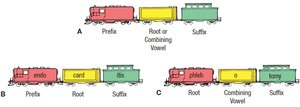
Example: Endocarditis (endo/card/itis) – inflammation of the inner lining of the heart.
Example: Phlebotomy (phleb/o/tomy) – incision into a vein.
Tips: To interpret a medical term, start with the suffix, then prefix, then root. Not all terms have all elements.
Anatomy and Physiology Overview
Definitions and Structural Organization
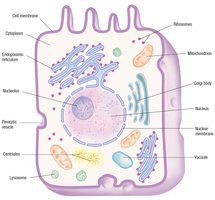
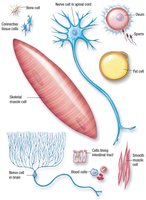
Anatomy is the study of the body's structure, while physiology focuses on its functions and processes. The human body is organized hierarchically:
Atoms → Molecules → Organelles → Cells → Tissues → Organs → Organ Systems → Organism
Homeostasis and Metabolism
Homeostasis is the maintenance of a stable internal environment. It is achieved through complex processes that regulate variables such as temperature, glucose, and pH. Metabolism includes all chemical reactions in the body and is divided into:
Anabolism: Building complex molecules from simpler ones (e.g., protein synthesis).
Catabolism: Breaking down complex molecules to release energy (e.g., digestion).
Vital signs (temperature, pulse, respiration, blood pressure) are key indicators of homeostasis.
Samples Collected from Patients
Types and Methods of Collection
Clinical laboratories analyze a variety of specimens to assess health and diagnose disease. Samples may be collected non-invasively (e.g., urine, saliva, swabs) or invasively (e.g., blood, tissue biopsies, cerebrospinal fluid).
Non-invasive: Urine, stool, sputum, saliva, semen, swabs from nasal/throat/wounds.
Invasive: Venipuncture, capillary/arterial puncture, tissue biopsy, lumbar puncture for CSF, bone marrow aspiration.
All samples can be analyzed or cultured to determine the presence and cause of disease (pathogenesis).
Anatomic Regions and Positions
Directional and Positional Terms
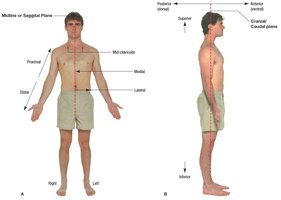
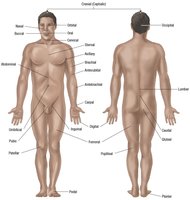
Understanding anatomical terminology is crucial for describing locations and orientations in the body:
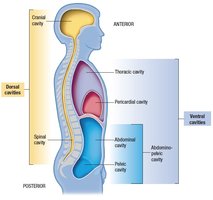
Anterior: In front of
Posterior: Toward the back
Medial: Toward the midline
Lateral: Toward the sides
Dorsal: Back side
Ventral: Front side
Proximal: Near point of attachment
Distal: Away from point of attachment
Superficial: Near the surface
Deep: Far from the surface
Body Positions
Normal anatomic position: Standing, arms at sides, palms forward.
Supine: Lying face-up.
Prone: Lying face-down.
Lateral recumbent: Lying on the side.

Major Organ Systems
Overview and Laboratory Relevance
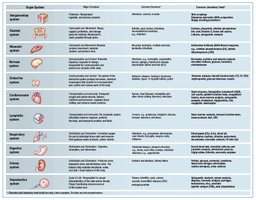
The human body consists of 11 major organ systems, each with specific functions, associated disorders, and laboratory tests. Laboratory analysis is essential for screening, diagnosis, treatment, and monitoring of diseases.
Integumentary System
Structure and Function
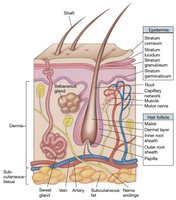
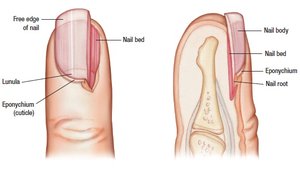
The integumentary system includes the skin, hair, nails, sweat and oil glands. It provides protection, regulates temperature, excretes wastes, and synthesizes vitamin D.
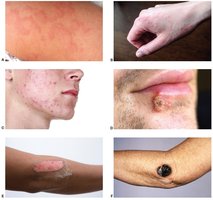
Disorders: Bacterial (acne, impetigo), viral (herpes, chickenpox), fungal (ringworm), allergic reactions, burns, skin cancers.
Lab Tests: Skin scrapings, biopsies, cultures, KOH prep, staining procedures.
Skeletal System
Structure and Function
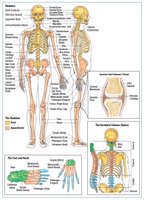
The skeletal system consists of bones, cartilage, joints, ligaments, and tendons. It provides support, protection, movement, blood cell formation (hematopoiesis), and mineral storage.
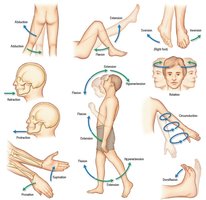
Types of Bones: Long (femur), short (carpals), flat (ribs), irregular (vertebrae).
Disorders: Osteoarthritis, osteoporosis, fractures, developmental conditions, tumors.
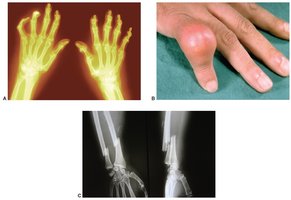
Lab Tests: Calcium, phosphate, uric acid, vitamin D, ALP, ANA, ESR, CBC, cultures, cytogenetic analysis.
Muscular System
Types and Functions
Muscles are classified as skeletal (voluntary), smooth (involuntary), and cardiac (heart). They enable movement, maintain posture, and produce heat.
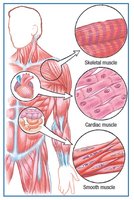
Disorders: Muscular dystrophy, MS, ALS, cramps, viral infections, atrophy.
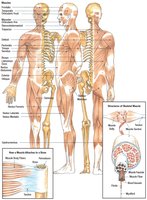
Lab Tests: Muscle enzymes, autoimmune antibodies, ANA, biopsy, cultures.
Nervous System
Structure and Function
The nervous system includes the brain, spinal cord, nerves, and sensory organs. It is divided into the central nervous system (CNS) and peripheral nervous system (PNS), which further divides into somatic (voluntary) and autonomic (involuntary) systems.
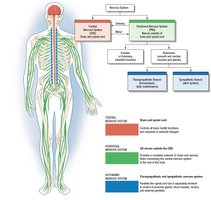
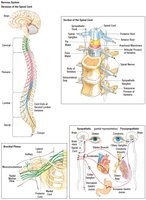
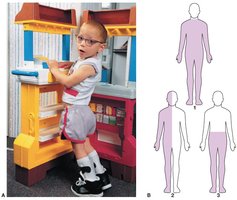
Disorders: Infections (meningitis, encephalitis), stroke, neurodegenerative diseases, psychological disorders.
Lab Tests: Chemical assays, cultures, therapeutic drug monitoring.
Respiratory System
Structure and Function
The respiratory system enables gas exchange (O2 and CO2) between the body and the environment. It includes the nose, pharynx, larynx, trachea, bronchi, and lungs.
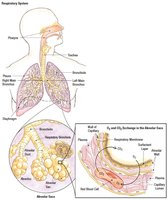
Disorders: Infections (TB, pneumonia), asthma, emphysema, tumors.
Lab Tests: Blood gases, pH, cultures, biopsies.
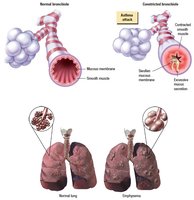
CO2 and pH: Increased CO2 lowers blood pH (acidosis); decreased CO2 raises pH (alkalosis). Normal blood pH is 7.35–7.45.
Digestive System
Structure and Function
The digestive system breaks down food into nutrients and eliminates waste. It includes the mouth, pharynx, esophagus, stomach, intestines, and accessory organs (liver, pancreas, gallbladder).
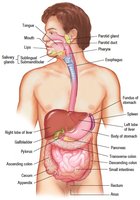
Disorders: Dental disease, GERD, ulcers, IBS, infections (H. pylori, Salmonella, parasites).
Lab Tests: Biopsies, occult blood, cultures, O&P, gastric analysis, blood tests.
Urinary System
Structure and Function
The urinary system includes the kidneys, ureters, bladder, and urethra. It regulates water, electrolytes, and acid-base balance, and removes nitrogenous wastes.
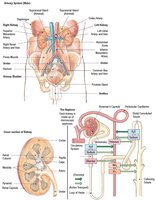
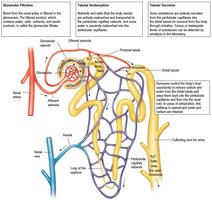
Disorders: Acidosis, alkalosis, nephritic syndrome, kidney disease.
Lab Tests: Urine dipstick, osmolality, GFR, chemical analysis, creatinine clearance.
Endocrine System
Structure and Function
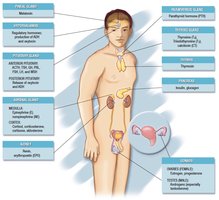
The endocrine system consists of ductless glands that secrete hormones directly into the bloodstream, regulating metabolism, growth, and homeostasis. Major glands include the hypothalamus, pituitary, thyroid, parathyroid, thymus, adrenals, ovaries, and testes.
Disorders: Addison's disease, Graves’ disease, diabetes, hypo/hyperthyroidism, gigantism, acromegaly.
Lab Tests: Chemical assays (glucose, insulin, cortisol), thyroid function tests.
Reproductive System
Structure and Function
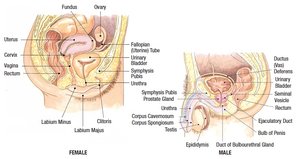
The reproductive system includes male (testes, prostate, penis) and female (ovaries, uterus, vagina) organs. Functions include gamete production, hormone secretion, and supporting reproduction and secondary sexual characteristics.
Disorders: Tumors, cysts, STDs (gonorrhea, syphilis, HIV), infertility, gender dysphoria.
Lab Tests: Fertility tests, hormone analysis, cytogenetics, Pap smears, cultures.
Laboratory Test Panels and Emerging Technology
Common Panels
Basic Metabolic Panel: Ca, CO2, Cl, creatinine, glucose, K+, Na, BUN
Comprehensive Metabolic Panel: Basic panel plus ALT, albumin, ALP, AST, bilirubin, protein
Cardiovascular Screen: Cholesterol, HDL, triglycerides
Renal Panel: Albumin, BUN, Ca, CO2, Cl, creatinine, glucose, phosphorus, K+, Na
Emerging Technology
Polymerase chain reaction (PCR) and genomic testing are increasingly used for diagnosis and monitoring.
Healthcare workers must stay updated on new technologies and emerging infectious diseases (e.g., Zika virus, antimicrobial resistance).
