 Back
Microbial Genetics: Structure and Replication of Genomes
Study Guide - Smart Notes
 Tailored notes based on your materials, expanded with key definitions, examples, and context.
Microbial Genetics
Introduction to Genetics and Genomes
Genetics is the study of inheritance and inheritable traits as expressed in an organism’s genetic material. The genome refers to the entire genetic complement of an organism, including all its genes and nucleotide sequences.
The Structure and Replication of Genomes
The Structure of Nucleic Acids
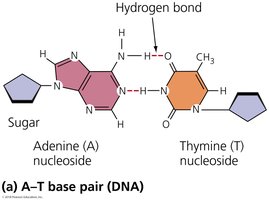
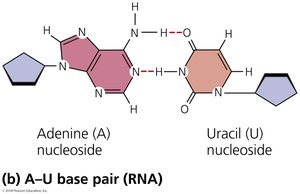
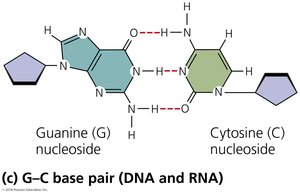
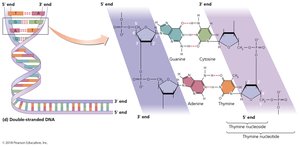
Nucleic acids are polymers of nucleotides, each consisting of a phosphate group, a pentose sugar, and a nitrogenous base. The length of DNA is typically expressed in base pairs (bp). The specific pairing of nitrogenous bases is fundamental to the structure and function of DNA and RNA.
DNA base pairs: Adenine (A) pairs with Thymine (T); Guanine (G) pairs with Cytosine (C).
RNA base pairs: Adenine (A) pairs with Uracil (U) instead of Thymine.
The Structure of Prokaryotic Genomes
Prokaryotic genomes are typically composed of a single, circular chromosome located in the nucleoid region. Prokaryotic cells are haploid, meaning they have only one chromosome copy. In addition to chromosomes, prokaryotes may contain plasmids—small, independently replicating DNA molecules that can confer survival advantages such as antibiotic resistance.
Types of plasmids: Fertility factors, resistance factors, bacteriocin factors, and virulence plasmids.
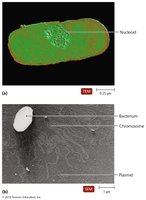
The Structure of Eukaryotic Genomes
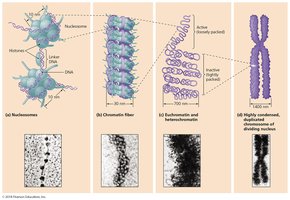
Eukaryotic genomes are more complex, typically consisting of multiple, linear chromosomes sequestered within a nucleus. Eukaryotic cells are often diploid, containing two copies of each chromosome. Chromosomal DNA is packaged with histone proteins into nucleosomes, which further condense to form chromatin and, ultimately, highly condensed chromosomes during cell division.
Comparison of Microbial Genomes
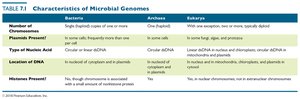
The characteristics of microbial genomes vary among bacteria, archaea, and eukaryotes. The following table summarizes key differences:
Characteristic | Bacteria | Archaea | Eukarya |
|---|---|---|---|
Number of Chromosomes | Single (haploid) copies of one or more | One (haploid) | Two or more (typically diploid) |
Plasmids Present? | In some cells; frequently more than one | In some cells | In some fungi, algae, and protozoa; circular DNA in mitochondria and chloroplasts |
Type of Nucleic Acid | Circular or linear dsDNA | Circular dsDNA | Linear dsDNA in nucleus; circular DNA in mitochondria, chloroplasts, and plasmids |
Location of DNA | In nucleoid and plasmids | In nucleoid and plasmids | In nucleus and mitochondria, chloroplasts, and plasmids in cytosol |
Histones Present? | No, though chromosome is associated with a small amount of nonhistone protein | Yes | Yes in nuclear chromosomes; not in extranuclear chromosomes |
DNA Replication
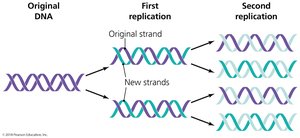
DNA replication is the process by which a cell duplicates its DNA, ensuring genetic information is passed to daughter cells. The key to replication is the complementary structure of the two DNA strands. Replication is semiconservative, meaning each new DNA molecule consists of one original (parental) strand and one newly synthesized (daughter) strand.
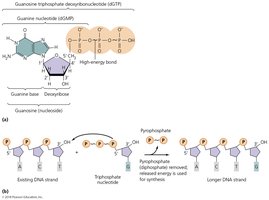
Monomers and energy: Triphosphate deoxyribonucleotides serve as both building blocks and energy sources for DNA synthesis.
Initial Processes in Bacterial DNA Replication
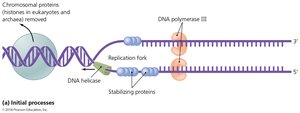
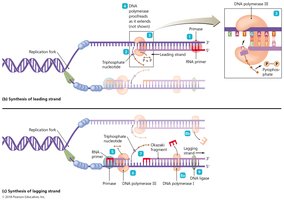
Bacterial DNA replication begins at a specific location called the origin of replication. DNA polymerase synthesizes new DNA only in the 5′ to 3′ direction. Because the two DNA strands are antiparallel, one strand (the leading strand) is synthesized continuously, while the other (the lagging strand) is synthesized discontinuously in short fragments called Okazaki fragments.
Other Characteristics of Bacterial DNA Replication
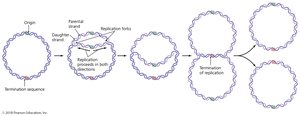
Replication in bacteria is bidirectional, proceeding in both directions from the origin. Enzymes such as gyrases and topoisomerases remove supercoils in DNA. DNA methylation plays roles in genetic expression, initiation of replication, protection against viral infection, and DNA repair.
Gene Function
The Relationship Between Genotype and Phenotype
The genotype is the set of genes in the genome, while the phenotype refers to the physical features and functional traits of the organism. The expression of genetic information determines the phenotype.
The Transfer of Genetic Information
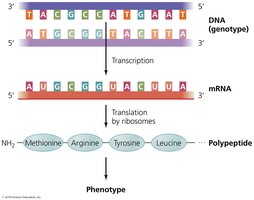
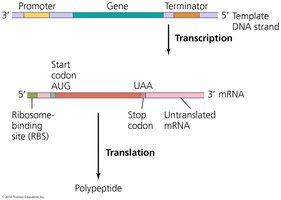
Genetic information flows from DNA to RNA to protein, a concept known as the central dogma of genetics. The two main processes are:
Transcription: Information in DNA is copied as RNA.
Translation: Polypeptides are synthesized from RNA.
The Events in Transcription
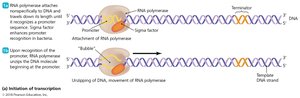
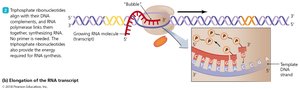
Transcription is the synthesis of RNA from a DNA template. In prokaryotes, this occurs in the nucleoid and involves three main steps: initiation, elongation, and termination. Six types of RNA are transcribed from DNA: RNA primers, messenger RNA (mRNA), ribosomal RNA (rRNA), transfer RNA (tRNA), regulatory RNA, and ribozymes.
Translation
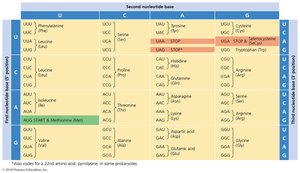
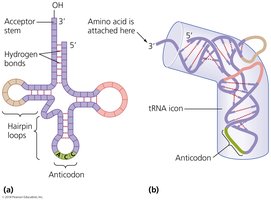
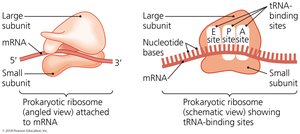
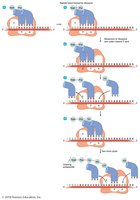
Translation is the process by which ribosomes use the genetic information in mRNA to synthesize polypeptides. The genetic code specifies which amino acids are added to the growing polypeptide chain. Key participants in translation include mRNA, tRNA, ribosomes, and rRNA.
Events in Translation
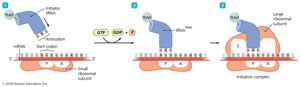
Translation occurs in three stages: initiation, elongation, and termination. Each stage requires additional protein factors, and initiation and elongation require energy in the form of GTP. During termination, release factors recognize stop codons, the ribosome dissociates, and the newly synthesized polypeptide is released.
Example: The process of gene expression, from DNA to protein, underlies all cellular functions and is fundamental to microbial physiology and adaptation.
