Back
BackMicrobial Infections of the Cardiovascular and Lymphatic Systems
Study Guide - Smart Notes
 Tailored notes based on your materials, expanded with key definitions, examples, and context.
Cardiovascular and Lymphatic Infections
Overview
The cardiovascular and lymphatic systems are susceptible to a variety of microbial infections, including those caused by bacteria, viruses, fungi, and protozoa. These infections can range from mild to life-threatening and often involve complex interactions between the pathogen and the host immune response.
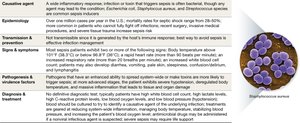
Sepsis
Definition and Causative Agents
Sepsis is a systemic inflammatory response to infection that can lead to tissue damage, organ failure, and death. Common causative agents include Escherichia coli, Staphylococcus aureus, and Streptococcus species.
Epidemiology
Over one million cases per year in the U.S.
High mortality rates, especially among older adults and immunocompromised patients.
Signs & Symptoms
Fever, rapid heart rate, low blood pressure, confusion, and organ dysfunction.
Pathogenesis
Pathogens trigger an intense immune response, leading to widespread inflammation and tissue damage.
Diagnosis & Treatment
Diagnosis is based on clinical presentation and laboratory tests.
Treatment includes antibiotics and supportive care.
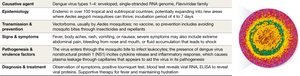
Dengue Fever
Causative Agent
Dengue virus (Flaviviridae family), an enveloped, single-stranded RNA virus.
Epidemiology
Over 100 tropical and subtropical countries affected.
Incubation period: 4-7 days.
Transmission & Prevention
Transmitted by Aedes mosquitoes.
No vaccine; prevention focuses on mosquito control.
Signs & Symptoms
Fever, body aches, rash, and severe symptoms like bleeding and shock in severe cases.
Pathogenesis
Virus infects white blood cells, causing inflammation and vascular leakage.
Diagnosis & Treatment
Observation of symptoms, patient history, and lab tests (PCR, ELISA).
Supportive therapy for fever and hydration.
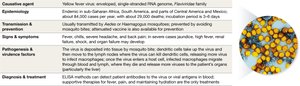
Yellow Fever
Causative Agent
Yellow fever virus (Flaviviridae family), enveloped, single-stranded RNA virus.
Epidemiology
Endemic in sub-Saharan Africa, South America, and parts of Central America and Mexico.
Incubation period: 3-6 days.
Transmission & Prevention
Transmitted by Aedes or Haemagogus mosquitoes.
Prevention includes vaccination and mosquito control.
Signs & Symptoms
Fever, muscle pain, jaundice, high fever, renal failure, shock, and organ failure.
Pathogenesis
Virus infects liver and other organs, causing hemorrhagic symptoms.
Diagnosis & Treatment
ELISA methods for patient antibodies; supportive therapy for fever, shock, and renal failure.
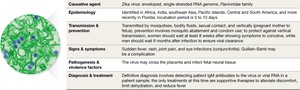
Zika Virus Infection
Causative Agent
Zika virus (Flaviviridae family), enveloped, single-stranded RNA virus.
Epidemiology
Identified in Africa, Asia, Pacific Islands, Central and South America, and more recently in Florida.
Incubation period: 3-12 days.
Transmission & Prevention
Transmitted by mosquitoes, blood transfusion, sexual contact, and vertically (mother to fetus).
Prevention includes mosquito control and personal protection.
Signs & Symptoms
Sudden fever, rash, joint pain, and mild headache; complications include Guillain-Barré syndrome and birth defects.
Pathogenesis
Virus infects the placenta and central nervous system.
Diagnosis & Treatment
Definitive diagnosis by detecting patient IgM antibodies or viral RNA.
Supportive treatment for dehydration and pain.
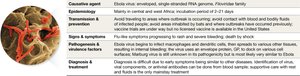
Ebola Hemorrhagic Fever
Causative Agent
Ebola virus (Filoviridae family), enveloped, single-stranded RNA virus.
Epidemiology
Mainly restricted to areas where outbreaks are occurring.
Incubation period: 6-21 days.
Transmission & Prevention
Transmitted by contact with blood and body fluids of infected people or animals.
Prevention includes avoiding contact and vaccination in outbreak areas.
Signs & Symptoms
Flu-like symptoms progressing to severe and bloody diarrhea, shock, and organ failure.
Pathogenesis
Virus infects macrophages and dendritic cells, spreading to other tissues and causing internal bleeding.
Diagnosis & Treatment
Diagnosis via ELISA or PCR; supportive care is the main treatment.
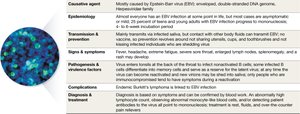
Mononucleosis
Causative Agent
Mainly caused by Epstein-Barr virus (EBV), enveloped, double-stranded DNA virus.
Epidemiology
Almost everyone has EBV infection by adulthood.
Incubation period: 4-7 weeks.
Transmission & Prevention
Transmitted via infected saliva; avoid sharing drinks and utensils.
Signs & Symptoms
Fever, headache, fatigue, sore throat, enlarged lymph nodes, splenomegaly.
Pathogenesis
Virus infects B cells and the throat, leading to immune activation.
Complications
Burkitt's lymphoma is linked to EBV infection.
Diagnosis & Treatment
Diagnosis via serology; supportive care for symptoms.
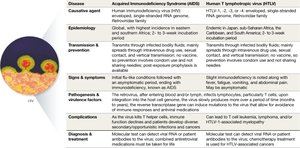
HIV and HTLV Infections
Causative Agents
HIV: Human immunodeficiency virus, enveloped, single-stranded RNA virus (Retroviridae family).
HTLV: Human T lymphotropic virus, enveloped, single-stranded RNA virus (Retroviridae family).
Epidemiology
HIV: Highest incidence in sub-Saharan Africa, Caribbean, and Southeast Asia.
HTLV: Endemic in Japan, sub-Saharan Africa, the Caribbean, and South America.
Transmission & Prevention
Transmitted through infected body fluids, sexual contact, and vertical transmission.
Prevention includes safe sex practices and blood screening.
Signs & Symptoms
HIV: Fever, fatigue, swollen lymph nodes, opportunistic infections.
HTLV: Slight immunosuppression, lymphadenopathy, and risk of leukemia.
Pathogenesis
HIV infects CD4+ T cells, leading to immunodeficiency.
HTLV infects T cells, causing cell proliferation and cancer risk.
Diagnosis & Treatment
HIV: Molecular tests and serology; antiretroviral therapy.
HTLV: Serology and PCR; supportive care.
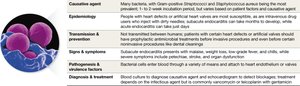
Bacterial Endocarditis
Causative Agents
Many bacteria, with Gram-positive Streptococcus and Staphylococcus aureus being most prevalent.
Epidemiology
People with heart defects or artificial valves are at higher risk.
Incubation period: 1-2 weeks.
Transmission & Prevention
Not transmitted between humans; prevention includes antibiotics before dental procedures.
Signs & Symptoms
Fever, malaise, night sweats, and organ dysfunction.
Pathogenesis
Bacteria enter the bloodstream and attach to heart valves, causing inflammation and tissue destruction.
Diagnosis & Treatment
Blood cultures and echocardiography; antibiotics and sometimes surgery.
Lyme Disease and Rocky Mountain Spotted Fever
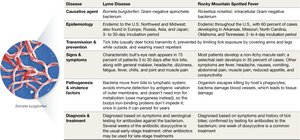
Causative Agents
Lyme Disease: Borrelia burgdorferi, Gram-negative spirochete.
Rocky Mountain Spotted Fever: Rickettsia rickettsii, Gram-negative intracellular bacterium.
Epidemiology
Lyme Disease: Endemic to U.S. Northeast and Midwest.
Rocky Mountain Spotted Fever: Endemic in Arkansas, Missouri, Oklahoma, and Tennessee.
Transmission & Prevention
Both transmitted by tick bites; prevention includes avoiding ticks and using repellents.
Signs & Symptoms
Lyme Disease: Bull's-eye rash, fever, joint pain, and neurological symptoms.
Rocky Mountain Spotted Fever: Rash, fever, headache, and organ failure.
Pathogenesis
Lyme Disease: Bacteria move from bite site to lymph nodes and organs.
Rocky Mountain Spotted Fever: Bacteria damage blood vessels, leading to tissue damage.
Diagnosis & Treatment
Lyme Disease: Diagnosis via serology and patient history; treated with antibiotics.
Rocky Mountain Spotted Fever: Diagnosis via serology and history; treated with doxycycline.
Invasive Candidiasis (Candidemia)
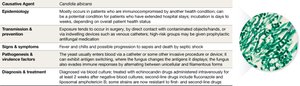
Causative Agent
Candida albicans, a fungal pathogen.
Epidemiology
Occurs in immunocompromised patients or those with indwelling catheters.
Incubation: days to weeks.
Transmission & Prevention
Exposure tends to occur in surgery or hospital settings; prevention includes proper catheter care.
Signs & Symptoms
Fever and chills, progressing to sepsis and organ failure.
Pathogenesis
Fungal cells enter the bloodstream and infect organs.
Diagnosis & Treatment
Blood cultures and antifungal drugs; removal of infected catheters.
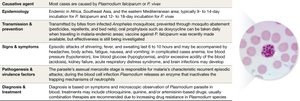
Malaria
Causative Agent
Most cases are caused by Plasmodium falciparum, a protozoan parasite.
Epidemiology
Endemic in Africa, Southeast Asia, and the Mediterranean.
Incubation: 7-14 days.
Transmission & Prevention
Transmitted by Anopheles mosquitoes; prevention includes mosquito control and prophylactic drugs.
Signs & Symptoms
Fever, chills, headache, and anemia; severe cases may cause organ failure.
Pathogenesis
Parasite invades red blood cells, causing hemolysis and immune activation.
Diagnosis & Treatment
Diagnosis via blood smear and serology; treatment with antimalarial drugs.