Back

Microbial Interactions: Symbiosis, Regulation, and the Human Microbiota

Study Guide - Learn with Videos

Curated lessons matched to your uploaded material – learn every topic step by step.

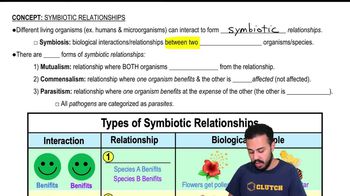
Symbiotic Relationships

  • Symbiotic Relationships
    05:59
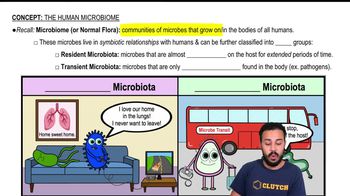
The Human Microbiome

  • The Human Microbiome
    03:25
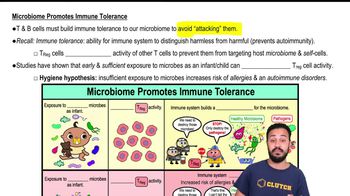
  • Microbiome Promotes Immune Tolerance
    05:48
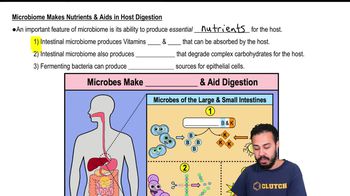
  • Microbiome Makes Nutrients & Aids in Host Digestion
    03:26

Introduction to Regulation of Gene Expression

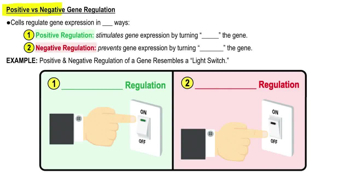
  • Positive vs Negative Gene Regulation
    02:17
  • Introduction to Regulation of Gene Expression
    06:40

Prokaryotic Gene Regulation via Operons

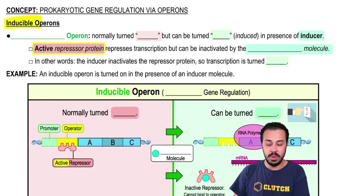
  • Inducible Operons
    04:25
  • Prokaryotic Gene Regulation via Operons
    00:53
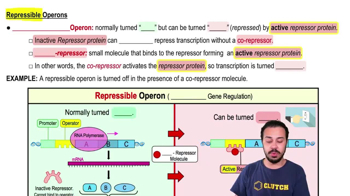
  • Repressible Operons
    03:42

The Trp Operon

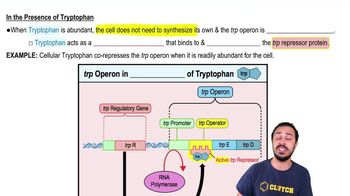
  • In the Presence of Tryptophan
    03:11
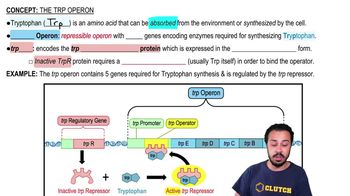
  • The Trp Operon
    05:30
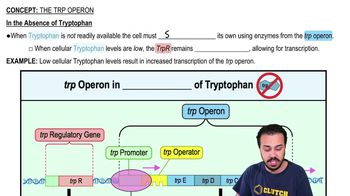
  • In the Absence of Tryptophan
    03:42

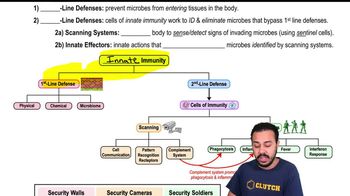
Introduction to Innate Immunity

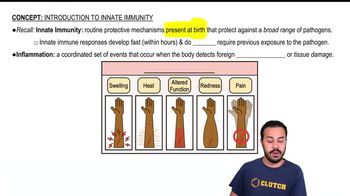
  • Introduction to Innate Immunity
    02:30
  • Map of Lesson on Innate Immunity
    06:42

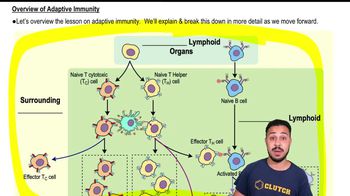
Introduction to Adaptive Immunity

  • Overview of Adaptive Immunity
    04:57
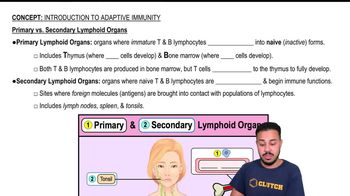
  • Primary vs. Secondary Lymphoid Organs
    04:58
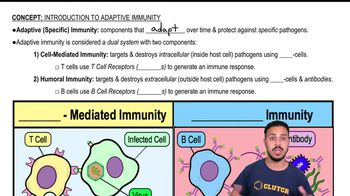
  • Introduction to Adaptive Immunity
    05:47

Antigens

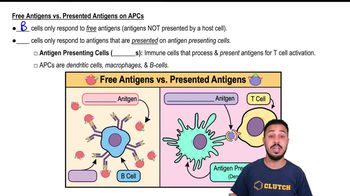
  • Free Antigens vs. Presented Antigens on APCs
    04:11
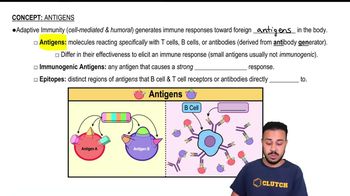
  • Antigens
    03:59
Introduction to T Lymphocytes

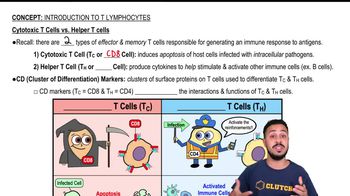
  • Cytotoxic T Cells vs. Helper T Cells
    05:58
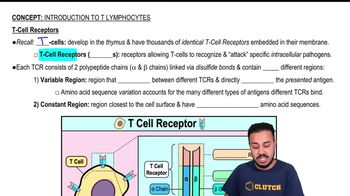
  • T-Cell Receptors
    05:18
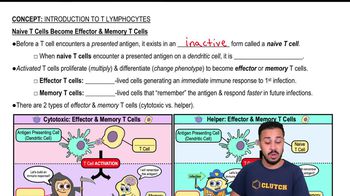
  • Naive T Cells Become Effector & Memory T Cells
    07:56

Major Histocompatibility Complex Molecules

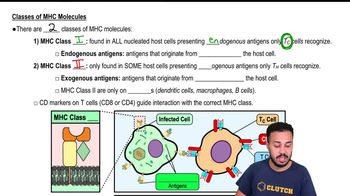
  • Classes of MHC Molecules
    07:17
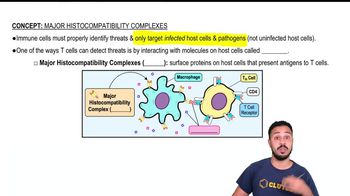
  • Major Histocompatibility Complex Molecules
    02:31

Activation of T Lymphocytes

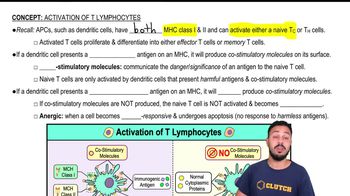
  • Activation of T Lymphocytes
    07:33
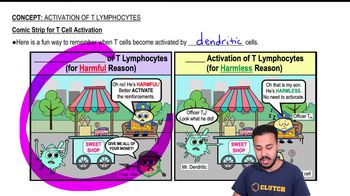
  • Comic Strip for T Cell Activation
    03:29
Functions of T Lymphocytes

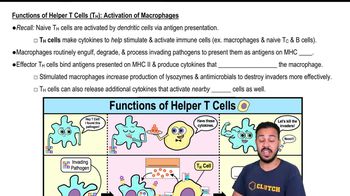
  • Functions of Helper T Cells (TH):Activation of Macrophages
    05:18
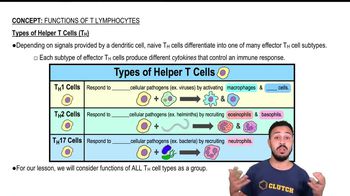
  • Types of Helper T Cells (TH)
    03:19
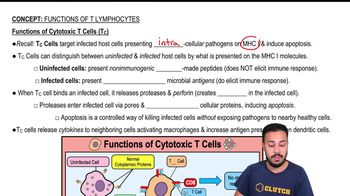
  • Functions of Cytotoxic T Cells (Tc)
    06:21

Introduction to B Lymphocytes

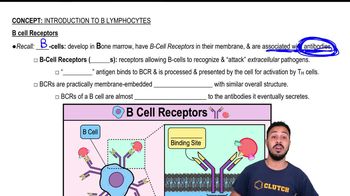
  • B cell Receptors
    04:37
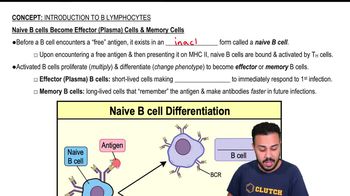
  • Naive B cells Become Effector (Plasma) Cells & Memory Cells
    04:23
  • Introduction to B Lymphocytes
    03:55

Antibodies

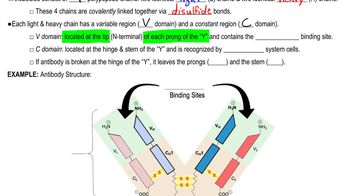
  • Antibody Structure
    05:40
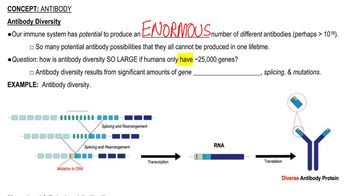
  • Antibody Diversity
    02:34
  • Antibodies
    00:48

Clonal Selection

  • Clonal Selection
    06:43

Bacterial Pathogenesis

  • Intro to Bacterial Pathogenesis
    02:35
  • 1) Exposure to Pathogen
    03:27
  • 3) Invasion into Host Tissues
    05:38

Introduction to Epidemiology

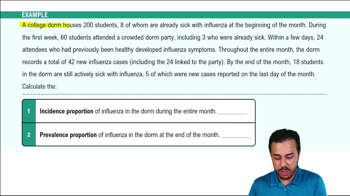
  • Introduction to Epidemiology Example 1
    01:48
  • Introduction to Epidemiology Example 2
    05:15
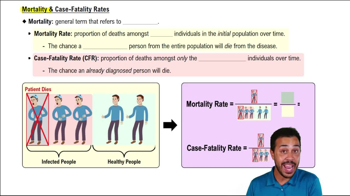
  • Mortality & Case-Fatality Rates
    02:28

Introduction to Chain of Infection

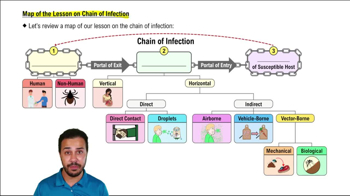
  • Map of the Lesson on Chain of Infection
    00:46
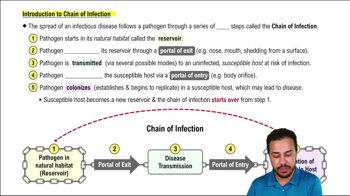
  • Introduction to Chain of Infection
    03:15

Reservoirs of Infection

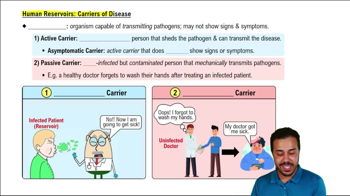
  • Human Reservoirs: Carriers of Disease
    03:12
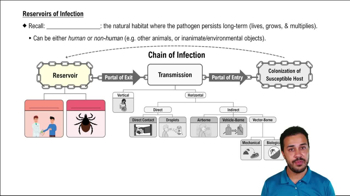
  • Reservoirs of Infection
    00:51
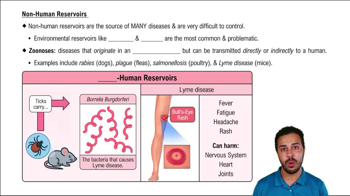
  • Non-Human Reservoirs
    02:36

Disease Transmission

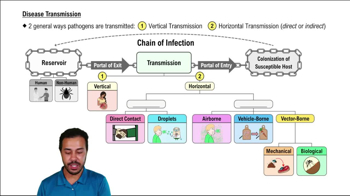
  • Disease Transmission
    01:24
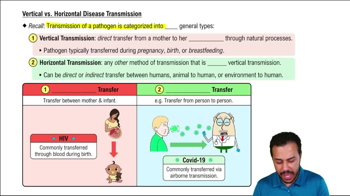
  • Vertical vs. Horizontal Disease Transmission
    02:32

Horizontal Disease Transmission

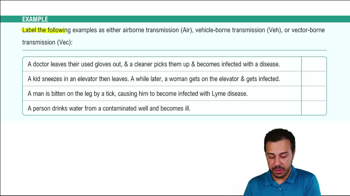
  • Horizontal Disease Transmission Example 1
    01:53
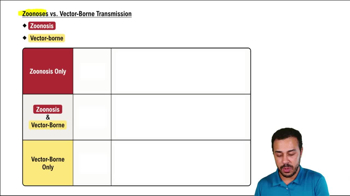
  • Zoonoses vs. Vector-Borne Transmission
    03:52
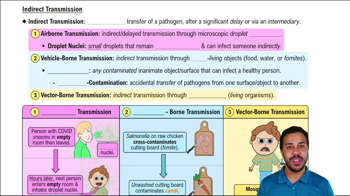
  • Indirect Transmission
    04:42

Colonization of Susceptible Host

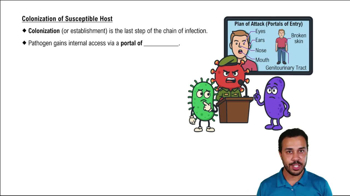
  • Colonization of Susceptible Host
    01:02
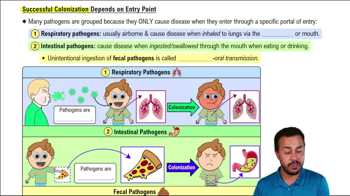
  • Successful Colonization Depends on Entry Point
    03:01

Factors Influencing Epidemiology

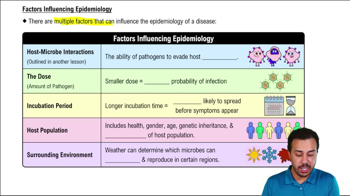
  • Factors Influencing Epidemiology
    03:26
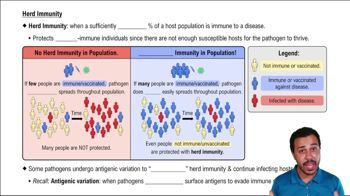
  • Herd Immunity
    04:05