 Back
BackChp 5 Microbial Metabolism Case Studies & Vocabulary – Guided Study
Study Guide - Smart Notes
 Tailored notes based on your materials, expanded with key definitions, examples, and context.
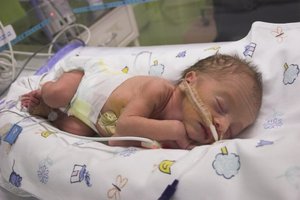
Case Study 1: Hospital-Acquired Infection in a Premature Infant
Q1. What was the most likely source/reason for Mark’s infection?
Background
Topic: Nosocomial (hospital-acquired) infections and opportunistic pathogens.
This question tests your understanding of how infections can be acquired in a hospital setting, especially in vulnerable patients like premature infants.
Key Terms:
Nosocomial infection: An infection acquired in a hospital.
Opportunistic pathogen: A microbe that causes disease when the host's defenses are compromised.
Step-by-Step Guidance
Review the case details: Mark was born prematurely and required intubation and mechanical ventilation.
Consider the timeline: Mark developed symptoms after several days in the hospital, and the infection was not present at birth.
Think about common sources of hospital-acquired infections, especially in infants who require respiratory support.
Recall that certain bacteria can colonize medical equipment and cause infections in vulnerable patients.
Try solving on your own before revealing the answer!
Q2. Mark’s infection caused meningitis and septicemia. Explain what these two terms mean.
Background
Topic: Infectious diseases of the central nervous system and bloodstream.
This question tests your ability to define and distinguish between two serious types of infections.
Key Terms:
Meningitis: Inflammation of the protective membranes covering the brain and spinal cord (meninges).
Septicemia: Presence of bacteria or their toxins in the bloodstream, leading to a systemic inflammatory response.
Step-by-Step Guidance
Define meningitis and identify which part of the body it affects.
Define septicemia and explain how it differs from a localized infection.
Relate these definitions to the findings in Mark’s case (bacteria in CSF and blood).
Try solving on your own before revealing the answer!
Q3. In your own words, explain how phenol red tests are done to help identify bacteria.
Background
Topic: Biochemical identification of bacteria using fermentation tests.
This question tests your understanding of how metabolic properties are used to distinguish bacterial species.
Key Terms and Concepts:
Phenol red: A pH indicator that changes color based on acidity.
Fermentation: Metabolic process that produces acids from carbohydrates.
Step-by-Step Guidance
Describe the setup: Bacteria are inoculated into a broth containing a specific sugar and phenol red.
Explain what happens if the bacteria ferment the sugar (acid production lowers pH).
Describe the color change that indicates a positive result (red to yellow).
Try solving on your own before revealing the answer!
Q4. Why were three tests for fermentation done instead of just testing with one carbohydrate?
Background
Topic: Differential identification of bacteria based on metabolic capabilities.
This question tests your understanding of why multiple biochemical tests are used in microbiology.
Key Terms:
Fermentation profile: The pattern of sugars a bacterium can ferment.
Step-by-Step Guidance
Recall that different bacteria ferment different sugars.
Explain how testing multiple sugars helps narrow down the identity of the organism.
Think about how a unique pattern of positive/negative results can be used diagnostically.
Try solving on your own before revealing the answer!
Q5. Why was Mark’s treatment changed? Be specific!
Background
Topic: Antibiotic selection and resistance.
This question tests your understanding of empirical vs. targeted antibiotic therapy and the importance of identifying the causative agent.
Key Terms:
Empirical therapy: Initial treatment given before the specific pathogen is known.
Targeted therapy: Treatment adjusted based on identification and susceptibility of the pathogen.
Step-by-Step Guidance
Review why broad-spectrum antibiotics are used initially in suspected infections.
Consider why therapy is changed after the pathogen is identified and its resistance profile is known.
Think about the characteristics of Citrobacter sedlakii and its antibiotic resistance.
Try solving on your own before revealing the answer!
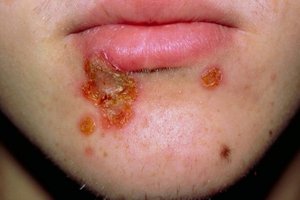
Case Study 2: Impetigo in a Wrestler
Q1. What pathogen(s) is/are responsible for impetigo?
Background
Topic: Bacterial skin infections.
This question tests your knowledge of the common causative agents of impetigo.
Key Terms:
Staphylococcus aureus: Gram-positive cocci, common cause of skin infections.
Streptococcus pyogenes: Another Gram-positive cocci, also causes impetigo.
Step-by-Step Guidance
Recall the two main bacteria that cause impetigo.
Think about their Gram reaction and morphology.
Consider which is more common in impetigo cases.
Try solving on your own before revealing the answer!
Q2. Who is at greatest risk of getting impetigo?
Background
Topic: Epidemiology of skin infections.
This question tests your understanding of risk factors for impetigo.
Key Terms:
Susceptible populations: Age groups or conditions that increase risk.
Step-by-Step Guidance
Think about the age group most commonly affected by impetigo.
Consider why this group is more susceptible (e.g., immune system development, skin integrity).
Try solving on your own before revealing the answer!
Q3. What factors place wrestlers at greater risk for skin infections than other athletes in contact sports?
Background
Topic: Transmission of infectious diseases in sports.
This question tests your ability to connect environmental and behavioral factors to infection risk.
Key Terms:
Fomite: An object that can carry infectious agents (e.g., wrestling mats).
Skin integrity: The condition of the skin as a barrier to infection.
Step-by-Step Guidance
List the ways bacteria can be transmitted during wrestling (direct contact, fomites).
Consider the role of skin abrasions and environmental conditions (warmth, moisture).
Think about why wrestlers might be at higher risk than other athletes.
Try solving on your own before revealing the answer!
Q4. What microbiology tests were likely performed to determine the causative agent of Shaun’s infection?
Background
Topic: Laboratory identification of bacterial pathogens.
This question tests your knowledge of common microbiological tests used to identify bacteria.
Key Terms:
Gram stain: Differentiates bacteria by cell wall structure.
Kirby-Bauer test: Assesses antibiotic susceptibility.
Catalase test: Differentiates Staphylococcus from Streptococcus.
Step-by-Step Guidance
Recall the purpose of the Gram stain and what result you would expect for Staph and Strep.
Describe how the Kirby-Bauer test is used to determine antibiotic sensitivity.
Explain how the catalase test distinguishes between Staph and Strep.
Try solving on your own before revealing the answer!
Vocabulary Chart Guidance
Background
Topic: Key terms in microbial metabolism.
Understanding vocabulary is essential for mastering microbiology concepts. Here are some terms and their explanations:
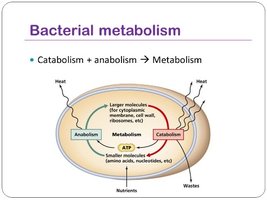
Metabolism: The sum of all chemical reactions in a cell, including catabolism (breakdown) and anabolism (building up).
Catabolism: The breakdown of complex molecules into simpler ones, releasing energy.
Anabolism: The synthesis of complex molecules from simpler ones, requiring energy.
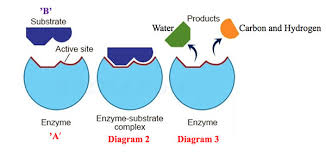
Enzyme: A protein that speeds up chemical reactions by lowering activation energy.
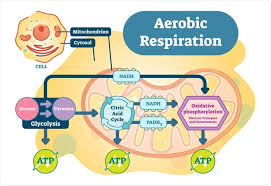
Glycolysis: The metabolic pathway that breaks down glucose to pyruvate, generating ATP and NADH.
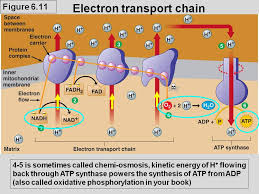
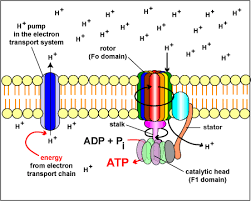
Electron transport: The transfer of electrons through a series of membrane proteins to generate a proton gradient for ATP synthesis.
Chemiosmosis: The movement of ions across a membrane, driving ATP synthesis.
ATP: Adenosine triphosphate, the main energy carrier in cells.
Fermentation: The partial oxidation of sugar to release energy without using an external electron acceptor.
Try completing the vocabulary chart with your own examples and associations before checking the answers!
