 Back
BackMicrobial Metabolism: Pathways, Energy, and Biosynthesis
Study Guide - Smart Notes
 Tailored notes based on your materials, expanded with key definitions, examples, and context.
Microbial Metabolism
Introduction to Metabolism
Microbial metabolism encompasses all chemical reactions occurring within a microbial cell. These reactions are essential for energy generation, biosynthesis, and cellular maintenance. Metabolism is divided into two main processes: catabolism (breakdown of molecules to release energy) and anabolism (synthesis of complex molecules from simpler ones).
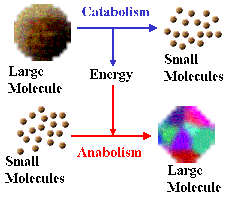
Catabolism: Degradation of large molecules into smaller ones, releasing energy.
Anabolism: Synthesis of large molecules from smaller ones, requiring energy input.
Metabolic pathways are sequences of enzymatically catalyzed chemical reactions in a cell. Each step is facilitated by a specific enzyme, ensuring efficiency and regulation.
Importance of Microbial Metabolism
Microbial metabolism is crucial for:
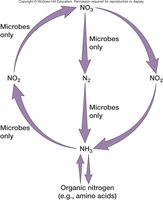
Biogeochemical cycles: Microbes drive the cycling of elements such as carbon, nitrogen, and sulfur.
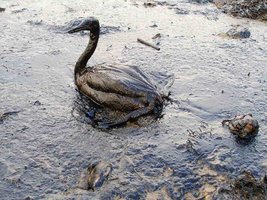
Wastewater treatment and bioremediation: Microbes degrade pollutants, including petroleum hydrocarbons and pesticides.
Food industry: Microbial metabolism is essential in the production of cheese, alcohol, vinegar, yogurt, and bread.
Human health: The human microbiome outnumbers human cells and contributes to health by producing vitamins, amino acids, and antibiotics.
Role of Enzymes in Metabolism
Enzymes are biological catalysts that accelerate metabolic reactions by lowering the activation energy required. Each enzyme is specific to a particular reaction, ensuring precise metabolic control.
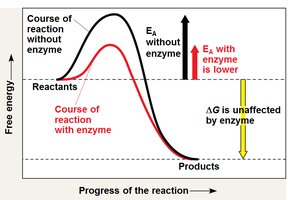
Activation energy (Ea): The minimum energy required to initiate a chemical reaction.
Enzymes do not alter the overall free energy change (ΔG) of a reaction.
Thermodynamics in Metabolism
Metabolic reactions obey the laws of thermodynamics:
First Law: Energy cannot be created or destroyed, only transformed.
Second Law: Every energy transfer increases the entropy (disorder) of the universe; some energy is lost as heat.

Organization of Metabolic Pathways
Pathway Structure
Metabolic pathways can be linear, branched, or cyclic. Each pathway begins with a substrate and ends with a product, with each step catalyzed by a specific enzyme.
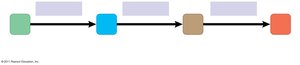
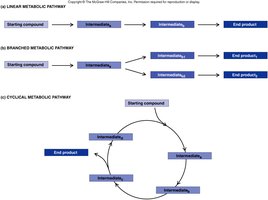
Linear pathways: Substrate is converted stepwise to a final product.
Branched pathways: Intermediates can lead to multiple end products (e.g., glycolysis).
Cyclic pathways: Intermediates are regenerated (e.g., Krebs cycle).
Catabolism: Energy Release and Conservation
Overview of Catabolic Processes
Catabolism involves the breakdown of organic and inorganic molecules to release energy, which is conserved as ATP. Major catabolic processes include aerobic respiration, anaerobic respiration, fermentation, and chemolithotrophy.
Aerobic respiration: Oxygen is the terminal electron acceptor.
Anaerobic respiration: Other inorganic molecules (e.g., NO3-, SO42-, CO2) serve as terminal electron acceptors.
Fermentation: Organic molecules serve as both electron donors and acceptors; less ATP is produced.
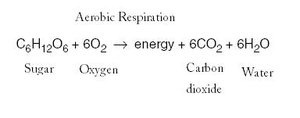
Example equation for aerobic respiration:
Nutritional Types of Microorganisms
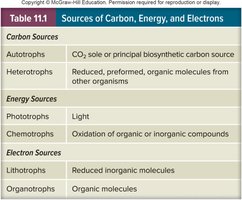
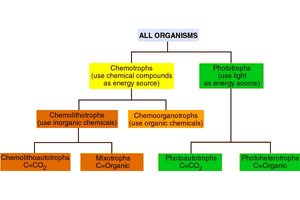
Microorganisms are classified based on their sources of carbon, energy, and electrons:
Type | Carbon Source | Energy Source | Electron Source |
|---|---|---|---|
Autotrophs | CO2 | Light or chemicals | Inorganic molecules |
Heterotrophs | Organic molecules | Light or chemicals | Organic molecules |
Catabolic Pathways
Glycolysis: The breakdown of glucose to pyruvate, generating ATP and NADH.
Krebs (TCA) cycle: Oxidizes acetyl-CoA to CO2, generating NADH, FADH2, and ATP.
Electron Transport Chain (ETC): Transfers electrons from NADH/FADH2 to terminal electron acceptors, generating a proton motive force (PMF) used to synthesize ATP.
ATP Synthesis
ATP synthase (ATPase) uses the PMF to convert ADP and inorganic phosphate (Pi) into ATP as protons flow back into the cell.
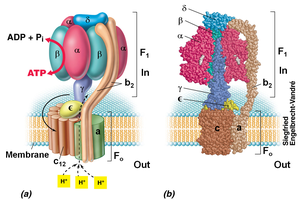
Approximately 3 H+ are required to synthesize one ATP molecule.
Bacterial cells can regenerate ATP at extremely high rates.
Redox Balance in Fermentation
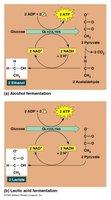
During fermentation, NAD+ must be regenerated from NADH to maintain glycolytic flux. This is achieved by transferring electrons to organic molecules, producing end products such as ethanol or lactate.
Phototrophy and Chemolithotrophy
Phototrophy
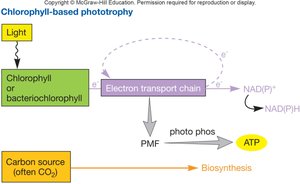
Phototrophic organisms capture light energy and convert it to chemical energy. There are two main types:
Oxygenic phototrophy: Generates oxygen (e.g., cyanobacteria, algae).
Anoxygenic phototrophy: Does not generate oxygen (e.g., purple and green bacteria).
Chemolithotrophy
Chemolithotrophs obtain energy by oxidizing inorganic molecules (e.g., H2, Fe2+, NH3). Many are autotrophs, using CO2 as a carbon source.
Anabolism: Biosynthesis of Cellular Components
Overview of Anabolism
Anabolism is the synthesis of complex molecules from simpler ones, requiring energy (usually from ATP) and reducing power (NADPH). It includes the formation of macromolecules such as proteins, nucleic acids, lipids, and polysaccharides.
Precursor metabolites: Intermediates from central metabolic pathways used as starting materials for biosynthesis.
CO2 fixation: Conversion of inorganic carbon into organic molecules (e.g., Calvin-Benson cycle).
Principles Governing Biosynthesis
Macromolecules are synthesized from a limited set of monomers, conserving energy and genetic resources.
Some enzymes function in both catabolic and anabolic pathways, but key steps are catalyzed by unique enzymes to ensure directionality.
Catabolic and anabolic pathways are often physically separated and use different cofactors (NADH for catabolism, NADPH for anabolism).
CO2 Fixation Pathways
Autotrophs use several pathways to fix CO2:
Calvin-Benson cycle (reductive pentose phosphate cycle): Main pathway in plants, algae, and cyanobacteria.
Reductive TCA cycle, hydroxypropionate bi-cycle, reductive acetyl-CoA pathway: Used by various bacteria and archaea.
The Calvin-Benson cycle consists of three phases: carboxylation, reduction, and regeneration. For each CO2 fixed, three ATP and two NADPH are consumed.
Summary Table: Sources of Carbon, Energy, and Electrons
Source | Type | Example |
|---|---|---|
Carbon | Autotrophs | CO2 |
Carbon | Heterotrophs | Organic molecules |
Energy | Phototrophs | Light |
Energy | Chemotrophs | Chemical compounds |
Electrons | Lithotrophs | Inorganic molecules |
Electrons | Organotrophs | Organic molecules |
