 Back
BackMicrobio lecture midterm pt.2
Study Guide - Smart Notes
 Tailored notes based on your materials, expanded with key definitions, examples, and context.
Q18. Explain the concept of semiconservative replication and how simultaneous copying of both strands of DNA is accomplished in prokaryotic cells.
Background
Topic: DNA Replication in Prokaryotes
This question tests your understanding of how DNA is duplicated in prokaryotic cells, specifically the mechanism of semiconservative replication and the coordination of copying both DNA strands.
Key Terms:
Semiconservative replication: Each new DNA molecule consists of one original (parental) strand and one newly synthesized strand.
DNA polymerase: The enzyme responsible for synthesizing new DNA strands.
Leading and lagging strands: The two strands of DNA are copied in different ways due to their antiparallel nature.
Step-by-Step Guidance
Recall that in semiconservative replication, the double helix unwinds and each strand serves as a template for a new strand.
Identify the enzymes involved: DNA helicase unwinds the DNA, and DNA polymerase synthesizes new strands.
Understand that replication occurs at the replication fork, where both strands are copied simultaneously—one continuously (leading strand), the other in fragments (lagging strand).
Consider how Okazaki fragments are joined by DNA ligase on the lagging strand.
Try solving on your own before revealing the answer!
Final Answer:
Semiconservative replication means each daughter DNA molecule contains one parental strand and one new strand. In prokaryotes, both strands are copied simultaneously at the replication fork: the leading strand is synthesized continuously, while the lagging strand is synthesized in Okazaki fragments and joined by DNA ligase.
Q19. Discuss how the initiation of DNA synthesis occurs in bacteria using the terms origin of replication, replication fork, and theta structures.
Background
Topic: DNA Replication Initiation in Bacteria
This question focuses on the process by which bacterial cells begin DNA replication, including the specific structures and terminology involved.
Key Terms:
Origin of replication (oriC): The specific DNA sequence where replication begins.
Replication fork: The Y-shaped region where DNA is actively being unwound and copied.
Theta structure: The intermediate structure formed during replication of circular DNA.
Step-by-Step Guidance
Identify the origin of replication (oriC) as the starting point for DNA synthesis in bacteria.
Describe how DNA helicase unwinds the DNA at the origin, forming two replication forks.
Explain that replication proceeds bidirectionally from the origin, creating a theta-shaped intermediate in circular DNA.
Consider how the replication forks move away from the origin, duplicating the entire chromosome.
Try solving on your own before revealing the answer!
Final Answer:
DNA synthesis in bacteria initiates at the origin of replication (oriC), where helicase unwinds the DNA, forming two replication forks. Replication proceeds bidirectionally, resulting in a theta structure as the circular chromosome is copied.
Q20. Some essential genes and DNA sequences in cells do NOT encode for proteins but are still essential for cellular growth and replication. Give two examples of a gene or sequence of which this is TRUE and explain why it is essential for growth or replication.
Background
Topic: Non-coding Essential DNA Elements
This question tests your knowledge of DNA elements that are crucial for cell function but do not code for proteins.
Key Terms:
rRNA genes: Encode ribosomal RNA, essential for protein synthesis.
Origin of replication: DNA sequence required for the initiation of DNA replication.
Promoter regions: DNA sequences that regulate gene expression.
Step-by-Step Guidance
Think of examples of essential non-protein-coding DNA, such as rRNA genes and origins of replication.
Explain why rRNA genes are essential: they produce RNA components of ribosomes, necessary for translation.
Describe why the origin of replication is essential: it is required for DNA replication to begin.
Consider other examples, such as promoter regions, which regulate transcription.
Try solving on your own before revealing the answer!
Final Answer:
Examples include rRNA genes (essential for ribosome assembly and protein synthesis) and the origin of replication (required for DNA replication). Both are crucial for cell growth and division, even though they do not encode proteins.
Q21. Explain the role of sigma factors in RNA synthesis in Bacteria.
Background
Topic: Transcription Initiation in Bacteria
This question tests your understanding of how bacterial RNA polymerase recognizes where to start transcription.
Key Terms:
Sigma factor: A protein that binds to RNA polymerase and directs it to specific promoter sequences.
Promoter: DNA sequence recognized by RNA polymerase for transcription initiation.
Step-by-Step Guidance
Recall that sigma factors are subunits of RNA polymerase in bacteria.
Understand that sigma factors help RNA polymerase recognize and bind to promoter sequences.
Consider how different sigma factors can direct RNA polymerase to different sets of genes under various conditions.
Think about the importance of sigma factors in regulating gene expression.
Try solving on your own before revealing the answer!
Final Answer:
Sigma factors guide RNA polymerase to specific promoter sequences, enabling the initiation of transcription. They are essential for recognizing where transcription should begin and for regulating gene expression in response to environmental changes.
Q22. What is the primary function of the protein DNA gyrase?
Background
Topic: DNA Topology in Prokaryotes
This question tests your knowledge of enzymes that manage DNA supercoiling during replication and transcription.
Key Terms:
DNA gyrase: A type II topoisomerase that introduces negative supercoils into DNA.
Supercoiling: The overwinding or underwinding of DNA, affecting its structure and function.
Step-by-Step Guidance
Recall that DNA gyrase is unique to prokaryotes and is involved in managing DNA supercoiling.
Understand that negative supercoiling helps compact DNA and facilitates unwinding during replication and transcription.
Consider how DNA gyrase relieves torsional stress ahead of the replication fork.
Try solving on your own before revealing the answer!
Final Answer:
DNA gyrase introduces negative supercoils into DNA, which helps relieve torsional stress and allows the DNA to be unwound for replication and transcription. This is essential for maintaining DNA structure and function in prokaryotes.
Q23. Explain the function of the helicases and why they are necessary.
Background
Topic: DNA Replication Enzymes
This question tests your understanding of the role of helicases in DNA replication.
Key Terms:
Helicase: An enzyme that unwinds the DNA double helix.
Replication fork: The area where DNA is being unwound and copied.
Step-by-Step Guidance
Recall that helicases break hydrogen bonds between DNA strands, separating them.
Understand that unwinding is necessary for DNA polymerase to access the template strands.
Consider how helicases are essential for forming the replication fork and enabling DNA synthesis.
Try solving on your own before revealing the answer!
Final Answer:
Helicases unwind the DNA double helix by breaking hydrogen bonds, allowing the replication machinery to access and copy each strand. They are essential for DNA replication to proceed.
Q24. Explain the process of RNA transcription using the terms upstream, Pribnow box, and consensus sequence.
Background
Topic: Transcription Initiation in Prokaryotes
This question tests your understanding of how RNA polymerase recognizes and initiates transcription at specific DNA sequences.
Key Terms:
Upstream: Refers to DNA sequences before (5' direction) the start site of transcription.
Pribnow box: The -10 consensus sequence in bacterial promoters (TATAAT).
Consensus sequence: A sequence that represents the most common nucleotides found at a particular position in a set of similar sequences.
Step-by-Step Guidance
Identify the promoter region upstream of the gene, which includes the Pribnow box and other consensus sequences.
Describe how RNA polymerase, guided by sigma factors, binds to these sequences to initiate transcription.
Explain the importance of the Pribnow box in positioning RNA polymerase correctly.
Consider how transcription proceeds downstream from the promoter.
Try solving on your own before revealing the answer!
Final Answer:
Transcription begins when RNA polymerase binds to the promoter region, which includes the Pribnow box (a consensus sequence upstream of the start site). The Pribnow box helps position RNA polymerase for accurate initiation of RNA synthesis.
Q25. How do prokaryotes know when to stop RNA transcription? Describe the known methods using correct terminology.
Background
Topic: Transcription Termination in Prokaryotes
This question tests your knowledge of mechanisms that signal the end of transcription in bacterial cells.
Key Terms:
Rho-independent termination: Involves a hairpin loop followed by a poly-U sequence.
Rho-dependent termination: Requires the Rho protein to release the RNA transcript.
Step-by-Step Guidance
Recall that prokaryotes use two main mechanisms: Rho-independent and Rho-dependent termination.
Describe Rho-independent termination: a GC-rich hairpin loop forms in the RNA, followed by a string of uracils.
Explain Rho-dependent termination: the Rho protein binds to the RNA and moves toward the polymerase, causing release.
Consider how these mechanisms ensure proper termination of transcription.
Try solving on your own before revealing the answer!
Final Answer:
Prokaryotes terminate transcription either via Rho-independent (hairpin loop and poly-U sequence) or Rho-dependent (Rho protein-mediated) mechanisms, ensuring the RNA transcript is released at the correct site.
Q26. How are the hypothetical bacterial genes A, B, and C involved in a single pathway commonly organized (positioned) on the chromosome? Draw a typical arrangement using correct terminology for each element.
Background
Topic: Operon Structure in Bacteria
This question tests your understanding of gene organization in prokaryotes, especially for genes involved in a common pathway.
Key Terms:
Operon: A cluster of genes under the control of a single promoter.
Promoter: DNA sequence where RNA polymerase binds to start transcription.
Operator: Regulatory sequence controlling gene expression.
Step-by-Step Guidance
Recall that genes involved in a single pathway are often organized in an operon.
Describe the typical arrangement: promoter, operator, and structural genes (A, B, C).
Consider how a single mRNA is transcribed from the operon.
Think about regulatory elements that control expression.
Try solving on your own before revealing the answer!
Final Answer:
Genes A, B, and C are typically organized in an operon: promoter → operator → gene A → gene B → gene C. This allows coordinated expression of all genes in the pathway from a single mRNA transcript.
Q27. Speculate on why it can be problematic to copy and express genes from Bacteria into Eukarya.
Background
Topic: Gene Expression Differences Between Domains
This question tests your understanding of the challenges in expressing bacterial genes in eukaryotic systems.
Key Terms:
Promoter compatibility: Bacterial promoters may not be recognized by eukaryotic transcription machinery.
Codon usage: Differences in codon preferences can affect translation efficiency.
Post-translational modifications: Eukaryotes may modify proteins differently than bacteria.
Step-by-Step Guidance
Consider differences in promoter sequences and regulatory elements between bacteria and eukaryotes.
Think about codon usage and how it may affect translation in eukaryotes.
Reflect on post-translational modifications and protein folding differences.
Consider the presence of introns in eukaryotic genes, which are absent in bacteria.
Try solving on your own before revealing the answer!
Final Answer:
Problems include differences in promoter recognition, codon usage, and post-translational modifications. Bacterial genes may not be efficiently transcribed or translated in eukaryotes, and proteins may not fold or function properly due to these differences.
Q28. Is the following statement TRUE or FALSE? Explain why you think so. "Proteins are the only biomolecules capable of catalyzing bond formation."
Background
Topic: Biological Catalysts
This question tests your understanding of biomolecules that can act as catalysts in cells.
Key Terms:
Enzyme: Protein that catalyzes biochemical reactions.
Ribozyme: RNA molecule with catalytic activity.
Step-by-Step Guidance
Recall that enzymes are proteins that catalyze reactions.
Consider whether other biomolecules, such as RNA, can also catalyze reactions.
Think about examples of ribozymes, such as the ribosome's peptidyl transferase activity.
Reflect on the diversity of biological catalysts.
Try solving on your own before revealing the answer!
Final Answer:
FALSE. RNA molecules (ribozymes) can also catalyze bond formation, such as in the ribosome. Proteins are not the only biomolecules with catalytic activity.
Q29. Explain why GC-rich DNA requires a higher temperature to denature or melt than AT-rich DNA and hypothesize as to why the GC content of chromosomes in microorganisms from different environments varies widely.
Background
Topic: DNA Stability and Environmental Adaptation
This question tests your understanding of DNA melting and the significance of GC content in adaptation.
Key Terms:
GC pairs: Guanine and cytosine pairs, held together by three hydrogen bonds.
AT pairs: Adenine and thymine pairs, held together by two hydrogen bonds.
Melting temperature (Tm): The temperature at which DNA strands separate.
Step-by-Step Guidance
Recall that GC pairs have three hydrogen bonds, while AT pairs have two.
Understand that more hydrogen bonds mean greater stability and higher melting temperature.
Hypothesize why microorganisms in hot environments might have higher GC content for increased DNA stability.
Consider environmental factors that influence GC content.
Try solving on your own before revealing the answer!
Final Answer:
GC-rich DNA requires higher temperatures to melt due to three hydrogen bonds per GC pair. Microorganisms in hot environments often have higher GC content for increased DNA stability, while those in cooler environments may have lower GC content.
Q30. How is an open reading frame (ORF) identified and used to determine the sequence of amino acids in the gene it encodes for?
Background
Topic: Gene Annotation and Protein Coding
This question tests your understanding of how genes are identified and translated into proteins.
Key Terms:
Open reading frame (ORF): A sequence of DNA that can be translated into a protein.
Start codon: The first codon in an ORF, usually AUG.
Stop codon: Codon that signals the end of translation.
Step-by-Step Guidance
Identify the start codon (AUG) and stop codon in the DNA sequence.
Determine the region between start and stop codons as the ORF.
Translate the ORF into amino acids using the genetic code.
Consider how the ORF is used to predict the protein sequence.
Try solving on your own before revealing the answer!
Final Answer:
An ORF is identified by locating the start and stop codons. The sequence between them is translated into amino acids using the codon table, determining the protein encoded by the gene.
Q31. Speculate why the half-life of mRNA is short, while the half-lives of rRNA and tRNA are long.
Background
Topic: RNA Stability and Function
This question tests your understanding of the differences in stability among various types of RNA.
Key Terms:
mRNA: Messenger RNA, carries genetic information for protein synthesis.
rRNA: Ribosomal RNA, forms the core of ribosomes.
tRNA: Transfer RNA, brings amino acids to the ribosome.
Half-life: The time it takes for half of the RNA molecules to degrade.
Step-by-Step Guidance
Recall that mRNA is used transiently for protein synthesis and must be regulated quickly.
Understand that rRNA and tRNA are structural and functional components of the translation machinery, requiring stability.
Consider the cellular need for rapid changes in gene expression via mRNA turnover.
Reflect on the importance of stable rRNA and tRNA for efficient protein synthesis.
Try solving on your own before revealing the answer!
Final Answer:
mRNA has a short half-life to allow rapid changes in gene expression, while rRNA and tRNA are stable because they are essential components of the translation machinery and must persist for efficient protein synthesis.
Q32. You isolate a piece of DNA from a microorganism you cultivated from your teeth. The piece of DNA is 94 kbp in size and is circular. You sequence it and discover that it contains genes for capsule formation, pili, and antibiotic resistance, as well as an origin of replication. What is this piece of DNA and how is it related to the other genetic elements found in prokaryotic cells?
Background
Topic: Plasmids and Genetic Elements in Prokaryotes
This question tests your understanding of plasmids and their role in prokaryotic cells.
Key Terms:
Plasmid: Circular, extrachromosomal DNA molecule found in prokaryotes.
Origin of replication: Sequence required for plasmid replication.
Antibiotic resistance genes: Genes that confer resistance to antibiotics.
Step-by-Step Guidance
Identify the characteristics of the DNA: circular, contains origin of replication, and accessory genes.
Recall that plasmids are common in prokaryotes and often carry genes for antibiotic resistance and other functions.
Consider how plasmids are distinct from the main chromosome but can replicate independently.
Think about the role of plasmids in horizontal gene transfer.
Try solving on your own before revealing the answer!
Final Answer:
This DNA is a plasmid, an extrachromosomal genetic element. It carries genes for capsule formation, pili, and antibiotic resistance, and can replicate independently of the chromosome, contributing to genetic diversity and adaptation in prokaryotes.
Q33. Based on the concept of the Central Dogma, what is the basic flow of genetic information in all cellular life? Include in your answer a diagram that illustrates the relationships between the basic components and steps in the flow of genetic information.
Background
Topic: Central Dogma of Molecular Biology
This question tests your understanding of the fundamental flow of genetic information in cells.
Key Terms:
Central Dogma: DNA → RNA → Protein
Transcription: DNA to RNA
Translation: RNA to protein
Step-by-Step Guidance
Recall the basic steps: DNA is transcribed into RNA, which is then translated into protein.
Draw or visualize a diagram showing DNA, RNA, and protein, with arrows indicating the flow.
Label the processes: transcription and translation.
Consider any exceptions or additional steps, such as reverse transcription in some viruses.
Try solving on your own before revealing the answer!
Final Answer:
The Central Dogma describes the flow: DNA → RNA → Protein. DNA is transcribed to RNA, which is translated to protein. The diagram shows arrows from DNA to RNA (transcription) and from RNA to protein (translation).
Q34. The following is the sequence of bases in the sense strand of a DNA segment and contains the beginning of a gene. DNA 3ʹ A T A T T A C C A G G C A T G G A C C C C C G G G 5ʹ Based on this sequence, write the sequence of the anti-sense DNA strand and the mRNA. Label the 5ʹ and 3ʹ ends in your predicted sequences. The start codon in this organism is AUG. Indicate where the start codon is in your sequence. Why is the start codon important? Why does there have to be a specific start codon?
Background
Topic: Transcription and Translation Initiation
This question tests your ability to transcribe and translate DNA sequences, and understand the importance of the start codon.
Key Terms:
Sense strand: The DNA strand with the same sequence as the mRNA (except T for U).
Antisense strand: The template strand for mRNA synthesis.
Start codon (AUG): Signals the beginning of translation.
Step-by-Step Guidance
Write the antisense strand by pairing complementary bases to the sense strand.
Transcribe the antisense strand to mRNA, replacing T with U.
Label the 5' and 3' ends of each sequence.
Identify the AUG start codon in the mRNA sequence.
Explain the importance of the start codon for translation initiation.
Try solving on your own before revealing the answer!
Final Answer:
Antisense strand: 5' T A T A A T G G T C C G T A C C T G G G G G C C C 3' mRNA: 5' U A U A A U G G U C C G U A C C U G G G G G C C C 3' The AUG start codon is essential for translation initiation, ensuring the correct reading frame and proper protein synthesis.
Q35. What is the principle of bidirectional replication including the potential problems of this bidirectionality? How commonly does this occur in prokaryotes?
Background
Topic: DNA Replication Mechanisms
This question tests your understanding of how DNA replication proceeds in two directions and the challenges it presents.
Key Terms:
Bidirectional replication: DNA synthesis proceeds in both directions from the origin.
Replication fork: The site where DNA is unwound and copied.
Supercoiling and collision: Potential problems during bidirectional replication.
Step-by-Step Guidance
Recall that bidirectional replication starts at the origin and proceeds in two directions.
Describe how two replication forks move away from the origin.
Consider potential problems, such as supercoiling and fork collisions.
Reflect on how common bidirectional replication is in prokaryotes.
Try solving on your own before revealing the answer!
Final Answer:
Bidirectional replication is the standard in prokaryotes, with two forks moving away from the origin. Problems include supercoiling and possible fork collisions, but these are managed by enzymes like DNA gyrase.
Q36. Draw a replisome as it would look at the start of chromosomal replication showing both replication forks and their contents.
Background
Topic: DNA Replication Complex
This question tests your understanding of the structure and components of the replisome during DNA replication.
Key Terms:
Replisome: The complex of enzymes and proteins at the replication fork.
Replication fork: The site where DNA is unwound and copied.
DNA polymerase, helicase, primase, ligase: Key replisome components.
Step-by-Step Guidance
Visualize the replication fork with leading and lagging strands.
Identify the enzymes present: DNA polymerase, helicase, primase, ligase.
Draw or describe the arrangement of these components at both forks.
Consider the directionality of synthesis for each strand.
Try solving on your own before revealing the answer!
Final Answer:
The replisome includes DNA polymerase, helicase, primase, and ligase at each replication fork, with leading and lagging strands being synthesized simultaneously. Both forks contain the same set of enzymes, arranged to facilitate bidirectional replication.
Q37. What is the prokaryotic ribosome comprised of and which ‘sites’ are described in the textbook?
Background
Topic: Ribosome Structure and Function
This question tests your knowledge of ribosome composition and the functional sites involved in translation.
Key Terms:
Ribosome: Composed of rRNA and proteins.
Sites: A (aminoacyl), P (peptidyl), and E (exit) sites.
Step-by-Step Guidance
Recall that prokaryotic ribosomes are made of two subunits: 30S and 50S.
Identify the three functional sites: A, P, and E.
Describe the role of each site in translation.
Consider how tRNA and mRNA interact with these sites.
Try solving on your own before revealing the answer!
Final Answer:
Prokaryotic ribosomes consist of 30S and 50S subunits, with A, P, and E sites for tRNA binding and peptide bond formation. These sites facilitate the sequential addition of amino acids during translation.
Q38. Distinguish between transcription and translation with particular focus on the players and reaction types that occur in each.
Background
Topic: Gene Expression Processes
This question tests your understanding of the differences between transcription and translation.
Key Terms:
Transcription: DNA to RNA, involves RNA polymerase.
Translation: RNA to protein, involves ribosomes, tRNA, and amino acids.
Reaction types: Polymerization (transcription), peptide bond formation (translation).
Step-by-Step Guidance
Describe transcription: RNA polymerase synthesizes RNA from a DNA template.
Describe translation: Ribosomes synthesize proteins from mRNA using tRNA and amino acids.
Compare the players involved in each process.
Contrast the types of reactions: nucleotide polymerization vs. peptide bond formation.
Try solving on your own before revealing the answer!
Final Answer:
Transcription uses RNA polymerase to synthesize RNA from DNA, while translation uses ribosomes, tRNA, and amino acids to synthesize proteins from mRNA. The reactions differ: transcription involves nucleotide polymerization, translation involves peptide bond formation.
Q39. What is the underlying reason for the transcriptional-translational coupling that is known to occur in bacteria?
Background
Topic: Coupling of Transcription and Translation in Prokaryotes
This question tests your understanding of why transcription and translation are coupled in bacteria.
Key Terms:
Transcriptional-translational coupling: Simultaneous transcription and translation.
Prokaryotic cell structure: Lack of nuclear membrane.
Step-by-Step Guidance
Recall that prokaryotes lack a nuclear membrane, allowing ribosomes to access mRNA as it is transcribed.
Understand that coupling increases efficiency and speed of gene expression.
Consider the advantages for rapid adaptation and growth.
Reflect on differences with eukaryotes, where processes are separated.
Try solving on your own before revealing the answer!
Final Answer:
Transcriptional-translational coupling occurs in bacteria because there is no nuclear membrane, allowing ribosomes to begin translating mRNA as it is being transcribed. This enables rapid and efficient gene expression.
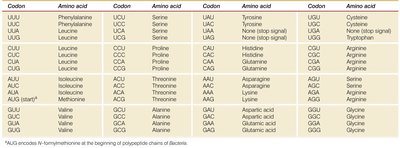
Q40. Show the expected direction of transcription, the template strand and the resultant mRNA followed by the polypeptide you would obtain from the following double stranded DNA sequence.
Background
Topic: Transcription, Translation, and Codon Usage
This question tests your ability to determine the template strand, transcribe mRNA, and translate it into a polypeptide using a codon table.
Key Terms:
Template strand: The DNA strand used to synthesize mRNA.
Transcription direction: 5' to 3' synthesis of mRNA.
Codon table: Used to translate mRNA into amino acids.
Step-by-Step Guidance
Identify the template strand based on the direction of transcription (usually 3' to 5' DNA strand).
Transcribe the template strand to mRNA, replacing T with U and maintaining 5' to 3' direction.
Use the codon table to translate the mRNA sequence into a polypeptide.
Label the directionality of each sequence and identify the start codon.
Try solving on your own before revealing the answer!
Final Answer:
Transcription proceeds from the template strand (3' to 5'), producing mRNA in the 5' to 3' direction. The mRNA is then translated into a polypeptide using the codon table provided. The polypeptide sequence is determined by reading the mRNA codons from the start codon onward.
