 Back
BackMicrobiology Study Guide: Cell Structure, Classification, and Microbial Growth Control
Study Guide - Smart Notes
 Tailored notes based on your materials, expanded with key definitions, examples, and context.
Prokaryotic and Eukaryotic Cell Structure
Prokaryotes vs. Eukaryotes
Understanding the differences between prokaryotic and eukaryotic cells is fundamental in microbiology. Prokaryotes include bacteria and archaea, while eukaryotes encompass protists, fungi, plants, and animals.
Prokaryotes: One circular chromosome, not in a membrane; lack histones and organelles; cell walls contain peptidoglycan (bacteria) or pseudomurein (archaea); divide by binary fission.
Eukaryotes: Paired chromosomes in a nuclear membrane; contain histones and organelles; cell walls (when present) are polysaccharide-based; divide by mitosis.
Feature | Prokaryote | Eukaryote |
|---|---|---|
Chromosome | Circular, no membrane | Paired, in nuclear membrane |
Histones | Absent | Present |
Organelles | Absent | Present |
Cell Wall | Peptidoglycan (bacteria), pseudomurein (archaea) | Polysaccharide (when present) |
Division | Binary fission | Mitosis |
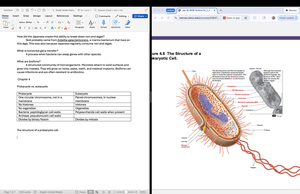
Structure of a Prokaryotic Cell
Prokaryotic cells typically lack membrane-enclosed organelles. All bacteria contain cytoplasm, ribosomes, a plasma membrane, and a nucleoid. Most bacteria have cell walls, which play roles in virulence, identification, and as targets for antimicrobial agents.
Capsule: Contributes to virulence by preventing phagocytosis.
Cell Wall: Provides structural support and protection; composition varies between Gram-positive and Gram-negative bacteria.
Flagella: Filamentous appendages for motility; composed of filament, hook, and basal body.
Plasmids: Extrachromosomal DNA elements encoding antibiotic resistance or toxin production.
Gram Staining and Cell Wall Differences
Gram-Positive vs. Gram-Negative Bacteria
Gram staining is a differential technique used to classify bacteria based on cell wall structure. Gram-positive bacteria have thick peptidoglycan walls, while Gram-negative bacteria have thin peptidoglycan and an outer membrane containing lipopolysaccharides.
Characteristic | Gram-Positive | Gram-Negative |
|---|---|---|
Peptidoglycan Thickness | Thick | Thin |
Outer Membrane | Absent | Present |
Teichoic Acids | Present | Absent |
LPS (Lipopolysaccharide) | Absent | Present |
Susceptibility to Penicillin | High | Low |
Flagella Basal Body | 2 rings | 4 rings |

Classification and Identification of Microorganisms
Methods of Classification
Microorganisms are classified based on cellular organization, morphology, staining characteristics, and biochemical tests. Carl Woese established the three-domain system: Bacteria, Archaea, and Eukarya.
Morphological Characteristics: Useful for identifying eukaryotes.
Differential Staining: Gram and acid-fast stains.
Biochemical Tests: Detect presence of specific enzymes.
Dichotomous Keys: Identification keys based on successive questions.

Control of Microbial Growth
Principles and Methods
Controlling microbial growth is essential in medical and laboratory settings. Methods include heat, radiation, and filtration. Heat is the most widely used method for sterilization.
Decontamination: Treatment to make objects safe to handle.
Disinfection: Targets pathogens but does not eliminate all microorganisms.
Sterilization: Removal or destruction of all living microorganisms.
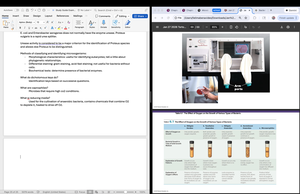
Use-Dilution Test: Evaluates effectiveness of disinfectants.
Disk-Diffusion Method: Tests antimicrobial activity.
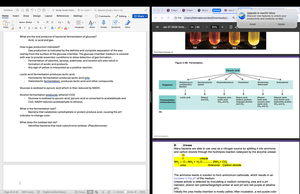
Biochemical Tests and Metabolic Pathways
Fermentation and Respiration
Microorganisms utilize various metabolic pathways for energy production, including glycolysis, the Krebs cycle, and fermentation. Biochemical tests help identify bacteria based on their metabolic capabilities.
Fermentation: Anaerobic process producing acids, gases, or alcohols.
Respiration: Complete oxidation of pyruvic acid to CO2; aerobic or anaerobic.
Biochemical Tests: Detect enzymes such as urease, catalase, and oxidase.
Test | Purpose |
|---|---|
Fermentation Test | Detects acid/gas production from carbohydrate metabolism |
Oxidase Test | Identifies cytochrome oxidase presence |
Urease Test | Detects urea hydrolysis |
Summary Table: Microbial Classification and Control
Domain | Cell Type | Cell Wall | Example |
|---|---|---|---|
Bacteria | Prokaryote | Peptidoglycan | Escherichia coli |
Archaea | Prokaryote | Pseudomurein | Methanogens |
Eukarya | Eukaryote | Varies | Fungi, Protozoa |
