 Back
BackMicrobiology Study Notes: Chemical Principles, Antimicrobial Agents, and Epidemiology
Study Guide - Smart Notes
 Tailored notes based on your materials, expanded with key definitions, examples, and context.
Chemical Principles of Microbiology
pH Scale and Its Importance
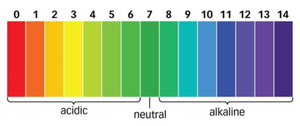
The pH scale is a measure of the hydrogen ion concentration in a solution, which determines its acidity or alkalinity. In microbiology, pH affects enzyme activity, microbial growth, and the effectiveness of antimicrobial agents.
Acidic solutions: pH 0–6
Neutral solution: pH 7
Alkaline (basic) solutions: pH 8–14
Microbial growth: Most bacteria grow best near neutral pH, but some thrive in acidic or alkaline environments.
Controlling Microbial Growth
Bactericidal vs. Bacteriostatic Agents
Antimicrobial agents are classified based on their effects on microorganisms:
Bactericidal: Agents that kill bacteria directly.
Bacteriostatic: Agents that inhibit bacterial growth but do not kill them; bacteria can resume growth if the agent is removed.
Example: Penicillin is bactericidal against many Gram-positive bacteria, while tetracycline is bacteriostatic.
Antiseptics vs. Disinfectants
Antiseptics: Chemical agents safe for use on living tissues (e.g., skin, wounds) to reduce infection risk.
Disinfectants: Chemical agents used on non-living surfaces (e.g., countertops, instruments) to destroy microorganisms.
Example: Iodine is an antiseptic; bleach is a disinfectant.
Disk Diffusion Method
The disk diffusion method is a laboratory technique used to evaluate the effectiveness of antimicrobial agents against specific bacteria. Disks impregnated with antimicrobial agents are placed on an agar plate inoculated with bacteria. After incubation, zones where bacteria fail to grow (zones of inhibition) are measured.
Zone of inhibition: The clear area around a disk where bacterial growth is prevented by the antimicrobial agent.
Interpretation of Results:
Susceptible: Large zone of inhibition; bacteria are easily inhibited or killed.
Resistant: Small or no zone of inhibition; bacteria are not affected by the agent.
Intermediate: Moderate zone; bacteria may be inhibited at higher doses or in certain conditions.
Application: Guides clinicians in selecting effective antibiotics for treatment.
Epidemiology
Key Terms in Epidemiology
Index case: The first identified case in an outbreak, crucial for tracking and controlling disease spread.
Carrier: An individual who harbors a pathogen and can spread it without showing symptoms.
Epidemic: A sudden increase in disease cases above what is normally expected in a specific area.
Endemic: A disease that is consistently present in a population or region.
Epidemiology: The science of studying disease patterns, causes, and effects in populations to improve public health.
Case definition: A set of standard criteria for classifying whether a person has a particular disease, often including clinical symptoms, laboratory findings, and epidemiological information (e.g., time, place, person).
Example: For measles, a case definition might require fever, rash, and a positive lab test for the measles virus.
