 Back
BackPathogenic Microorganisms of the Urogenital Tract & Sexually Transmitted Diseases (STDs)
Study Guide - Smart Notes
 Tailored notes based on your materials, expanded with key definitions, examples, and context.
Genitourinary Tract: Structure and Defenses
Overview of the Genitourinary Tract
The genitourinary tract consists of two distinct organ systems: the urinary tract and the genital (reproductive) system. The urinary tract is responsible for removing metabolic wastes from the blood, regulating body processes, and forming and transporting urine. The genital system is primarily involved in reproduction.
Urinary tract components: Kidneys, ureters, bladder, and urethra
Genital system components: Testes, epididymides, vas deferens, prostate gland, scrotum, penis (male); uterus, fallopian tubes, ovaries, vagina, cervix (female)
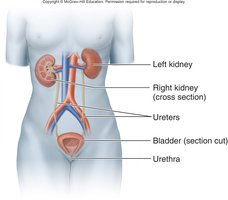
Urinary Tract Anatomy
Kidneys: Filter metabolic wastes from the blood
Ureters: Tubes that transport urine from kidneys to bladder
Bladder: Stores urine until excretion
Urethra: Conducts urine to the exterior; in males, also part of the reproductive tract
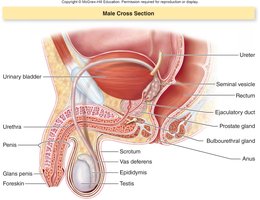
Male Reproductive Anatomy
The male reproductive system produces, maintains, and transports sperm and is the source of male sex hormones. The urethra serves as the terminal organ for both urinary and reproductive tracts.
Testes: Produce sperm and hormones
Epididymides: Coiled tubes for sperm maturation
Vas deferens: Transports sperm to the ejaculatory duct
Prostate gland: Contributes to semen
Scrotum and penis: External structures housing testes and urethra
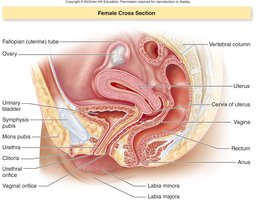
Female Reproductive Anatomy
The female reproductive system includes the uterus, fallopian tubes, ovaries, vagina, and cervix. The cervix is a common site of infection and connects the uterus to the vagina.
Uterus: Site of fetal development
Fallopian tubes: Transport ova from ovaries to uterus
Ovaries: Produce ova and hormones
Vagina: Muscular canal for intercourse and childbirth
Cervix: Lower part of uterus, opening to vagina
Defenses of the Genitourinary Tract
The genitourinary tract employs several innate defenses to prevent infection:
Flushing action of urine: Removes microbes from the urinary tract
Desquamation: Shedding of epithelial cells with attached microbes
Urine properties: Acidic pH, lysozyme (breaks down peptidoglycan), lactoferrin (inhibits bacterial growth), secretory IgA (specific immunity)
Female reproductive tract: Mucus membranes, secretory IgA, acidic pH (due to bacterial fermentation of glycogen)
Male reproductive tract: Flushing action of urine
Normal Biota of the Genitourinary Tract
Normal biota play a significant role in the health of the genitourinary tract. The outer urethra harbors nonhemolytic streptococci, staphylococci, corynebacteria, and lactobacilli. The female genital tract, especially the vagina, is colonized by lactobacilli, which maintain an acidic environment, and low levels of Candida albicans.

Urinary Tract Infections (UTIs)
Overview and Types
UTIs are common infections of the urinary tract, often caused by normal biota from the gastrointestinal tract. Types include:
Cystitis: Infection of the bladder
Pyelonephritis: Infection of the kidneys
Urethritis: Infection limited to the urethra
Signs and Symptoms
Cystitis: Sudden onset pain, frequent urination, dysuria (burning), cloudy or bloody urine, low-grade fever, nausea
Pyelonephritis: Back pain, high fever, risk of permanent kidney damage
Causative Agents and Epidemiology
95% of UTIs are caused by normal GI biota, especially Escherichia coli (80%), Staphylococcus saprophyticus, and Enterococcus
Catheter-associated UTIs (CA-UTIs) are common in healthcare settings
Women are more susceptible due to anatomical proximity of urethra to anus

Treatment and Prevention
Treatment: Sulfa drugs (e.g., trimethoprim-sulfamethoxazole), phenazopyridine for symptom relief, alternative antibiotics for resistant strains
Prevention: Good hygiene, minimizing catheter use, proper screening
Sexually Transmitted Infections (STIs) of the Genitourinary Tract
Discharge Diseases
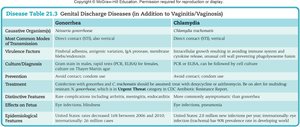
Discharge diseases are STIs characterized by increased fluid discharge from the reproductive tract. Major examples include gonorrhea, chlamydia, and trichomoniasis.
Gonorrhea
Causative agent: Neisseria gonorrhoeae (Gram-negative diplococcus)
Symptoms in males: Urethritis, painful urination, yellowish discharge, possible infertility
Symptoms in females: Urinary and genital tract infection, mucopurulent or bloody discharge, salpingitis, pelvic inflammatory disease (PID), risk of sterility or ectopic pregnancy
Complications: Dissemination to joints, skin, meningitis, endocarditis; neonatal eye infections
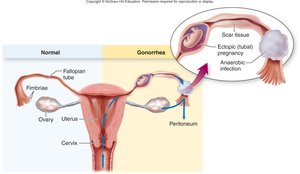
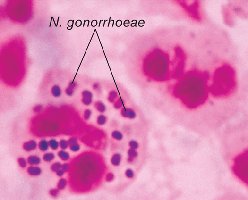
Pathogenesis and Virulence Factors
Attachment via fimbriae, antigenic and phase variation, IgA protease production, endotoxin release
Diagnosis and Treatment
Diagnosis: Gram stain (males), ELISA or PCR (females), culture on Thayer-Martin agar
Treatment: Ceftriaxone plus azithromycin or doxycycline; no vaccine available
Chlamydia
Causative agent: Chlamydia trachomatis (obligate intracellular bacterium)
Symptoms in males: Urethritis, discharge, painful urination, epididymitis
Symptoms in females: Cervicitis, discharge, salpingitis, PID, risk of infertility
Complications: Lymphogranuloma venereum, neonatal conjunctivitis and pneumonia

Pathogenesis and Diagnosis
Intracellular growth, immune evasion, inflammation-induced tissue damage
Diagnosis: PCR, ELISA, direct fluorescent antibody, urine test
Treatment and Prevention
Treatment: Doxycycline or azithromycin; treat all sexual partners; recheck after 3–4 months
Prevention: Barrier protection, annual screening for at-risk populations
Trichomoniasis
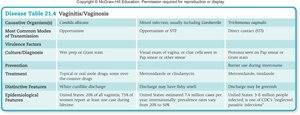
Causative agent: Trichomonas vaginalis (flagellated protozoan)
Symptoms: Often asymptomatic; females may have frothy, greenish discharge; increased susceptibility to other infections and pregnancy complications
Transmission: Sexual contact
Genital Ulcer Diseases
Overview
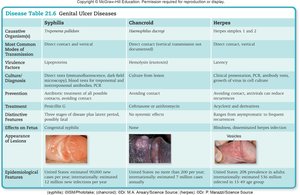
Genital ulcer diseases are characterized by lesions on the genitals, increasing the risk of HIV infection. Major examples include syphilis, chancroid, and genital herpes.
Syphilis
Causative agent: Treponema pallidum (spirochete)
Stages: Primary (chancre), secondary (rash, systemic symptoms), tertiary (gummas, cardiovascular and neurological complications), latent periods
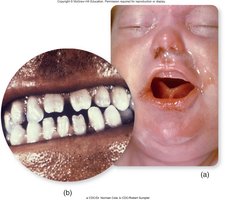
Congenital syphilis: Transmitted from mother to fetus, causing developmental defects or stillbirth
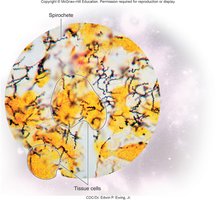
Diagnosis and Treatment
Dark-field microscopy, serological tests (FTA-ABS), public health contact tracing
Penicillin G is the treatment of choice
Chancroid
Causative agent: Haemophilus ducreyi (pleomorphic gram-negative rod)
Symptoms: Painful soft chancre, swollen lymph nodes
Transmission: Sexual contact, associated with poor hygiene
Genital Herpes
Causative agents: Herpes simplex virus 1 and 2 (HSV-1, HSV-2)
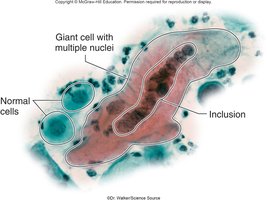
Symptoms: Painful vesicles, recurrent outbreaks, possible encephalitis, neonatal herpes (high mortality)
Pathogenesis: Latency in nerve cells, reactivation by stress or other triggers
Treatment: Acyclovir, valacyclovir; no cure or vaccine yet
Wart Diseases of the Genital Tract
Human Papillomavirus (HPV) Infection
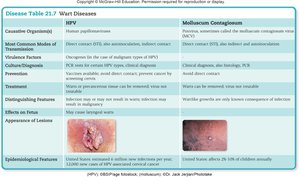
Causative agent: Human papillomaviruses (nonenveloped DNA viruses)
Symptoms: Genital warts (condyloma acuminata), risk of cervical, penile, anal, and oropharyngeal cancers
Transmission: Direct contact, autoinoculation
Prevention: Gardasil vaccine, Pap smear screening
Treatment: Wart removal; infection is incurable
Molluscum Contagiosum
Causative agent: Unclassified virus in the Poxviridae family
Symptoms: Wartlike growths on genital mucosa or skin
Transmission: Sexual contact, fomites, autoinoculation
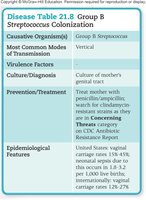
Group B Streptococcus Colonization
Overview
Group B Streptococcus (GBS) colonizes 10–40% of women asymptomatically. Colonization during pregnancy can lead to neonatal infections, including sepsis, meningitis, and pneumonia, as well as maternal complications.
Screening: Recommended for all pregnant women at 35–37 weeks
Treatment: Penicillin or ampicillin during labor; erythromycin for resistant strains
Additional info: These notes integrate and expand upon the provided material with academic context, definitions, and examples, and include only images that directly reinforce the adjacent content.
