 Back
BackPathogenic RNA Viruses: Structure, Diseases, and Taxonomy
Study Guide - Smart Notes
 Tailored notes based on your materials, expanded with key definitions, examples, and context.
Pathogenic RNA Viruses
Overview of Enveloped, Segmented Negative ssRNA Viruses
Enveloped, segmented negative-sense single-stranded RNA (ssRNA) viruses are a diverse group of pathogens that include several important human and zoonotic viruses. Their genomes are divided into multiple RNA segments, which can facilitate genetic reassortment and variation.
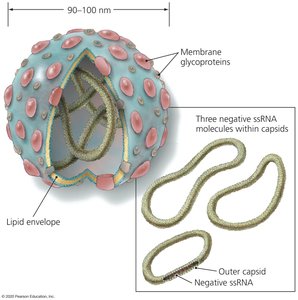
Capsid Structure: These viruses possess a segmented genome enclosed within a capsid and a lipid envelope derived from the host cell membrane.
Major Families: Orthomyxoviridae (e.g., influenza viruses), Bunyaviridae, and Arenaviridae.
Zoonotic Potential: Many of these viruses primarily infect animals but can be transmitted to humans, often resulting in significant disease outbreaks.

Bunyaviruses
Bunyaviruses are primarily zoonotic pathogens, meaning they are transmitted from animals to humans, often via arthropod vectors (arboviruses). Their genome consists of three segments of negative-sense ssRNA.
Transmission: Most bunyaviruses are transmitted by biting arthropods such as mosquitoes and ticks.
Genome: Segmented into three ssRNA molecules, allowing for genetic reassortment.
Diseases: Rift Valley fever, California encephalitis, and various hemorrhagic fevers.
Hantaviruses: Unlike other bunyaviruses, hantaviruses are not transmitted by arthropods but by inhalation of virions from rodent excreta. American strains can cause hantavirus pulmonary syndrome, a severe and often fatal pneumonia.
Diagnosis, Treatment, and Prevention of Bunyavirus Diseases
Bunyavirus infections can be challenging to diagnose and manage due to their nonspecific symptoms and lack of targeted therapies.
Diagnosis: Clinical symptoms are similar to other viral infections; laboratory confirmation is achieved using ELISA or PCR.
Treatment: No specific antiviral treatments are available; care is supportive.
Prevention: Focuses on reducing contact with vectors and controlling arthropod populations. A vaccine exists for Rift Valley fever.
Arenaviruses
Arenaviruses are enveloped viruses with a segmented genome of two ssRNA molecules. They are unique in containing host cell ribosomes, which give them a sandy appearance in electron micrographs, though these ribosomes are not used by the virus.
Diseases: Lymphocytic choriomeningitis (LCM), Lassa fever, Junin, Sabiá, and Machupo hemorrhagic fevers.
Transmission: Zoonotic, primarily from rodents via aerosols or contaminated food. Lassa fever can also spread through contact with body fluids.
Symptoms: Range from mild flu-like illness to severe hemorrhagic fevers with internal bleeding.
Diagnosis: Based on clinical symptoms and immunoassays.
Treatment: Supportive care is the mainstay; prevention relies on rodent control and limiting exposure.
Hepatitis D Virus (HDV)
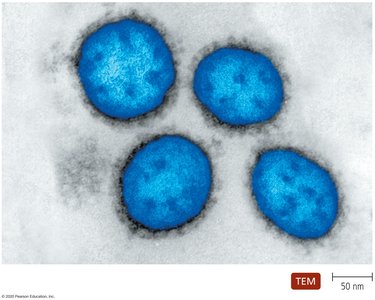
Hepatitis D virus is a unique pathogen that requires co-infection with hepatitis B virus (HBV) to be infectious. It is transmitted through bodily fluids, including via sexual contact and contaminated needles.
Dependency: HDV cannot attach to liver cells without HBV; it uses HBV surface antigens for entry.
Role in Disease: HDV infection can exacerbate liver damage and increase the risk of liver cancer, especially in the presence of HBV.
Prevention: Vaccination against HBV also prevents HDV infection.
Comparison of Hepatitis Viruses
Hepatitis viruses differ in their structure, transmission, and clinical outcomes. The following table summarizes key features of the major hepatitis viruses:
Feature | Hepatitis A | Hepatitis B | Hepatitis C | Hepatitis D | Hepatitis E |
|---|---|---|---|---|---|
Common Names of Disease | Infectious hepatitis | Serum hepatitis | Non-A, non-B hepatitis; chronic hepatitis | Delta agent hepatitis | Hepatitis E, enteric hepatitis |
Virus Family (genus) | Picornaviridae (Hepatovirus) | Hepadnaviridae (Orthohepadnavirus) | Flaviviridae (Hepacivirus) | Arenaviridae (Deltavirus) | Hepeviridae (Orthohepevirus) |
Genome | +ssRNA | dsDNA | +ssRNA | −ssRNA | +ssRNA |
Envelope? | Naked | Enveloped | Enveloped | Enveloped | Naked |
Transmission | Fecal-oral | Needles; sex | Needles; sex | Needles; sex | Fecal-oral |
Severity (mortality rate) | Mild (< 0.5%) | Occasionally severe (1–2%) | Usually subclinical (0.5–4%) | Requires coinfection with HBV; may be severe (high) | Mild (1–2%) except in pregnant women (20%) |
Chronic Carrier State? | No | Yes | Yes | No | No |
Other Disease Associations | — | Hepatic cancer | Hepatic cancer | Liver damage; hepatic cancer (with HBV) | — |
Naked, Segmented dsRNA Viruses: Reoviridae
General Features
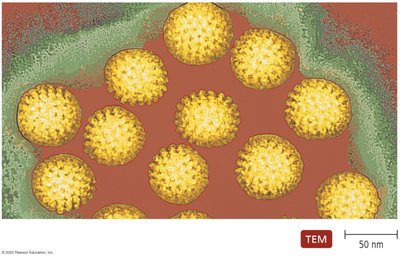
Reoviridae are unique among viruses in that their genomes are composed of double-stranded RNA (dsRNA) and are segmented. They have naked icosahedral capsids and include important human pathogens such as rotavirus and coltivirus.
Diseases: Respiratory and enteric infections, including severe gastroenteritis in infants (rotavirus) and Colorado tick fever (coltivirus).
Transmission: Rotavirus is transmitted via the fecal-oral route, while coltivirus is an arbovirus transmitted by ticks.
Rotavirus
Rotavirus is a leading cause of severe diarrhea and dehydration in infants and young children worldwide. Its capsid glycoproteins function similarly to those of enveloped viruses, facilitating attachment and endocytosis.
Symptoms: Acute gastroenteritis, often self-limited but potentially severe due to dehydration.
Treatment: Supportive care with fluid and electrolyte replacement.
Prevention: Good hygiene, proper sewage treatment, and vaccination are key preventive measures.
Coltivirus
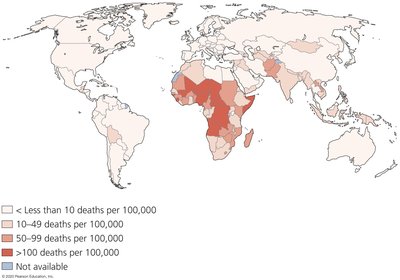
Coltivirus causes Colorado tick fever, a zoonotic disease transmitted by ticks. Most infections are mild, but severe cases can occur. Diagnosis is by immunoassay, and there is no specific treatment.
Prevention: Limiting contact with ticks is the primary preventive strategy.

Taxonomy and Characteristics of Human RNA Viruses
Human RNA viruses are classified based on their genome type, envelope status, capsid symmetry, and representative genera. The following table summarizes the taxonomy and key characteristics of major human RNA virus families:
Family | Strand Type | Enveloped or Naked | Capsid Symmetry | Size (nm) | Representative Genera (Diseases) |
|---|---|---|---|---|---|
Picornaviridae | Single, positive | Naked | Icosahedral | 22–30 | Enterovirus (polio), Rhinovirus (common cold), Hepatovirus (hepatitis A) |
Caliciviridae | Single, positive | Naked | Icosahedral | 35–40 | Norovirus (acute gastroenteritis) |
Astroviridae | Single, positive | Naked | Icosahedral | 30 | Astrovirus (gastroenteritis) |
Hepeviridae | Single, positive | Naked | Icosahedral | 27–34 | Orthohepevirus (hepatitis E) |
Togaviridae | Single, positive | Enveloped | Icosahedral | 40–75 | Alphavirus (encephalitis), Rubivirus (rubella) |
Flaviviridae | Single, positive | Enveloped | Icosahedral | 37–50 | Flavivirus (yellow fever), Hepacivirus (hepatitis C) |
Coronaviridae | Single, positive | Enveloped | Helical | 80–160 | Coronavirus (common cold, SARS) |
Retroviridae | Single, positive, segmented | Enveloped | Icosahedral | 80–146 | Deltaretrovirus (leukemia), Lentivirus (AIDS) |
Paramyxoviridae | Single, negative | Enveloped | Helical | 125–250 | Respirovirus (colds), Pneumovirus (RSV), Morbillivirus (measles), Rubulavirus (mumps) |
Rhabdoviridae | Single, negative | Enveloped | Helical | 75 × 130–240 | Lyssavirus (rabies) |
Filoviridae | Single, negative | Enveloped | Helical | Up to 14,000; 80 in diameter | Ebolavirus, Marburgvirus (hemorrhagic fevers) |
Orthomyxoviridae | Single, negative, segmented | Enveloped | Helical | 80–120 | Influenzavirus (flu) |
Bunyaviridae | Single, negative, segmented | Enveloped | Helical | 90–100 | Orthobunyavirus (encephalitis), Hantavirus (pneumonia) |
Arenaviridae | Single, negative, segmented | Enveloped | Helical | 50–300 | Lassavirus (hemorrhagic fever), Deltavirus (hepatitis D) |
Reoviridae | Double, segmented | Naked | Icosahedral | 78–80 | Rotavirus (diarrhea), Coltivirus (Colorado tick fever) |
Key Concepts and Review Questions
Hepatitis D virus requires co-infection with hepatitis B virus to trigger liver cancer.
Best prevention for rotavirus diarrhea: Vaccination is the most effective preventive measure.
Hantaviruses are not arboviruses: They are transmitted by inhalation of rodent excreta, not by arthropod vectors.
