 Back
BackPhosphorylation and Fermentation: Microbial Metabolism Study Notes
Study Guide - Smart Notes
 Tailored notes based on your materials, expanded with key definitions, examples, and context.
Phosphorylation
Definition and Importance
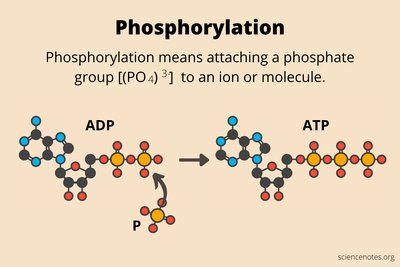
Phosphorylation is a fundamental biochemical process in which a phosphate group (PO43-) is attached to an ion or molecule. This process is essential for energy transfer within cells, particularly in the synthesis of ATP (adenosine triphosphate), the primary energy carrier in biological systems.
Key Point 1: Phosphorylation enables the storage and release of energy in cells.
Key Point 2: The conversion of ADP (adenosine diphosphate) to ATP is a classic example of phosphorylation.
Example: During cellular respiration, energy from food molecules is used to add a phosphate group to ADP, forming ATP.
Types of Phosphorylation
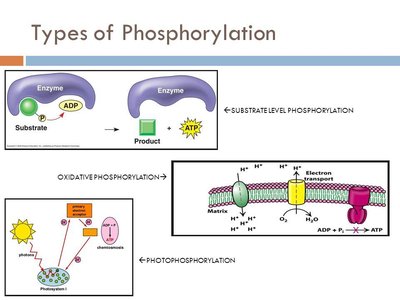
There are three main types of phosphorylation processes in microbial metabolism, each with distinct mechanisms and biological significance.
Substrate-Level Phosphorylation: Direct transfer of a phosphate group from a substrate to ADP, forming ATP. Occurs during glycolysis and the citric acid cycle.
Oxidative Phosphorylation: ATP is generated using energy released by electrons as they are transferred to oxygen in the electron transport chain. This process is central to aerobic respiration.
Photophosphorylation: ATP is produced using light energy during photosynthesis, primarily in cyanobacteria and plants.
Equation:
Fermentation
Overview and Biological Role
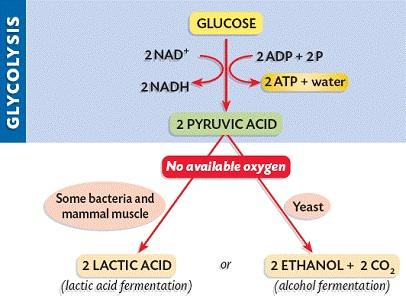
Fermentation is a metabolic process that allows cells to generate energy in the absence of oxygen. It involves the breakdown of glucose to produce ATP, with organic molecules serving as electron acceptors instead of oxygen.
Key Point 1: Fermentation occurs when oxygen is unavailable, providing an alternative pathway for ATP production.
Key Point 2: The process regenerates NAD+ from NADH, allowing glycolysis to continue.
Example: Yeast cells ferment glucose to produce ethanol and carbon dioxide, while some bacteria and muscle cells produce lactic acid.
Types of Fermentation
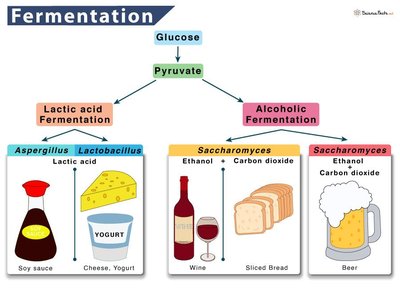
There are two primary types of fermentation, each characterized by the end products and the organisms involved.
Lactic Acid Fermentation: Pyruvate is reduced to lactic acid. Occurs in Lactobacillus (used in yogurt and cheese production) and in mammalian muscle cells.
Alcoholic Fermentation: Pyruvate is converted to ethanol and carbon dioxide. Performed by Saccharomyces (yeast), used in bread, wine, and beer production.
Equation for Lactic Acid Fermentation:
Equation for Alcoholic Fermentation:
Applications of Fermentation
Fermentation is widely used in food and beverage industries, as well as in biotechnology.
Food Production: Lactic acid fermentation produces yogurt, cheese, and soy sauce. Alcoholic fermentation produces wine, beer, and bread.
Biotechnological Uses: Fermentation is used to produce biofuels, pharmaceuticals, and other industrial chemicals.
Type of Fermentation | Microorganisms | Products | Applications |
|---|---|---|---|
Lactic Acid Fermentation | Lactobacillus, Aspergillus | Lactic acid | Yogurt, cheese, soy sauce |
Alcoholic Fermentation | Saccharomyces (yeast) | Ethanol, CO2 | Wine, beer, bread |
Additional info: Fermentation is a crucial process for microbial survival in anaerobic environments and is exploited in various industrial applications.
