 Back
BackCh 8 - Recombinant DNA Technology: Tools, Techniques, and Applications
Study Guide - Smart Notes
 Tailored notes based on your materials, expanded with key definitions, examples, and context.
Recombinant DNA Technology and Biotechnology
Introduction to Biotechnology and Recombinant DNA Technology
Biotechnology is the use of microorganisms and biological systems to produce practical products for human use. Recombinant DNA technology involves the intentional modification of the genomes of organisms for practical purposes. The main goals are:
Eliminate undesirable phenotypic traits
Combine beneficial traits from different organisms
Create organisms that synthesize products needed by humans
Example: Production of insulin by genetically modified bacteria. 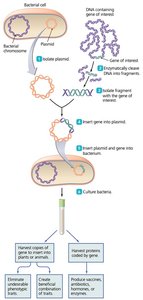
Tools of Recombinant DNA Technology
Mutagens
Mutagens are physical or chemical agents that induce mutations in DNA. Scientists use mutagens to create genetic diversity and select for cells with beneficial traits.
Mutated genes can be isolated for further study or application.
Reverse Transcriptase and cDNA Synthesis
Reverse transcriptase is an enzyme isolated from retroviruses that synthesizes DNA from an RNA template.
Allows creation of cDNA (complementary DNA) from mRNA, which lacks introns and can be cloned in prokaryotes.
Synthetic Nucleic Acids
Synthetic nucleic acids are DNA or RNA molecules produced in cell-free solutions. Uses include:
Elucidating the genetic code
Creating genes for specific proteins
Synthesizing DNA/RNA probes and PCR primers
Restriction Enzymes
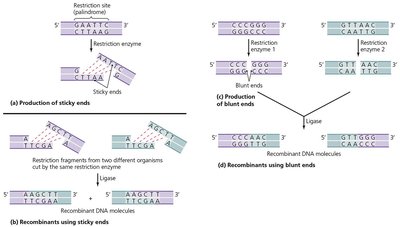
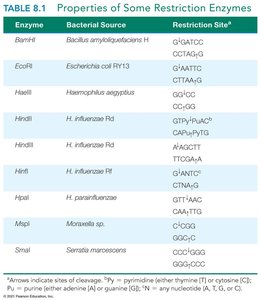
Restriction enzymes are bacterial enzymes that cut DNA at specific nucleotide sequences called restriction sites (often palindromes).
Produce sticky ends or blunt ends for DNA recombination
Essential for gene cloning and DNA manipulation
Enzyme | Bacterial Source | Restriction Site |
|---|---|---|
BamHI | Bacillus amyloliquefaciens H | G\'GATCC |
EcoRI | Escherichia coli RY13 | G\'AATTC |
HaeIII | Haemophilus aegyptius | GG\'CC |
HindIII | H. influenzae Rd | A\'AGCTT |
HinfI | H. influenzae Rd | G\'ANTC |
ApaI | H. parainfluenzae | G\'GGCCC |
MspI | Moraxella sp. | C\'CGG |
SmaI | Serratia marcescens | GGG\'CCC |
Vectors
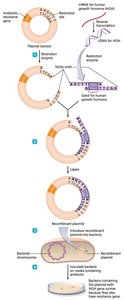
Vectors are nucleic acid molecules (such as plasmids, viral genomes, or transposons) used to deliver genes into cells.
Small, easily manipulated, and contain genetic markers
Ensure expression of the inserted gene
CRISPR System
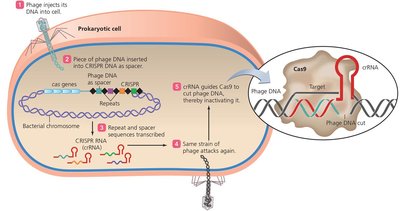
The CRISPR-Cas system is a primitive immune system in prokaryotes that protects against viral infection.
Used for precise DNA editing in many organisms
Potential for treating genetic diseases
Gene Libraries
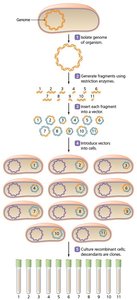
Gene libraries are collections of bacterial or phage clones, each containing a gene from an organism's genome.
Can represent all genes of a chromosome or cDNA from mRNA
Techniques of Recombinant DNA Technology
Polymerase Chain Reaction (PCR)
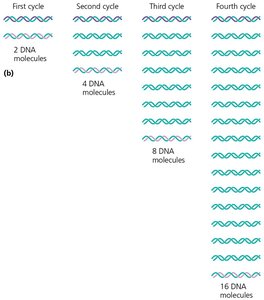
PCR is a method to amplify DNA in vitro, producing large numbers of identical DNA molecules.
Critical for diagnostics, research, and epidemiology
Consists of three steps: Denaturation, Priming, and Extension
Automated using a thermocycler
Example: Used to distinguish Ebola outbreaks. 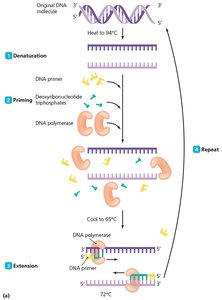
Gel Electrophoresis
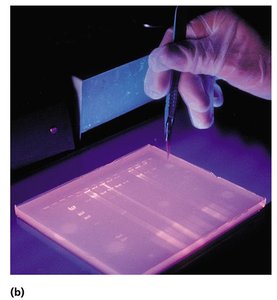
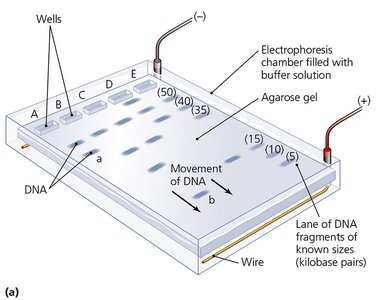
Gel electrophoresis separates DNA molecules based on size, charge, and shape.
DNA migrates toward the positive electrode in an agarose gel
Smaller fragments move faster and farther
Used to isolate DNA of interest and estimate fragment size
Southern Blot
Southern blot transfers DNA from a gel to a membrane, where probes can localize specific sequences.
Used for DNA identification and analysis
DNA Microarrays
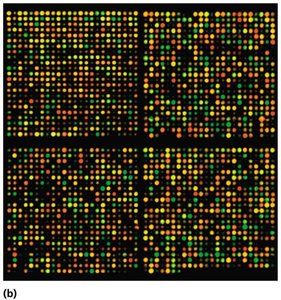
DNA microarrays consist of immobilized single-stranded DNA.
Fluorescently labeled DNA binds to complementary sequences
Used for monitoring gene expression, diagnosing infections, and identifying organisms
Inserting DNA into Cells
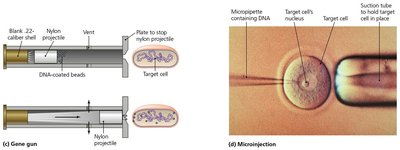
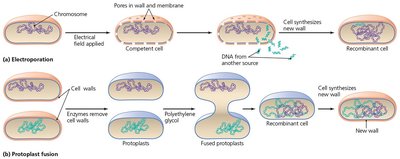
The goal is to introduce recombinant DNA into cells using natural or artificial methods.
Natural methods: Transformation, transduction, conjugation
Artificial methods: Electroporation, protoplast fusion, gene gun, microinjection, heat shock
Applications of Recombinant DNA Technology
Genetic Mapping
Genetic mapping locates genes on nucleic acid molecules, providing insights into metabolism, growth, and relatedness.
Methods include restriction fragmentation and fluorescent in situ hybridization (FISH)
Genomics and Sequencing
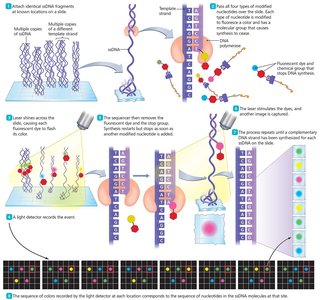
Genomics involves sequencing and analyzing the nucleotide bases of genomes.
Next-generation sequencing (NGS) is used to relate DNA sequence to protein function
Microbial Community Studies
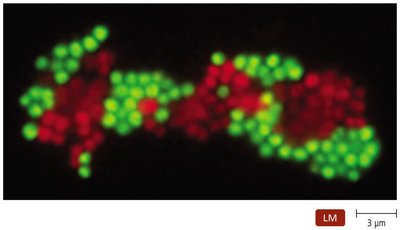
Most microorganisms are identified only by their DNA fingerprints.
Next-generation sequencing allows identification of all members of a microbiome
Pharmaceutical and Therapeutic Applications
Protein synthesis: Bacteria and yeast produce synthetic proteins
Vaccine production: Safer vaccines, subunit vaccines, and gene-based immunization
Genetic screening: DNA microarrays screen for inherited diseases and viral DNA
Gene therapy: Replacing defective genes with normal copies
Medical diagnosis: Detecting pathogen-specific gene sequences
Xenotransplants: Animal cells/tissues/organs used in humans
Biomedical animal models: Studying diseases and developing therapies
Agricultural Applications
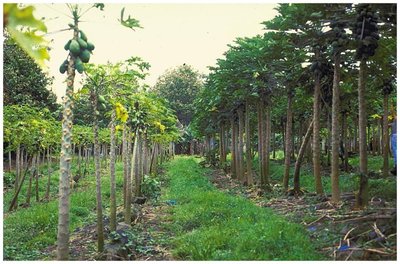
Transgenic organisms: Recombinant plants and animals (GMOs)
Herbicide tolerance: Genes for resistance to glyphosate
Pest resistance: Bt toxin gene inserted into crops
Salt and freeze tolerance: Genes for environmental resilience
Improved nutrition and yield: Genes for vitamin A, BGH, and metabolic pathways
Ethics and Safety of Recombinant DNA Technology
Safety Concerns
Long-term effects of transgenic manipulations are unknown
Potential for gene transfer to other organisms
Risk of allergies or pathogenicity
Biological weapons could be created
Ethical Issues
Routine genetic screenings
Types of permissible genetic alterations
Genetic privacy and ownership
Profits from genetically altered organisms
Mandatory screening or correction of genetic abnormalities
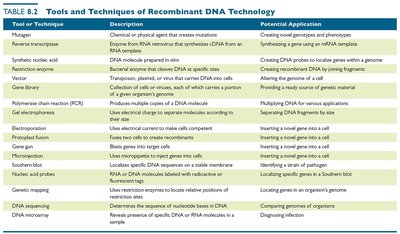
Summary Table: Tools and Techniques of Recombinant DNA Technology
Tool or Technique | Description | Potential Application |
|---|---|---|
Mutagen | Chemical or physical agent that creates mutations | Creating novel genotypes and phenotypes |
Reverse transcriptase | Enzyme that synthesizes DNA from RNA template | Synthesizing cDNA for gene cloning |
Synthetic nucleic acid | DNA/RNA molecule prepared in vitro | Creating DNA probes, PCR primers, and genes |
Restriction enzyme | Bacterial enzyme that cuts DNA at specific sites | Cloning genes, analyzing DNA fragments |
Vector | Plasmid, virus, or other carrier for DNA | Inserting genes into cells |
Gene library | Collection of clones with genome fragments | Storing and accessing genes |
PCR | Multiplying DNA copies in vitro | Diagnostics, research, forensics |
Electroporation | Uses electric field to insert DNA into cells | Inserting genes into cells |
Protoplast fusion | Fuses cells without walls to combine genomes | Creating hybrid cells |
Gene gun | Shoots DNA-coated beads into cells | Inserting genes into plant cells |
Microinjection | Injects DNA into cells with a micropipette | Inserting genes into animal cells |
Southern blot | Transfers DNA from gel to membrane | Locating genes in a genome |
DNA microarray | Compares gene expression | Diagnosing infection |
