 Back
BackStructural Features of Prokaryotic and Eukaryotic Microorganisms
Study Guide - Smart Notes
 Tailored notes based on your materials, expanded with key definitions, examples, and context.
Structural Features of Prokaryotic and Eukaryotic Microorganisms
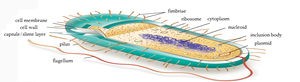
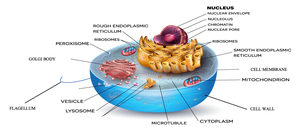
Overview of Prokaryotic and Eukaryotic Microbes
Prokaryotic and eukaryotic microorganisms share several fundamental cellular features, but also possess distinct structural characteristics. Understanding these differences is essential for microbiology students, as it forms the basis for classification, physiology, and the study of microbial function.
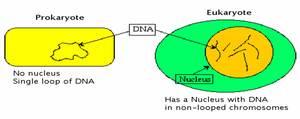
Prokaryotes: Include Bacteria and Archaea; lack a membrane-bound nucleus.
Eukaryotes: Include Fungi, Algae, Protozoa; possess a membrane-bound nucleus and organelles.
Cell Size: Prokaryotic cells are typically 1-10 µm, while eukaryotic cells range from 10-200 µm.
Features Shared by Prokaryotic and Eukaryotic Microbes
Both cell types contain essential structures for life, including DNA, ribosomes, cytoplasm, and cell membranes.
DNA: Serves as the genetic instruction manual for all cellular processes.
Ribosomes: Responsible for protein synthesis.
Cytoplasm: Gelatinous fluid that houses internal cell structures and provides shape.
Cell Membrane: Regulates nutrient transport and maintains energy gradients.
DNA and Chromosomes
The organization and compaction of DNA differ between prokaryotes and eukaryotes.
Prokaryotic DNA: Usually a single, circular chromosome located in the nucleoid region; may also contain plasmids.
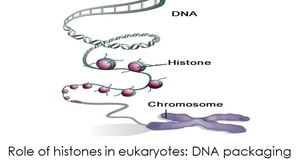
Eukaryotic DNA: Multiple, linear chromosomes housed within a nucleus; DNA is wrapped around histone proteins for compaction.
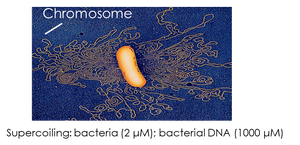
Ribosomes
Ribosomes are the site of protein synthesis, but their size and structure differ between prokaryotes and eukaryotes.
Prokaryotic Ribosomes: 70S, composed of 50S and 30S subunits.
Eukaryotic Ribosomes: 80S, composed of 60S and 40S subunits.
Location: Prokaryotic ribosomes are free in the cytoplasm; eukaryotic ribosomes can be free or attached to the endoplasmic reticulum.
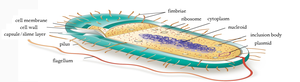
Cytoplasm
The cytoplasm is a semi-fluid matrix that supports cellular structures and metabolic activities.
Function: Provides structure, houses organelles (in eukaryotes), and is the site of many metabolic reactions.
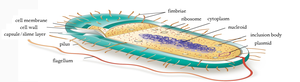
Cell Membrane
The cell membrane is a phospholipid bilayer that separates the cell from its environment and regulates transport.
Functions: Nutrient transport, energy gradient maintenance, and cellular communication.
Phospholipid Linkages: Bacteria and eukaryotes use ester linkages; archaea use ether linkages.
Membrane Fluidity: Maintained by hopanoids (bacteria) or cholesterol (eukaryotes).
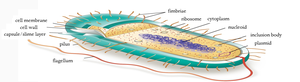
Transport Across Cell Membranes
Microbes utilize various mechanisms to transport nutrients and waste across their membranes.
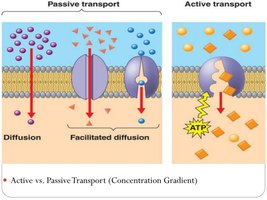
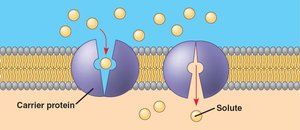
Passive Transport: Includes diffusion and facilitated diffusion; does not require energy.
Active Transport: Requires energy (ATP) to move substances against concentration gradients.
Endocytosis/Exocytosis: Occur only in eukaryotes; involve engulfing or releasing materials via vesicles.
Cell Walls
Cell walls provide structural support and protection from osmotic forces. Their composition varies among microbial groups.
Bacterial Cell Walls: Contain peptidoglycan (murein).
Archaeal Cell Walls: Contain pseudopeptidoglycan (pseudomurein).
Fungal Cell Walls: Contain chitin.
Algal Cell Walls: Contain pectins, agar, or cellulose.
Flagella
Flagella are appendages used for motility. Their structure and mechanism differ between prokaryotes and eukaryotes.
Prokaryotic Flagella: Composed of flagellin; rotate using Na+/H+ gradients.
Eukaryotic Flagella: Composed of microtubules; move in a wave-like fashion using ATP.
Unique Features in Prokaryotic Microbes
Attachment Structures
Prokaryotes possess specialized structures for attachment, including fimbriae, pili, capsules, and slime layers. These are critical for biofilm formation and pathogenicity.
Capsule: Protects against desiccation and immune responses.
Pili/Fimbriae: Aid in attachment to surfaces and other cells.
Biofilm Formation
Biofilms are communities of microbes attached to surfaces, protected by extracellular matrices.
Quorum Sensing: Chemical signaling that triggers biofilm formation.
Advantages: Protection from predators, resistance to antibiotics and disinfectants.
Applications: Biofilms can cause industrial damage (e.g., pipeline corrosion) and medical issues (e.g., chronic infections).
Plasmids
Plasmids are small, circular DNA molecules that provide bacteria with extra genetic features, such as antibiotic resistance.
Inclusion Bodies
Inclusion bodies store nutrients and other materials; some are involved in orientation with Earth's magnetic field.
Endospores
Endospores are highly resistant structures formed by some bacteria to survive extreme conditions, such as heat, starvation, and antimicrobial treatments.
Unique Features in Eukaryotic Microbes
Membrane-Bound Organelles
Eukaryotes possess organelles such as mitochondria, endoplasmic reticulum, Golgi apparatus, and lysosomes, which compartmentalize cellular functions.
Chloroplasts
Chloroplasts capture light energy and convert it into chemical energy via photosynthesis.
Microtubules and Cytoskeleton
Microtubules are structural components of the cytoskeleton, involved in maintaining cell shape, intracellular transport, and motility.
Feature | Prokaryotes | Eukaryotes |
|---|---|---|
Nucleus | No | Yes |
Chromosome Structure | Circular | Linear |
Ribosome Size | 70S | 80S |
Cell Wall Composition | Peptidoglycan (Bacteria), Pseudomurein (Archaea) | Chitin (Fungi), Cellulose (Algae) |
Flagella Structure | Flagellin, rotary | Microtubules, wave-like |
Membrane-Bound Organelles | No | Yes |
Example: Escherichia coli (prokaryote) vs. Saccharomyces cerevisiae (eukaryote) demonstrate differences in cell structure, chromosome organization, and metabolic capabilities. Additional info: Academic context was added to clarify the functions and significance of each structure, as well as to provide examples and comparisons relevant to microbiology students.
