 Back
BackUrinary and Reproductive System Infections: Microbiology Study Notes
Study Guide - Smart Notes
 Tailored notes based on your materials, expanded with key definitions, examples, and context.
Urinary and Reproductive System Infections
Overview of the Urinary System
The human urinary system is responsible for filtering blood, removing waste, and regulating fluid balance. It consists of two kidneys, two ureters, a bladder, and a urethra. The anatomical differences between male and female urethras influence susceptibility to infection.
Female urethra: Short and straight, increasing risk of infection.
Male urethra: Longer and curved, offering more protection against ascending infections.
The Genitourinary System Microbiome
The genitourinary tract harbors a diverse microbiome that varies with age, sex, and health status. The composition differs by anatomical site and physiological state.
Common genera: Lactobacillus and Streptococcus are predominant.
Other microbes: Staphylococcus, Corynebacterium, Candida albicans, etc.
Lactobacillus species produce lactic acid, lowering vaginal pH (3.5–4.5) and inhibiting pathogen growth.
The female reproductive tract microbiome changes with life stages: adolescence, childbearing, and postmenopausal periods.
Natural Defenses of the Genitourinary Tract
The urinary and reproductive tracts possess several innate defenses to prevent infection:
Flushing action of urine
Shedding of epithelial cells
Acidity of urine and vagina
Antibacterial agents: lysozyme, lactoferrin, antimicrobial peptides
Normal flora: competitive exclusion of pathogens
Secretory IgA in mucus
Pathogens That Cross the Placenta (TORCH Agents)
Some pathogens can be transmitted from mother to fetus (vertical transmission), leading to serious complications. These are collectively referred to as TORCH agents:
Toxoplasma gondii
Other infections: HIV, syphilis, varicella-zoster virus, enteroviruses
Rubella virus
Cytomegalovirus
Herpes simplex viruses
Complications include stillbirth, congenital defects, and spontaneous abortion.
Urinary Tract Infections (UTIs)
Classification and Pathogenesis
UTIs are classified by the site of infection:
Lower UTIs: Urethritis (urethra), cystitis (bladder)
Upper UTIs: Ureteritis (ureters), pyelonephritis (kidneys)
Bacteria are the leading cause of UTIs, often due to proximity of the urethra to the anus and genitalia. Women are at greater risk due to a shorter urethra and its anatomical position.
Transmission: Endogenous transfer from GI tract, environmental sources, or hospital-acquired (catheters)
Etiology, Symptoms, and Treatment
Most common cause: Escherichia coli (80% of cases)
Virulence factors: Adhesins, motility, siderophores
Symptoms: Urgency to urinate, dysuria (painful urination), pyuria (pus in urine)
Treatment: Nitrofurantoin, TMP-SMX
Reproductive System Viral Infections
Herpes Simplex Viruses (HSV-2)
HSV-2 is a DNA virus causing genital herpes. It can establish latency in nerve cells and reactivate under certain conditions.
Transmission: Sexual contact, oral sex, vertical transmission during birth (neonatal herpes)
Symptoms: Often asymptomatic; may cause mild flu-like illness and recurrent lesions
Treatment: Acyclovir and derivatives reduce symptoms but do not cure
Reactivation triggers: Stress, UV radiation, injury, menstruation, other infections
Human Papillomavirus (HPV)
HPV is a nonenveloped DNA virus causing genital warts and is associated with certain cancers.
Virulence: Immune evasion
Transmission: Sexual contact, autoinoculation
Symptoms: Most infections are asymptomatic; warts on genitals
Complications: Cervical and genitourinary cancers (HPV-16, HPV-18)
Treatment: Removal of warts (laser, freezing, chemicals)
Prevention: Vaccination
Reproductive System Bacterial Infections
Neisseria gonorrhoeae
Neisseria gonorrhoeae is a gram-negative diplococcus causing gonorrhea and ophthalmia neonatorum.
Virulence factors: Fimbriae, IgA proteases
Transmission: Sexual contact, childbirth
Symptoms: Males: urethritis, painful urination, yellowish discharge (often asymptomatic); Females: mucopurulent/bloody discharge, painful urination
Complications: Pelvic inflammatory disease (PID), ophthalmia neonatorum (blindness in newborns)
Prevention: Prophylactic erythromycin for newborns
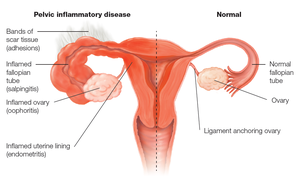
Chlamydia trachomatis
Chlamydia trachomatis is a gram-negative, obligate intracellular parasite causing chlamydia and lymphogranuloma venereum.
Virulence factor: Prevents phagosome-lysosome fusion
Transmission: Sexual contact, childbirth
Symptoms: Males: discharge, painful urination; Females: cervicitis, discharge, PID; up to 75% asymptomatic
Lymphogranuloma venereum: Invasion of lymphatic tissues, swollen lymph nodes (buboes), fever
Treatment: Azithromycin or doxycycline
Treponema pallidum (Syphilis)
Treponema pallidum is a gram-negative spirochete causing syphilis, which progresses through several stages if untreated.
Virulence factors: Hooked tip for attachment, membrane lipoproteins trigger inflammation
Transmission: Sexual contact, transplacental
Treatment: Penicillin G (especially effective in early stages)
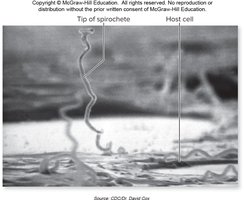
Stages of Syphilis
Primary syphilis: Chancre at site of entry (genitalia, oral cavity, nipples, anus)
Secondary syphilis: Fever, headache, sore throat, red/brown rash, hair loss; occurs ~3 months after infection
Latency: No visible symptoms, can last years
Tertiary syphilis: Gummas (lesions) in liver, skin, bone; neurosyphilis (headaches, convulsions, blindness, dementia)
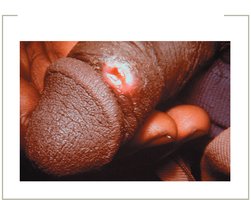

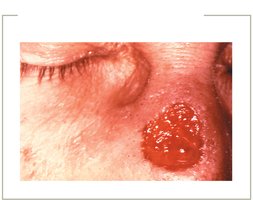
Congenital Syphilis
Transmission: Mother-to-fetus during pregnancy
Complications: Fetal abnormalities, nasal/tooth/palate deformations, blindness, deafness, miscarriage, stillbirth
Reproductive System Eukaryotic Infections
Candida albicans
Candida albicans is a dimorphic fungus and part of the normal microbiota. It can cause vulvovaginal candidiasis under conditions of dysbiosis.
Virulence factors: Dimorphism (yeast to hyphal form)
Transmission: Endogenous (overgrowth due to antibiotics, hormonal changes, etc.)
Symptoms: Vaginal itching, thick curd-like discharge
Treatment: Azole antifungals (clotrimazole, miconazole)
Trichomonas vaginalis
Trichomonas vaginalis is a flagellated protozoan causing trichomoniasis, a common sexually transmitted infection.
Virulence factors: Flagella for motility, glycocalyx for adherence
Transmission: Sexual contact
Symptoms: Many cases asymptomatic; females: white/green frothy discharge, dysuria, itchiness; males: dysuria, urethritis, discharge
Treatment: Metronidazole
