Skip to main content
Nutrition
My Course
Learn
Exam Prep
AI Tutor
Study Guides
Flashcards
Try the app
My Course
Learn
Exam Prep
AI Tutor
Study Guides
Flashcards
Try the app
Back
Gaining Weight exam
You can tap to flip the card.
What is the primary goal for underweight individuals trying to gain weight?
You can tap to flip the card.
👆
What is the primary goal for underweight individuals trying to gain weight?
Achieving a positive energy balance by consuming more calories than expended.
Track progress
Control buttons has been changed to "navigation" mode.
1/26
Related flashcards
Related practice
Recommended videos
Gaining Weight definitions
Gaining Weight
15 Terms
Gaining Weight quiz
Gaining Weight
15 Terms
Gaining Weight
10. Energy Balance: Body Weight, Obesity, & Eating Disorders
10 problems
Topic
Eating Disorders
10. Energy Balance: Body Weight, Obesity, & Eating Disorders
10 problems
Topic
10. Energy Balance: Body Weight, Obesity, & Eating Disorders
8 topics
15 problems
Chapter
03:58
Gaining Weight
126
views
1
rank
02:09
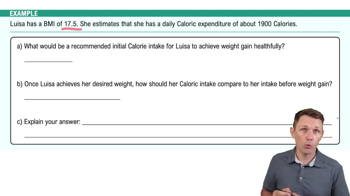
Gaining Weight Example 1
114
views
1
rank
Terms in this set (26)
Hide definitions
What is the primary goal for underweight individuals trying to gain weight?
Achieving a positive energy balance by consuming more calories than expended.
Energy Density
The amount of calories packed into a given volume or weight of food.
Why are low volume, high energy density foods recommended for weight gain?
They provide more calories in smaller portions, making it easier to increase calorie intake.
Dietary Reference Intakes (DRIs)
Nutrient intake standards set to meet the needs of most healthy individuals.
What is a common calorie surplus recommended for healthy weight gain?
An additional 500 to 1,000 calories per day.
Behavioral Modification
Changes in eating habits or lifestyle to support a specific health goal.
Why should underweight individuals avoid empty calories?
Empty calories lack essential nutrients and can lead to poor health despite weight gain.
Resistance Training
Physical activity designed to improve muscle strength and mass.
What is the benefit of eating smaller, more frequent meals for weight gain?
It helps avoid discomfort from large meals and increases total calorie intake.
High Energy Density Foods
Foods that contain a large number of calories in a small serving size, such as nuts and dried fruits.
Why is resistance training important during weight gain?
It helps build muscle mass, contributing to healthy weight gain.
Empty Calories
Calories from foods or drinks that provide little or no nutritional value.
What is a practical snack suggestion for healthy weight gain?
Apples with peanut butter, as peanut butter is calorie-dense and nutritious.
Mindful Eating
Paying attention to the eating experience and food choices to support health goals.
Why might large meals be difficult for underweight individuals?
They may cause discomfort or fullness, making it hard to consume enough calories.
Positive Energy Balance
Consuming more calories than the body uses, leading to weight gain.
What is the risk of not meeting DRIs while gaining weight?
Potential nutrient deficiencies and associated health problems.
Healthy Oils
Fats such as olive oil or canola oil that are high in unsaturated fats and energy.
What is the difference between fresh and dried fruit in terms of energy density?
Dried fruit is higher in energy density, providing more calories per serving.
Why is it important to avoid saturated fats when gaining weight?
To reduce the risk of heart disease and promote overall health.
Calorie Dense Snacks
Snacks that provide a high number of calories in a small portion, aiding in weight gain.
What health risks are associated with being underweight?
Increased risk of nutrient deficiencies, weakened immunity, and other health issues.
Nuts
A high energy density food recommended for healthy weight gain.
How can behavioral modifications support weight gain?
By encouraging habits like frequent meals and calorie-dense snacks to increase intake.
Muscle vs. Fat in Weight Gain
Muscle is denser and healthier to gain than fat, supporting better overall health.
What is the role of physical activity in a weight gain plan?
To build muscle mass rather than just increasing fat.
 BackBack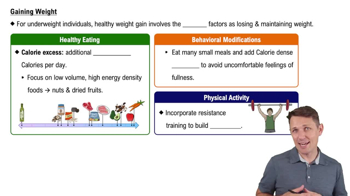
 03:58
03:58